Everything Travelers Need to Know About Nepal: 2026 Updated
Nepal, a landlocked country in South Asia, offers travelers varieties of traveling options: high-altitude as well as beginner friendly trails, ancient cultural heritage, and diverse wildlife. This guide, updated for 2026, confirms that travel remains secure despite recent political shifts and details essential information for a memorable, stress-free journey. It covers everything from entry requirements, safety protocols, best months to trek, and the top natural and cultural destinations, including the iconic Everest region and the UNESCO World Heritage sites of the Kathmandu Valley.
Table of Contents
Nepal Travel Advice, Safety & Facts
The current political environment in Nepal is stable following the Gen Z protests of late 2025, with an interim government promising orderly elections and low probability of future mass unrest. Nepal is considered safe for travel in 2026 due to low crime rates (2.29 per 100,000), dedicated Tourist Police, and strong local hospitality (“Atithi Devo Bhaba”). Key emergency contacts include Local Police (100), Tourist Police (1144), and respective embassies.
For entry, most travelers can easily obtain a Visa on Arrival ($30–$125) at the airport. Indian citizens get visa-free entry but require an Indian Passport or Voter ID. Travel insurance is not mandatory for general tourists but is compulsory for trekking in Restricted Areas like Upper Mustang or Nar Phu.
The Current Political Situation in Nepal in 2026
The current political situation in Nepal in 2026 is uncertain, but the unrest faced by the country due to the Gen Z protest has subsided. The protests during September 8 to September 13, 2025, by Nepalese Gen Z, toppled the existing government. A new interim government was formed on September 12 and promised an election in six months, as confirmed by BBC in the article “Nepal’s interim PM to hand over power within six months.” The situation is peaceful and stable now, with only rare, minor protests happening around government offices.
Mass protests in the coming months of 2026 are highly unlikely, since Nepalese citizens want peace and the major political parties of Nepal have mutually agreed to an orderly election. Protests hurt businesses and livelihoods so most Nepalese people do not want large-scale protests. Additionally, major political parties have agreed to a peaceful election, as reported by The Kathmandu Post in “Oli jumps into election mode after travel curbs lifted.
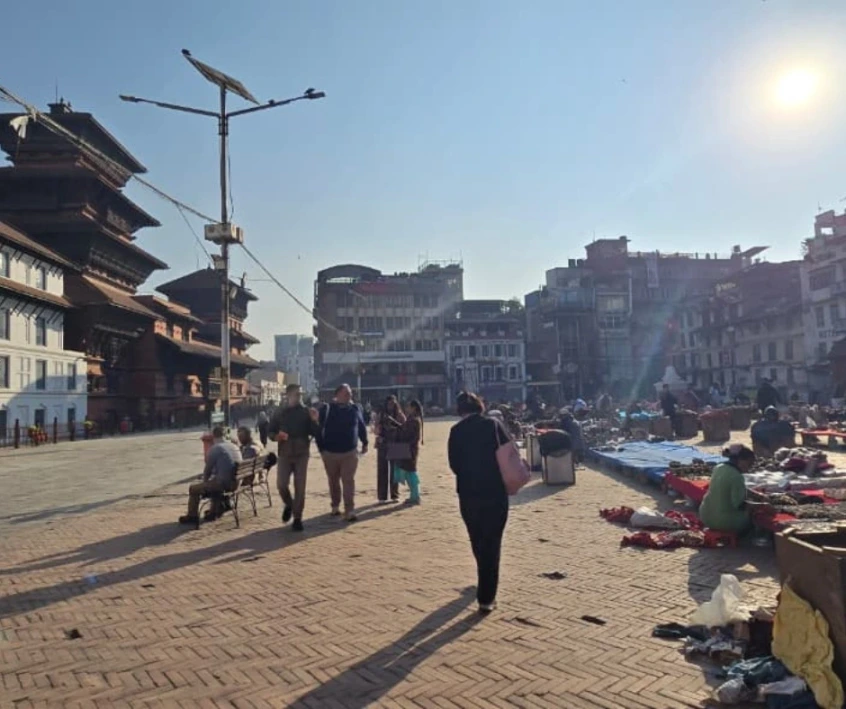
The above photo shows Kathmandu Durbar Square from early January 2026 morning time. Local people are busy in daily life, while foreign travelers sightsee the heritage site independently and freely.
Is It Safe To Travel To Nepal in 2026?
Yes, it is safe to travel to Nepal right now because the probability of major political unrest in future is low, as mentioned above. Safety of traveling also includes factors like crime rates, health facilities, solo traveling, female traveling and local behavior. Here are other factors that makes Nepal safe to visit for travelers:
- Crime Rates: Nepal has a low crime rate of 2.29 out of 100,000 population as per the data from Macrotrends. This is much safer than the USA crime rate of 6.81 out of 100,000 people. Petty crimes with travelers are rare. However, we suggest you to stay vigilant in crowds, secure your valuables, and avoid drunk groups in Thamel after 10:00 PM.
- Health and Medical Safety: Hospitals are accessible in the urban areas of Nepal. Kathmandu Metropolitan City has around 361 healthcare facilities according to 2025 data. This means you find about 7 hospitals in a 1 km square area. But travelers must know that first-class hospitals are not available in rural areas and during trekking. Villages have health posts for common illnesses like diarrhea and simple injuries, but they are not frequent like in the city. Trekkers have to be careful and avoid activities that cause health problems. Helicopter rescue can be arranged for emergency situations.
- Legal Risks and Local Treatment: The Government of Nepal prioritizes tourism as an important sector of the economy. A dedicated Tourist Police force ensures your safety and assists with any problems and unjust treatments. Every traveler must follow the laws and culture of Nepal to avoid legal actions: do not kill cows, do not enter restricted areas without permit, do not disrespect local culture, and do not harm nature. Locals follow “Atithi Devo Bhaba” (Guest is God) and treat you as such. They try to make your stay memorable for life.
- Women and Solo Travelers: UK-based company “Much Better Adventures” rated Nepal as 7th best solo travel destination in 2026. Kirsty Holmes, Content Manager at Much Better Adventures, stated that solo traveling in Nepal made her feel at home. However, we still recommend women and solo visitors to not walk alone at night in dark areas. Please use reputed ride-sharing apps like Pathao and InDrive if you have to travel. During the trek, we suggest you reach your destination before night falls.
The real-life example that shows the safety of traveling in Nepal: Gen-Z protestors explicitly allowed safe passage to tourist vehicles even during peak protest times. The movement was strictly for internal political reform (anti-corruption) and never anti-tourist. You can see this incident in the Tiktok link here: https://www.tiktok.com/@mr….alian/video/7550180990723951893
Many countries, such as the USA, the UK, and Australia, suggest that their citizens “reconsider travel to Nepal.” These governments are legally required to be ultra-cautious after protests and during the election period, but our experience on the ground shows normal life and a low possibility of future escalation of protests.
In the above facebook post, foreign tourists are traveling across Nepal after the protest. They are holding cards “We Are in Nepal” to show the message that Nepal is safe to travel.
Emergency Local Contact for Foreign Travelers in Nepal
Visitors are recommended to dial 100 to contact local police first in case of emergency. Local authorities respond best as first responders in crisis. Furthermore, travelers and trekkers can contact embassies of the USA, France, Germany, UK, Australia, China, India and others. A simple Google Search helps you find if your country has an embassy in Nepal.
Emergency Contact List for Nepal Travelers:
- Local Police: Dial 100
- Local Tourist Police: Dial 1144 (for harassment, mistreatment, criminal activity, or rescue)
- US Embassy: +977-1-4234000
- German Embassy: +977-9851137943
- United Kingdom Embassy: +977-1-4237100
- France Embassy: +977-9801017201 (medical/legal emergency), +977-1-4512332
- Australian Embassy: +977-1-4371678
- India Embassy: +977-9851316807
- China Embassy: +977-1-4431511
Countries like Canada, Finland, Netherlands, and Norway have an Honorary Consul instead of a full embassy. Contact these Honorary Consul for help; you find their contact details on respective websites.
What are the Nepal Entry Requirements?
Nepal enforces specific entry protocols depending on your nationality, mode of travel, and intended activities. The following guide breaks down the critical requirements for Visa on Arrival, for travelers from countries who cannot get on-arrival visa, and entry documents required for Indian citizens.
On Arrival Visa Requirements
Most foreign nationals can obtain a Tourist Visa upon arrival at Tribhuvan International Airport (TIA) or designated land entry points, such as Immigration Office Belahia and Immigration Office, Rasuwa.
To get a Visa on Arrival, you must have a passport valid for at least 6 months past your entry date. You can fill out the “Tourist Visa” form online before travel (via the Department of Immigration website) to save time, or use kiosk machines at the airport. You must also pay the visa fee in cash (USD or other major currencies are accepted, but USD is preferred).
Visa fees in 2026 are $30 for 15 days, $50 for 30 days, and $125 for 90 days.
On Arrival Visa Procedure (Step-by-Step)
Getting your visa at the airport follows a specific three-step process once you land:
- First, fill out the “Arrival Card” and the “Tourist Visa” form (using the kiosks if you didn’t do it online).
- Second, take the printed slip to the banking counter and pay your visa fee in cash (USD recommended).
- Third, take your payment receipt, online form submission receipt, and passport to the Immigration Desk for final approval.
- Get your on-arrival visa.
Department of Immigration guidelines warn that online submission receipts are valid for only 15 days, so do not fill the form too early before your flight.
Countries Not Eligible for On-Arrival Visa
Citizens of 12 specific nations are ineligible for “On-Arrival” visas and must apply beforehand: Nigeria, Ghana, Zimbabwe, Cameroon, Somalia, Liberia, Ethiopia, Iraq, Palestine, Afghanistan, Syria, and Eswatini (Swaziland). Refugees with travel documents also fall into this category.
Travelers from above mentioned countries must obtain a physical visa from a Nepalese Embassy or Diplomatic Mission in their home country (or nearest location) prior to departure. Airport visas are not allowed for these citizens. They need to present a pre-approved visa to board flights to Nepal.
Entry Requirements for Indian Citizens
The entry requirements of Indian citizens are different from general foreign travelers. Indian travelers do not need a visa to enter Nepal, but they must prove their nationality with specific valid documents.
Indian nationals traveling by air must present either a valid Indian Passport or an Election ID Card (Voter ID) issued by the Election Commission of India, according to the Nepal Department of Immigration. Indian citizens won’t be granted entry on the basis of only an Aadhar card because it is not considered valid travel documents by the Department of Immigration.
Minors (under 18) need a valid passport or a birth certificate showing the names of both parents if traveling with parents holding valid documents. Indian Minors need additional documentation such as a consent letter from the parent or a legal guardian, if traveling alone.
Your nationality determines strictly how you enter Nepal. Most tourists obtain a Visa on Arrival at Tribhuvan International Airport easily with cash and passport. However, citizens from 12 restricted nations must bring pre-approved embassy visas. Indian nationals enter visa-free but need Passport or Voter ID.
Is Travel Insurance Mandatory to Visit Nepal?
Is Travel Insurance Compulsory for General Tourists to Visit Nepal?
No, the Nepal Government does not currently mandate travel insurance for general tourist entry. Tourists visiting for sightseeing, cultural tours, or city visits do not need to show insurance proof at Immigration. The official “Visa Fee and Documents” page on immigration.gov.np lists only Passport, Visa form, and fees as requirements for a standard Tourist Visa.
The Department of Immigration excludes travel insurance from the mandatory document list for “Visa on Arrival” applications at Tribhuvan International Airport. You can enter the country with just your passport and visa fee. However, the US Department of State and Nepal Tourism Board strongly recommend medical coverage because local hospitals often require upfront cash payment before treatment.
Is Travel Insurance Compulsory for Trekkers Visiting Nepal?
No, trekkers do not require mandatory insurance coverage for general classic treks, such as Everest Base Camp trek, Annapurna Base Camp trek, Annapurna Circuit trek, and Langtang trek. But trekkers require mandatory insurance coverage for entering Restricted areas, such as Manaslu Region, Upper Mustang region, and Nar Phu Valley, as per Nepal Department of Immigration.
Why is Insurance Recommended for Trek?
High-altitude trek insurance protects you from expensive helicopter rescue costs, in case of emergency situations. As per a 2020 study by CIWEC Hospital published in the Journal of Travel Medicine, only around 0.9% of trekkers need helicopter rescue, but altitude sickness affects even fit travelers. Helicopter evacuation fees range from $3,000 to $6,000 USD depending on weather and location. Without insurance, rescue companies require you to pay this full amount in cash or card before the pilot flies.
This creates unnecessary financial anxiety. Therefore, we recommend valid high-altitude insurance to ensure you trek with financial peace of mind even though the probability of helicopter rescue is low.
What to Look for in Your Insurance Policy?
Your insurance policy must specifically cover “high altitude” and “adventure activities.” Standard travel insurance often excludes climbing or trekking above 3,000 meters. You must ensure your policy covers “Emergency Medical Evacuation” and “Repatriation” up to 6,000 meters. Policies that label trekking as an “optional sport” or “dangerous activity” often deny claims unless you buy the specific “Adventure Pack” add-on.
We recommend a minimum coverage of $100,000 for medical expenses and specific inclusion of “Search and Rescue” up to 6,000 meters.
Restricted area trekking without insurance is illegal and unsafe even though you can enter Nepal without insurance to visit Kathmandu or trek in general classic trekking regions. We advise you to buy a robust insurance policy that covers helicopter rescue to ensure you enjoy the Himalayas carefreely.
What Travelers Need To Know Before Traveling To Nepal (2026)
Nepali Culture
Travelers need to adopt local customs of Nepali society, which function on deep-rooted traditions of spiritual purity and community respect, to gain deeper connections with hosts and avoid unintentional offense in public spaces. The main local customs of Nepal which travelers need to know are mentioned below with short explanation:
- Greet with Namaste: Press your palms together and say “Namaste” to greet elders and locals. This traditional gesture acknowledges the soul within the other person and bridges language barriers instantly.
- Dress Modestly: Temples and rural communities have strict dress norms. You must cover your shoulders, chest, and knees. Wearing revealing clothing in religious sites is considered disrespectful and may lead to denied entry.
- Remove Your Shoes: Shoes carry dirt and ritual impurity. You must take them off before entering anyone’s home, temple shrines, or monastery prayer halls. Look for the pile of shoes at the door as your visual cue, a requirement explicitly stated in the Nepal Tourism Board guidelines.
- Use Your Right Hand: Locals consider the left hand impure (historically reserved for hygiene). Always use your right hand to eat Dal Bhat, pass money, or accept gifts.
- Walk Clockwise (Kora): Buddhism and Hinduism mandate clockwise movement around spiritual structures. Walk around Stupas, temples, and Mani walls with the structure on your right side to align with spiritual energy.
- Respect Sacred Zones: Never touch a Nepali person’s head, as culture views it as the most sacred part of the body. Conversely, do not point your feet at people or shrines, as feet are considered the lowest and most impure part.
- Avoid Public Affection: Couples should avoid Public Displays of Affection (PDA) like kissing or tight hugging. Locals view these actions as private behaviors that are rude to perform in public.
Respect local norms by dressing modestly, taking off your shoes in religious places, and walking clockwise around temples.
Illegal and Regulated Activities
- Nepal strictly bans certain modern digital and recreational activities that are legal elsewhere. Cryptocurrency trading, mining, and investing are completely illegal; you can face jail time for using crypto apps, a rule enforced by the NRB.
- Drone usage requires prior permits from three different government agencies (Civil Aviation, Ministry of Home Affairs, and Defense), making casual drone photography nearly impossible for short trips for travelers.
- Harming of flora and fauna is strictly prohibited by the Government of Nepal.
- Marijuana remains illegal despite its historical association with hippies.
Best Seasons 2026 (Climate Change Update)
Climate change has shifted Nepal’s traditional weather patterns, altering the best times for clear views and safe travel.
- Trek in late Autumn (mid-October to mid-December) for the clearest views. The Nepal Department of Hydrology and Meteorology recent years rainfall data confirms that monsoon rains now extend into the first half of October, making early October treks riskier with low visibility.
- Choose early December for stable weather and solitude. The first half of December offers November-like clarity with far fewer crowds, as per our trekking experience in Nepal. Winter snows now arrive later than historically recorded, due to climate change, keeping trails passable longer.
- Visit in Spring (March to May) to see blooming rhododendrons. This season remains ideal for experiencing Nepal’s floral biodiversity (forests bloom with colorful rhododendrons), while mountain views may be hazier than in autumn.
- Winter (Mid-December to February) offers the best wildlife visibility for jungle safaris in Chitwan or Bardiya because the tall elephant grass is cut down, though mornings are foggy.
- You should avoid the Monsoon (June to Early-October) for remote travel and trek as roads become dangerous due to landslides, unless you only visit urban areas of Nepal using flights or “rain-shadow” areas like Upper Mustang, Nar Phu Valley, and Upper Dolpo which remain dry. For Monsoon, we highly recommend you to have some buffer days.
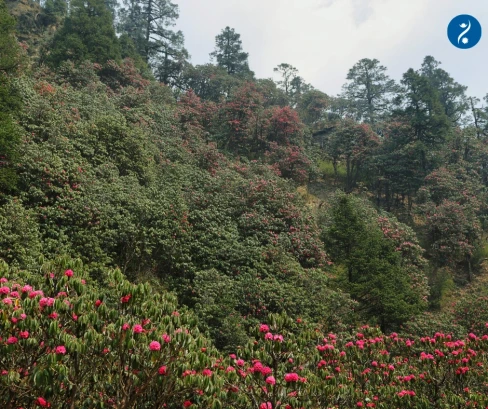
The above photo shows Rhododendron blooming in Annapurna Conservation Region in spring season.
Restricted Areas of Nepal
The Department of Immigration classifies Upper Mustang, Manaslu, Nar Phu, and Dolpo as restricted regions that require special entry protocols. To trek in these areas, you must obtain a Restricted Area Permit (RAP) through a registered travel agency of Nepal. You must also hire a licensed guide and travel in a group of at least two people; solo trekkers cannot obtain these permits.
The government has updated the fee structure for specific regions. The current costs per person are:
- Upper Mustang: USD 50 per day.
- Manaslu Circuit: USD 100 per week (September–November)/ USD 75 per week (December – August)
- Nar Phu Valley: USD 100 per week (September–November)/USD 75 per week (December – August)
- Upper Dolpo: USD 500 for the first 10 days.
Accommodation in Cities
Travelers can choose between star hotels, simple lodges, and hostels in urban areas, such as Kathmandu, Pokhara, and Chitwan. Star hotels offer full-service comfort, simple lodges offer basic comfort at an affordable price, while hostels provide budget-friendly social hubs. You must reserve rooms weeks in advance during peak seasons to guarantee availability and prevent price surges.
Accommodation in Trekking Regions
Trekking lodges (“tea houses”) provide communal dining and a room with a simple bed, light bulb, and blanket. In popular circuits (Everest/Annapurna), rooms are decent, but in restricted areas (Dolpo/Manaslu), they are basic. You usually pay extra for hot showers, Wi-Fi, and battery charging. During peak seasons (Spring and Autumn), booking ahead or arriving early is crucial, as rooms run out.
Food
Urban hubs like Kathmandu and Pokhara serve diverse international cuisines alongside spicy street snacks. You should eat local favorites like Chatpate and Panipuri with caution, as the high spice level often upsets foreign stomachs. Conversely, rural tea houses limit your choices to staples like Dal Bhat, Dhido, and Gundruk.
Trekkers must avoid meat at high altitudes. The report, Nutrition and hydration for high-altitude alpinism: A narrative review, published in the International Journal of Environmental Research and Public Health confirms that meat uses oxygen inefficiently and accelerates altitude sickness risks. Alcohol is also similarly harmful for average trekkers in high altitude and should not be consumed.
Local eSIM
Travelers can purchase tourist SIMs or eSIMs from Ncell or Nepal Telecom (NTC) counters at the Tribhuvan International Airport arrivals hall immediately after baggage claim. Both providers issue SIM cards upon presentation of your passport and visa. NTC often retains signal in deeper, remote valleys where private networks fail, while both NTC and NCELL are excellent in cities.
Which Places Can Travelers Visit in Nepal in 2026?
Travelers explore Nepal to experience high-altitude trekking, ancient cultural heritage, and wildlife safaris in the southern plains.
What Are The Best Trekking Destinations in Nepal?
Trekkers choose specific trekking destinations based on altitude preference, budget, time available, facilities, and accessibility. Each region offers unique landscapes ranging from lush jungles to high-altitude deserts. The main trekking regions of Nepal are listed below:
- Everest Region
- Annapurna Region
- Langtang Region
- Manaslu Region
- Kanchenjunga Region
- Dolpo Region
- Makalu Region
- Dhaulagiri Region
Everest Region
The world’s highest peaks define the Everest region as Nepal’s most iconic trekking hub. Popular routes include the Everest Base Camp (EBC) trek, Gokyo Lakes trek, and the Three Passes trek. Visitors experience rich Sherpa culture and stay in well-developed tea houses with modern amenities. The Department of Immigration requires a Sagarmatha National Park permit and a Khumbu Pasang Lhamu local fee for entry.
Annapurna Region
Annapurna region is the most visited Himalayan region of Nepal due to its accessibility, turquoise color lakes, prominent mountains, and verdant hills. Major routes include the Annapurna Circuit trek, Annapurna Base Camp trek, Ghorepani Poon Hill trek, Nar Phu Valley trek and Mardi Himal trek. Travelers enjoy a mix of lush subtropical forests and arid alpine terrain while staying in comfortable lodges.
This region offers the best variety of scenery and accommodation for all fitness levels.
Langtang Region
Proximity to Kathmandu makes the Langtang region the most accessible high-mountain destination. Standard routes include the Langtang Valley trek, Gosaikunda Lake, and the Tamang Heritage Trail. Key highlights are the culturally rich villages, 360-degree views of snow-capped mountains, Kyanjin Gompa monastery, and the sacred alpine lakes of Gosaikunda. This region has better accommodation facilities (comfortable lodges, a variety of food choices) and is easier than other treks, such as Annapurna Circuit trek and Everest Base Camp trek.
Manaslu Region
Restricted-area status preserves the Manaslu region as a pristine and spiritually significant “Hidden Valley”. The primary route is the Manaslu Circuit trek, often combined with the Tsum Valley trek. Trekkers circle Mt. Manaslu (8,163m) and cross the challenging Larkya La Pass at 5,106m. This region is culturally rich as it consists of ancient Buddhist monasteries like Mu Gompa and Pungyen Gompa.
Kanchenjunga Region
The world’s third-highest peak dominates the Kanchenjunga region in Nepal’s far-eastern corner. Routes include the North Base Camp trek(Pangpema), South Base Camp (Oktang) trek, and Kanchenjunga Circuit trek. Highlights include the pristine and rugged trails, grand Himalayan views, and rich wildlife habitat (home to red pandas and snow leopards).
Dolpo Region
Tibetan-style plateaus and turquoise lakes characterize the Dolpo region as a “Hidden Kingdom”. Travelers choose between Upper and Lower Dolpo circuits, often visiting Shey Phoksundo Lake and the 800-year-old Shey Gompa. Trekkers cross high passes like Numa La (5,318m) and experience the ancient Bon religion in isolated stone villages. The Department of Immigration charges $500 for the first 10 days of an Upper Dolpo Restricted Area Permit.
This is a high-altitude desert trek perfect for those seeking spiritual depth and total seclusion.
Makalu Region
The fifth-highest mountain, Mt. Makalu (8,481m), anchors this biodiverse region in eastern Nepal. The Makalu Base Camp trek and the technical Sherpani Col trek are the main routes. Highlights include the lush Barun Valley and views of Everest, Makalu, and Lhotse from the base camp. Trekkers encounter dramatic altitude shifts from 500m to 5,000m through unpopulated highlands.
Dhaulagiri Region
Rugged glacial terrain makes the Dhaulagiri Circuit one of the most challenging treks in the Himalayas.The circuit trek circles the Dhaulagiri massif (8,167m) and crosses the French Pass (5,360m) and Dhampus Pass (5,240m). Trekkers camp on glaciers and navigate stark, icy landscapes far from permanent human settlements.
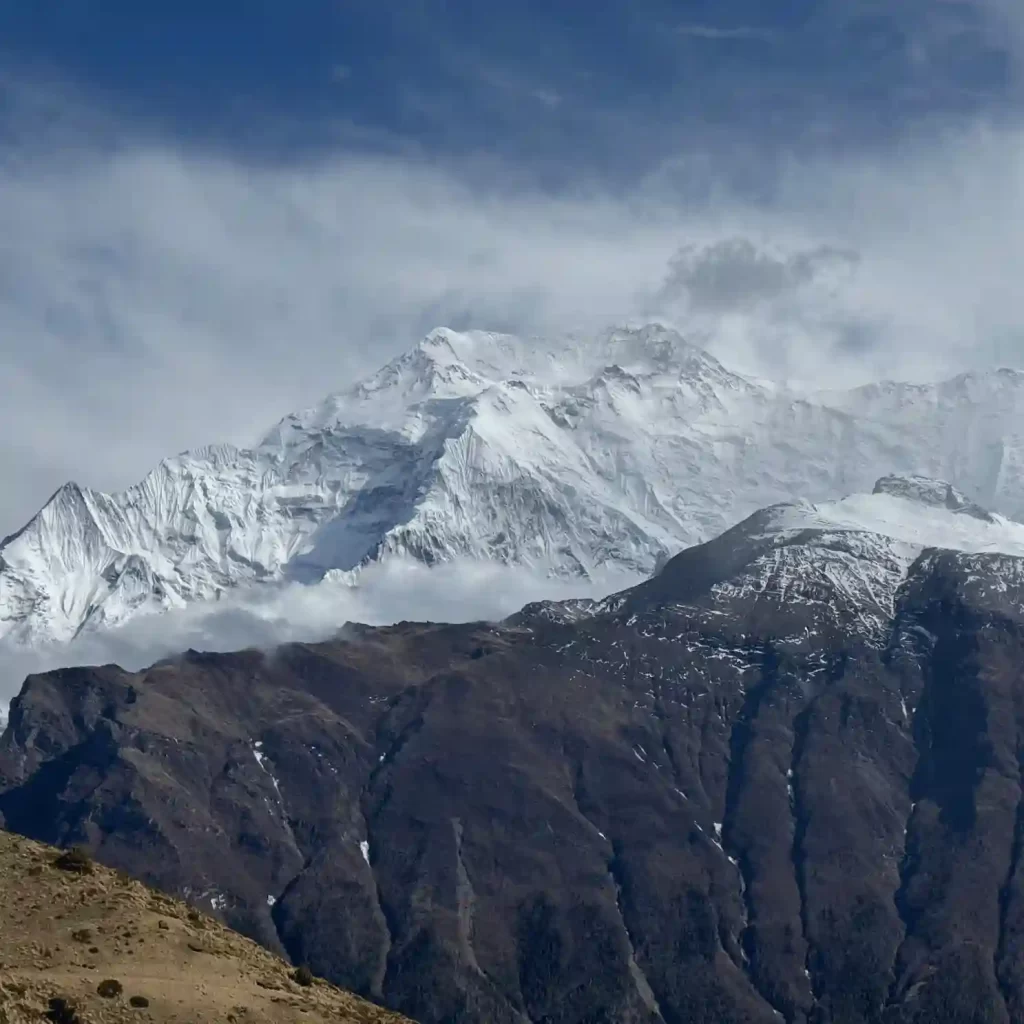
The image is of snow-capped Mount Annapurna II clicked from Annapurna region of Nepal.
This region offers a high-risk, high-reward camping adventure for elite adventurers seeking extreme terrain.
What Are The Best Cultural Sites in Nepal?
Tourists visit the Kathmandu Valley, Lumbini, Bandipur, Dolpo, Manang, Gorkha, Mustang, and other historical regions of Nepal to witness centuries-old architecture and religious history. The following sites represent Nepal’s most significant cultural and religious landmarks:
- Lumbini Heritage Site: Buddhist pilgrims travel here to worship at the birthplace of Lord Buddha, a UNESCO World Heritage site since 1997. The site features the Maya Devi Temple, where excavations revealed a “marker stone” identifying the exact birth spot from 623 BC. Visitors also study the Ashoka Pillar, erected in 249 BC, which contains a Pali inscription verifying the site’s historical significance.
- Pashupatinath Temple Precinct: Hindu devotees visit this sacred complex on the banks of the Bagmati River for daily rituals and cremation ceremonies. Dedicated to Lord Shiva, the two-story pagoda temple houses a sacred lingam that priests dress in golden vastram. Thousands gather here annually for the Maha Shivaratri festival, believing that prayers at this site lead to spiritual liberation (moksha).
- Kathmandu Durbar Square (Hanuman Dhoka): Visitors explore this UNESCO-listed palace complex to see the living goddess Kumari and medieval Newari architecture. The square houses the Taleju Temple, which stands 36.6 meters tall and was once the tallest structure in the valley. It served as the seat of the Malla and Shah dynasties until 1896 and remains the heart of Kathmandu’s traditional festivities like Indra Jatra.
- Bouddhanath Stupa (Boudha): Pilgrims perform “Kora” by circumambulating this massive 36-meter-high dome, which is the largest stupa in Nepal. Listed as a UNESCO site in 1979, the stupa is a central hub for Tibetan Buddhism and is often called “Little Tibet” due to the surrounding community. Its prominent golden spire features the “Eyes of Buddha,” symbolizing wisdom and compassion while looking in all four directions.
- Swayambhunath Stupa (Monkey Temple): Tourists climb 365 stone steps to this hilltop sanctuary for panoramic views of the Kathmandu Valley. This ancient complex represents a harmonious blend where Buddhist stupas and Hindu shrines stand side-by-side. According to local legend, the stupa “self-arose” from a lotus flower when the valley was still a vast lake.
- Muktinath Temple (Chumig Gyatsa): Spiritual travelers visit this high-altitude temple (3,710m) in Mustang, which is sacred to both Hindus and Buddhists. Hindus revere it as one of the 108 “Divya Desams” dedicated to Lord Vishnu, while Buddhists honor it as a place where Guru Rinpoche meditated. The temple complex features 108 sacred water spouts and an eternal natural gas flame symbolizing the five elements.
- Bandipur Hilltop Village: Travelers visit this car-free hilltop settlement to experience its well-preserved 18th-century Newari architecture and cobbled streets. Once a vital trading hub on the India-Tibet route, the village now serves as a “living museum” of traditional Newar culture and craftsmanship. From the Tundikhel plateau, visitors can view a massive panorama of the Annapurna, Dhaulagiri, and Manaslu mountain ranges.
Other notable cultural sites of Nepal include Janaki Mandir, Changunarayan Temple, Patan Durbar Square, Bhaktapur Durbar Square, Gorkha Durbar, Namobuddha Monastery, Ramagrama Stupa, Shey Gompa, Pharping (Asura Cave), Tashi Lhakhang Monastery, Tilaurakot, Lo Manthang, Sinja Valley, Panauti, and Tsum Valley.
What Are The Most Popular Wildlife National Parks in Nepal?
Wildlife enthusiasts visit protected national parks in the Terai lowlands and Himalayan highlands to spot endangered species. The following parks represent Nepal’s most significant efforts in biodiversity conservation and ecotourism.
- Chitwan National Park (CNP): Tourists who are interested in safari can visit Nepal’s first national park to see One-Horned Rhinoceroses and Royal Bengal Tigers in the subtropical inner Terai. The 2022 National Tiger Census recorded 128 adult tigers within this UNESCO World Heritage site, the highest population in the country. You can explore the park via jeep safaris or canoe trips to spot Gharial crocodiles along the Rapti River.
- Bardiya National Park (BNP): Tiger enthusiasts choose this remote western park for the highest statistical chances of spotting a wild tiger in its natural habitat. The Department of National Parks and Wildlife Conservation reported a population of 125 tigers in Bardiya during the 2022 census. Visitors also track the endangered Asiatic Elephant and the elusive Gangetic Dolphin in the Karnali River.
- Sagarmatha National Park (SNP): Wildlife enthusiasts also enter this UNESCO-listed park to see snow leopards and Himalayan tahrs. The park encompasses the world’s highest peak (8,848m) and provides a sanctuary for the rare Red Panda and the colorful Himalayan Monal. You must follow strict “Leave No Trace” rules to preserve this fragile alpine ecosystem.
- Langtang National Park (LNP): Travelers visit Nepal’s first Himalayan national park to search for the endangered Red Panda in its dense bamboo forests. Located just north of Kathmandu, the park supports 373 bird species and high-altitude wildlife like the Clouded Leopard and Musk Deer. The trail leads you through diverse climate zones, from subtropical forests to massive glacial valleys.
- Koshi Tappu Wildlife Reserve (KTWR): Birdwatchers travel to this eastern wetland to see over 500 species of resident and migratory birds. The reserve serves as the last remaining habitat for the endangered Wild Water Buffalo, locally known as “Arna”. As Nepal’s first Ramsar site, it offers a peaceful environment for spotting Gangetic Dolphins and various rare migratory waterbirds.
- Khaptad National Park (KNP): Adventurers explore this far-western plateau to witness its unique rolling moorlands and spiritual significance. The park protects 23 species of mammals, including the Himalayan Black Bear and the Leopard, alongside 287 species of birds. Visitors often combine wildlife viewing with a visit to the Khaptad Baba Ashram, a famous religious site for meditation.
Which are the top-rated Nepal holiday packages for 2026?
For 2026, the best holiday packages in Nepal offer a mix of adventure, culture, and nature. Travelers are choosing trips that combine mountain views with authentic local experiences. Whether you want to walk on high Himalayan trails or explore ancient temples in the cities, there is something for everyone. The top-rated packages focus on safety, comfort, and seeing the most beautiful parts of the country. From seeing Mount Everest to searching for tigers in the jungle, these holidays create memories that last a lifetime.
What Are The Most Popular Treks in Nepal?
The most popular treks in Nepal are listed below:
- Everest Base Camp (EBC) Trek: Trekkers trek to EBC (5,364m) to stand at the base of the world’s highest peak, Mount Everest (8,848m). The 14-day route traverses the Khumbu Glacier and Sagarmatha National Park, a UNESCO World Heritage site home to snow leopards and Himalayan tahrs. You must obtain a Sagarmatha National Park permit and Khumbu Pasang Lhamu Municipality entrance permit.
- Annapurna Circuit Trek: Trekkers circle around the Mount Annapurna I (8,091m), one of the world’s highest mountains, and cross the Thorong La Pass (5,416m), one of the world’s highest trekking passes, on this 14-to-18-day circuit. The trail includes a dramatic shift in biodiversity, starting from lush subtropical jungles in Besisahar and ascending to the arid, high-altitude desert of Manang. You also witness the diverse cultures of Gurung, Manangi, and Thakali people along the Marshyangdi river.
- Ghorepani Poon Hill Trek: Beginners, first-time trekkers, or those short on time walk this 4-to-5 day route to watch the golden sunrise illuminate the Dhaulagiri and Annapurna ranges. The trail winds through Nepal’s largest rhododendron forests, which bloom spectacularly in spring (March–April). It serves as an accessible introduction to Himalayan trekking without the risks of extreme altitude sickness.
- Langtang Valley Trek: Trekkers seeking an accessible and easy trekking route choose Langtang Valley trek, located just 122 km north of Kathmandu. Langtang Valley is often described as one of the most beautiful places by the trekkers. The trail offers close-up views of the Langtang Lirung (7,246m) and opportunities to visit the Kyanjin Gompa monastery. You can complete this moderate trek in 7–10 days, making it ideal for travelers with limited time.
- Manaslu Circuit Trek: Trekkers seeking solitude and remote trail choose this restricted area to circle the world’s eighth-highest peak, Mt. Manaslu (8,163m). The route crosses the challenging Larkya La Pass (5,106m) and requires a Restricted Area Permit (RAP). You must trek with a registered guide and at least one partner to legally enter this conservation area.
- Upper Mustang Trek: Visitors explore the “forbidden kingdom” of Lo Manthang to witness its preserved Tibetan Buddhist culture and ancient sky caves. The semi-desert landscape resembles the Tibetan plateau and lies in the rain shadow, making it perfect for monsoon trekking. As of 2026, the Department of Immigration charges a flexible $50 per day for permits.
- Nar Phu Valley Trek: Trekkers explore the restricted and remote “hidden valley” north of Annapurna to visit the ancient, Tibetan-influenced villages of Nar (4,110m) and Phu (4,080m). This 9-to-12-day route involves crossing the Kang La Pass (5,320m), which offers close-up views of Annapurna II, Gangapurna, and Himlung Himal. The trail traverses deep river gorges and high-altitude semi-deserts, showcasing medieval Buddhist architecture and the historic Tashi Lhakhang monastery. You must obtain a special Restricted Area Permit (RAP) and an Annapurna Conservation Area Project (ACAP) permit.
You should read our comprehensive guide to trekking in Nepal, if you are planning to trek on any trail in Nepal and need a detailed resource. This resource categorizes trekking trails based on features such as remoteness, difficulty, time required, accessibility, and challenges. After reading this guide, you can choose the perfect trekking trail to suit your requirements.
What Are the Most Popular Tours in Nepal?
The most popular tours in Nepal are as follows:
- Golden Triangle Nepal Tour: The Golden Triangle Tour is the perfect introduction to Nepal’s beauty. It covers three major destinations: Kathmandu, Pokhara, and Chitwan. In Kathmandu, you will visit historic palaces and ancient temples filled with art. Then, you travel to Pokhara, a city famous for its calm lakes and views of the Annapurna mountains. Finally, you go to Chitwan National Park for a jungle safari. This tour gives you a complete experience of culture, nature, and wildlife in one single trip.
- Hindu Spiritual Tour: This spiritual tour focuses on visiting the holy temple of Muktinath, which is sacred to both Hindus and Buddhists. Located high in the Mustang region, Muktinath is famous for its 108 water spouts and eternal flame. Pilgrims believe that bathing here washes away sins. The journey also offers amazing views of the arid landscapes and high mountains. Apart from Muktinath, you will visit other important Hindu sites like Pashupatinath and Budanilkantha in Kathmandu, and Gupteshwor and Bindabasini in Pokhara. It is a journey of faith and beautiful scenery.
- Buddhist Spiritual Tour: This tour is designed for those seeking peace and spiritual learning. The major highlights are Lumbini and Namo Buddha. You will also visit majestic stupas like Boudhanath and Swayambhunath in Kathmandu. This tour allows you to learn about Buddhist philosophy, visit active monasteries, and enjoy the quiet atmosphere of sacred places.
- Wildlife Safari in Chitwan The Wildlife Safari in Chitwan is an exciting adventure in Nepal’s tropical lowlands. Chitwan National Park is famous for protecting the endangered One-Horned Rhinoceros. During the safari, you can go on a jeep ride or a canoe ride down the Rapti River to see crocodiles and birds. You might also spot deer, monkeys, and sloth bears. The tour also includes a cultural program where you can see the traditional stick dance of the local Tharu people. It is a great trip for nature lovers.
- Tiger Tracking in Bardia Tiger Tracking in Bardia National Park is the best choice for a true wilderness experience. Bardia is located in the far west of Nepal and is less crowded than Chitwan. It is the best place to see the majestic Royal Bengal Tiger in its natural habitat. The tour involves walking safaris and waiting in hideouts to spot these big cats. You will also see wild elephants and dolphins in the Karnali River. This tour offers a raw and authentic jungle adventure away from the busy tourist spots.
Conclusion
This 2026 Nepal Travel Guide confirms the country is safe and stable for visitors, despite recent political shifts, with low crime rates and dedicated Tourist Police. Essential entry requirements include obtaining a Visa on Arrival (or a pre-approved visa for citizens of 12 restricted nations) and having a passport valid for six months. While travel insurance is not mandatory for general tourists, it is compulsory for trekking in restricted areas and highly recommended for all high-altitude treks due to the high cost of emergency helicopter rescue.
Nepal offers diverse travel experiences, focusing on iconic trekking, ancient culture, and rich wildlife. The top trekking regions include Everest and Annapurna, while Manaslu and Upper Mustang are popular restricted-area treks. Key cultural sites are the UNESCO World Heritage locations in Kathmandu Valley, such as Bouddhanath and Pashupatinath, and Lumbini, the birthplace of Buddha. For wildlife, Chitwan and Bardiya National Parks offer safaris to see the One-Horned Rhino and Royal Bengal Tiger.