Most Beautiful Treks in Nepal – A Complete Guide
Choosing the “most beautiful” trek in Nepal depends on whether you seek the cultural depth of Manaslu, the verdant forests of Langtang, or the stark grandeur of the Khumbu. For trekkers, Nepal’s geography offers a diverse tapestry of landscapes ranging from subtropical jungles to high-altitude snowy trails. This guide evaluates Nepal’s best and visually appealing trekking routes to help you choose the journey that best satisfies your soul.
Manaslu Circuit Trek: The Untouched Sanctuary
Ideally Suited For: Trekkers seeking a mesmerizing view of mountains and culturally preserved alternative to the commercialized Annapurna Circuit.
The Manaslu Circuit Trek encircles Mount Manaslu, the world’s eighth-highest peak at 8,163 meters. This route functions as a protected sanctuary for both Tibetan culture and rare Himalayan wildlife.
Why Is Manaslu Trek Beautiful?
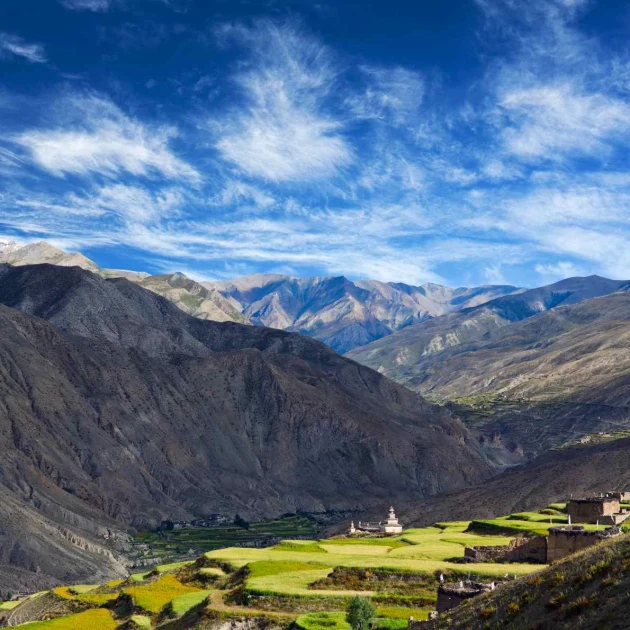
The visual journey of the Manaslu Circuit evolves dramatically each day. You begin in the humid, green gorge of the Budi Gandaki River. Here, waterfalls thunder down sheer cliff faces, and suspension bridges swing high above the turquoise waters. As you ascend, the landscape transforms into a high-altitude desert.
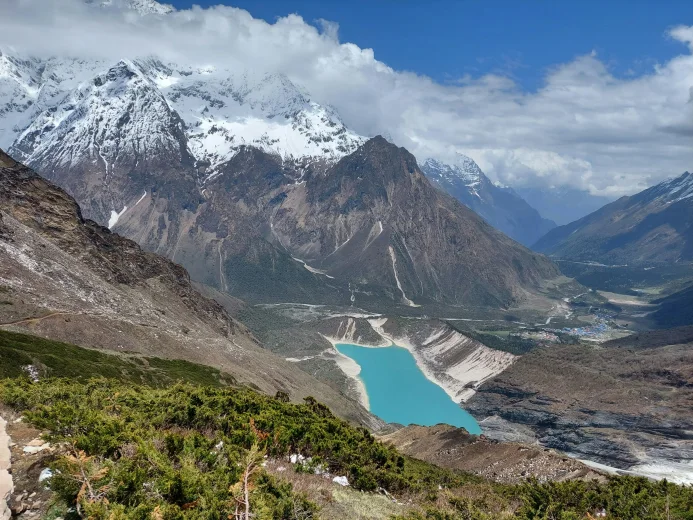
Adding a serene counterpoint to the rugged rock and ice are the region’s stunning glacial lakes. In Samagaun, a short acclimatization hike reveals Birendra Tal, an emerald gem resting at the foot of the massive Manaslu Glacier. Its calm, turquoise surface captures the reflection of the snow-capped giants above, creating a perfect symmetrical visual.
The spectacle continues even after the difficult crossing of the Larkya La Pass (5,106 meters). As you descend toward the Bhimtang valley, you are greeted by Ponkar Lake. Nestled amidst the glacial moraine, this pristine body of water offers a final, tranquil visual reward before the trail dips back into the tree line.
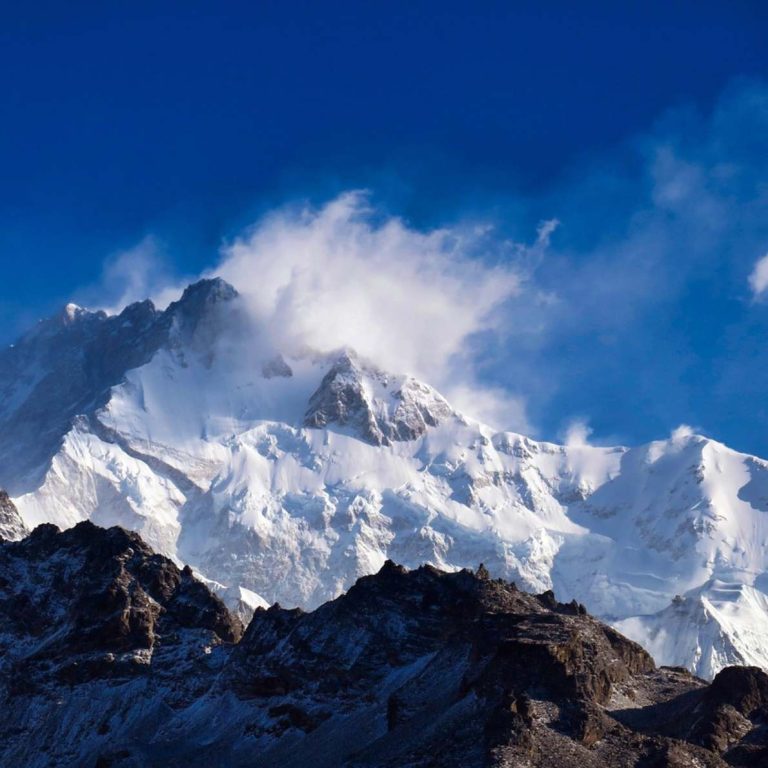
Standing at Larkya La Pass vantage point, you face a panorama that includes Himlung Himal, Cheo Himal, and the massive, shark-fin summit of Manaslu itself. The light at sunrise hits the Larkya Glacier, turning the ice into a canvas of gold and violet. This stark contrast, between the lush green lowlands and the stark white alpine pass, creates a visual rhythm that keeps photographers engaged for weeks.
Cultural Depth: A Living Tibetan Heritage
The village of Samagaun functions as a living museum of Tibetan culture rather than a mere tourist stop. Inhabitants of the Nubri Valley practice a form of Buddhism that has remained largely untouched by modern geopolitical shifts.
As you walk through the village, you pass extensive Mani walls, stone structures intricately carved with prayers, that guide travelers toward the ancient Pungyen Gompa. This monastery, situated on a ridge below Manaslu’s glaciers, offers a spiritual atmosphere where monks still perform daily rituals for the mountain gods. The stone architecture here resists modernization, utilizing flat roofs and enclosed courtyards designed to withstand the harsh Himalayan wind. This cultural immersion allows trekkers to witness a lifestyle defined by faith, agriculture, and high-altitude survival.
Biodiversity: A Sanctuary for Rare Wildlife
The Manaslu Conservation Area (MCA) safeguards a vertical ecosystem that rises from subtropical jungles to the arctic snow line. This protected zone provides a critical habitat for endangered Himalayan fauna. Sharp-eyed trekkers frequently spot the Himalayan Tahr and Blue Sheep (Bharal) navigating the steep cliff faces near Samdo. These ungulates serve as the primary prey for the elusive Snow Leopard, which roams the high ridges above 4,000 meters.
Lower in the valley, dense forests of Himalayan Larch and Rhododendron shelter the shy Red Panda and the Himalayan Monal, Nepal’s national bird. This biological diversity ensures that every day on the trail presents a new opportunity for wildlife observation, turning the trek into a mobile safari through the Himalayas.
Isolation: The Sound of Silence
Restricted area regulations strictly limit the number of trekkers who enter the Manaslu Circuit each season. This permit system preserves a sense of solitude that has vanished from the commercialized trails of Everest and Annapurna. Instead of queuing for photos or competing for teahouse beds, you often walk for hours in total silence, accompanied only by the sound of the Budi Gandaki River and the wind. The trek is also challenging but achievable for beginners.
The trail traffic consists primarily of local mule trains transporting goods between Nepal and Tibet, rather than large tour groups. This isolation allows you to connect deeply with the landscape, offering a meditative hiking experience where the vastness of the Himalayas feels personal and undisturbed.
Langtang Valley Trek: The Valley of Glaciers
Ideally Suited For: Trekkers seeking immediate access to high-altitude glaciers, distinct Tamang culture, and world-class views without the stress of domestic mountain flights.
The Langtang Valley Trek lies directly north of Kathmandu, nestled within the Langtang National Park. British mountaineer Bill Tilman famously described this region as “one of the most beautiful valleys in the world.” This route functions as a resilient testament to nature and community, offering a journey that feels remote yet remains accessible.
Why Is Langtang Trek Beautiful?
The visual narrative of the Langtang Valley is defined by its dramatic vertical relief. You begin your journey in the sub-tropical warmth of Syabrubesi, where the Langtang Khola river roars through dense forests. As you climb, the narrow river gorge widens into a classic U-shaped glacial valley. This geological formation allows for expansive, open views that are rare in the steeper gorges of the Annapurna region.
The visual climax awaits at Kyanjin Gompa (3,870 meters). This village sits in the lap of the mountains, surrounded by a 360-degree amphitheater of ice. A hike to the summit of Tserko Ri (4,984 meters) or Kyanjin Ri (4,773 meters) reveals a stunning world of ice. You stand face-to-face with the massive Langtang Lirung (7,234 meters) to the west. To the east, the jagged peaks of Dorje Lakpa and Shisha Pangma (in Tibet) dominate the skyline.
The Langtang valley floor itself is a visual treat, braided with glacial streams and dotted with yaks grazing on high alpine pastures. This contrast between the gentle, grassy valley floor and the towering, unforgiving walls of ice creates a visual grandeur that captivates photographers and nature lovers alike.
Cultural Depth: The Tamang Heritage
The valley serves as the cultural heartland of the Tamang & Sherpa people, an ethnic group with deep ancestral and linguistic roots in Tibet. Walking through villages like Langtang Village and Mundu, you witness a culture that has survived both harsh winters and the devastating 2015 earthquake.
Religious devotion is woven into the landscape. The destination, Kyanjin Gompa, is home to a centuries-old monastery and a traditional yak cheese factory. Here, you can watch monks perform morning rituals against a backdrop of snow peaks or observe locals processing yak milk into cheese using traditional methods. This blend of spiritual practice and daily livelihood offers an authentic window into high-altitude Himalayan life.
Biodiversity: A Red Panda Habitat
Langtang National Park was Nepal’s first Himalayan national park, established to protect a unique ecological zone. The lower trail serves as a dense, green corridor of oak, maple, and bamboo forests. This specific vegetation provides the critical habitat for the endangered Red Panda. While elusive, these “fire foxes” are frequently spotted by quiet groups in the bamboo groves near Lama Hotel and Ghoda Tabela.
As you ascend past the tree line, the flora shifts to hardy alpine shrubs and wildflowers. In spring, the lower valley explodes with color as Rhododendron forests bloom in shades of scarlet, pink, and white. The park is also home to the Himalayan Black Bear, Musk Deer, and troops of Langur monkeys that swing through the canopy. Birdwatchers can look for the Impeyan Pheasant (Danphe), Nepal’s national bird, flashing its iridescent feathers among the high-altitude scrub.
Accessibility: Views Without the Flight
Unlike the remote trails of Dolpo or the flight-dependent Everest region, Langtang offers a unique advantage: accessibility. A drive from Kathmandu transports you directly to the trailhead. This eliminates the risk of flight cancellations due to weather, a common stressor in other regions.
Despite its proximity to the capital, the valley retains a sense of wilderness. The trail dead-ends at the foot of the glaciers near the Tibetan border, meaning there is no through-traffic to other districts. This geographical cul-de-sac ensures that the valley remains quiet, preserving a peaceful atmosphere where the mountains feel exclusively yours.
Annapurna Circuit with Nar Phu Valley: The Ultimate Contrast
Ideally Suited For: Adventurers who want to combine the raw, medieval silence of a restricted area with the classic high-altitude thrill of the world’s most famous trekking circuit.
The Annapurna Circuit with Nar Phu Valley trek merges two distinct trails into a single itinerary. This route creates a journey of extreme contrasts, moving from the isolated, time-locked villages of Nar and Phu to the vibrant, bakery-lined streets of Manang. It challenges trekkers with two massive high passes: Kang La Pass and Thorong La Pass.
Why Is Annapurna Circuit Trek Beautiful?
The visual narrative of Nar Phu is defined by its rugged geology. You leave the lush green trails of the main Annapurna circuit at Koto and enter a narrow, towering gorge. The landscape transforms into steep canyon walls painted in natural mineral hues of orange, purple, and slate grey. These wind-eroded cliffs tower above you, creating a dramatic, claustrophobic beauty that feels distinct from the open valleys of the south.
The visual reward peaks at the Kang La Pass (5,320 meters). This pass provides a unique northern perspective of the Annapurna Massif that few trekkers ever see. As you crest the ridge, you look down upon the massive white walls of Annapurna II (7,937 meters), Gangapurna, and Tilicho Peak. Seeing these giants from their “backside” offers a sense of vertical scale that the standard circuit misses completely. The contrast is stark: you stand on dry, brown Tibetan scree while looking across at a wall of hanging glaciers and pristine white snow.
The beauty continues as you rejoin the main circuit and cross the Thorong La Pass (5,416 meters). This pass, one of the widest in the world, offers a panoramic view that stretches from the Annapurna range deep into the arid, desert-like kingdom of Mustang and the Kali Gandaki valley below.
Cultural Depth: A Journey Through Time
Entering the Nar Phu valley feels like stepping back into a medieval era. The village of Phu Gaon, perched like a fortress on a hill, features flat-roofed stone houses stacked atop one another to conserve heat. Inhabitants here are Bhotias, people of Tibetan origin who practice a distinct form of Buddhism. You can visit the ancient Tashi Lhakhang Gompa, one of the oldest monasteries in the Himalayas, where monks still use centuries-old scriptures. The culture here is defined by seasonal migration and yak herding, untouched by the commercialization found just a few valleys away.
Crossing from Nar Phu back into the Annapurna Circuit at Manang feels like time travel. You move from a subsistence-farming lifestyle where electricity is scarce to a bustling hub of tea houses offering apple pie, cinema halls, and hot showers. This cultural shock: from the silent, prayer-flag-adorned barley fields of Nar to the lively commerce of Manang, highlights the incredible diversity of Nepal’s mountain communities.
Biodiversity: The Domain of the Snow Leopard
The restricted nature of the Nar Phu valley makes it a thriving sanctuary for wildlife. Because the valley sees fewer than 1,000 tourists a year, the animals are less elusive. The steep, rocky cliffs near Phu are the prime habitat for large herds of Blue Sheep (Bharal). These agile climbers are often seen grazing on precipitous ridges, camouflaged against the grey rock.
This abundance of prey supports a healthy population of Snow Leopards. While spotting this “ghost of the mountains” is rare, trekkers in Nar Phu have a higher probability of seeing fresh pugmarks or scat than in almost any other region. As you descend back towards Pisang and Manang, the vegetation shifts to pine and juniper forests, home to Musk Deer and the Himalayan Griffon, which can be seen circling the thermals above the valley floor.
Isolation vs. Accessibility: The Best of Both Worlds
This itinerary solves the “crowd problem” of the classic Annapurna Circuit. While the main circuit has seen road construction and increased traffic, Nar Phu remains a Restricted Area requiring special permits and a guide. This regulation preserves the silence. You can walk for days in the narrow canyons of Nar Phu without seeing another trekking group. Yet, the trek ends with the classic comforts and camaraderie of the Annapurna Circuit, giving you the perfect balance of rugged isolation and social adventure.
Everest Base Camp Trek: The Roof of the World
Ideally Suited For: Trekkers who dream of standing at the foot of the highest point on Earth, experiencing legendary Sherpa hospitality, and walking a path defined by mountaineering history.
The Everest Base Camp (EBC) Trek is more than a trail; it is a pilgrimage. Located within the Sagarmatha National Park, a UNESCO World Heritage Site, this route brings you closer to the stratosphere than any other commercial trek. It offers a daily visual progression that moves from lush river valleys to the stark, frozen silence of the high Himalayas.
Why Is Everest Base Camp Trek Beautiful?
The visual signature of the Khumbu region is its sheer vertical scale. As you enter the Imja Khola valley, you do not just look at mountains; you are engulfed by them. The skyline is dominated by Ama Dablam (6,812 meters) and Thamserku (6,608 meters). Ama Dablam, in particular, is often cited by mountaineers as the most beautiful mountain in the Himalayas due to its distinct, jewel-like shape and hanging glaciers.
The visual climax of this journey is not Base Camp itself, but the summit of Kala Patthar (5,545 meters). This black rocky ridge offers the definitive view of the Everest Massif. At sunset, the light hits the summit of Mount Everest (8,848 meters), turning the black rock into a burning gold. You see the sheer Nuptse wall stretching out like a fortress, blocking the wind, while the deep black pyramid of Everest looms directly ahead. Below you, the Khumbu Icefall looks like a frozen, chaotic river of white shards, shifting inches every day. This view provides a sense of planetary scale that is impossible to replicate elsewhere.
Sherpa Culture and Monasteries: A Spiritual Ascent
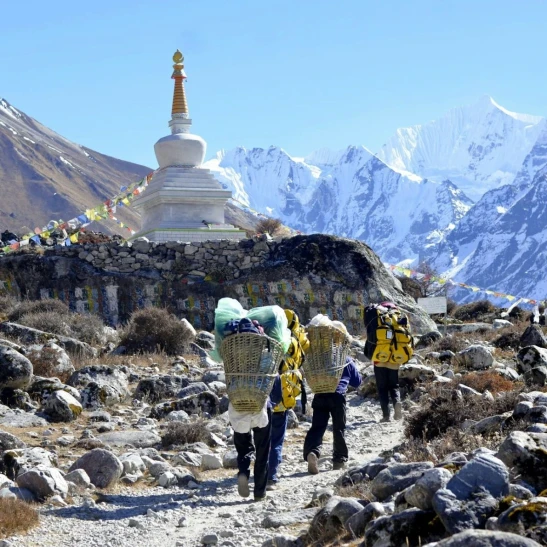
The beauty of the EBC trek extends deeply into the human element. The trail weaves through the heartland of the Sherpa people, renowned for their climbing prowess and Buddhist devotion. The town of Namche Bazaar (3,440 meters) sits in a natural horseshoe amphitheater, facing the Kongde Ri range. It serves as the commercial and social capital of the Khumbu, where yak trains laden with supplies mix with climbers from around the globe.
Higher up, the spiritual center of the region awaits at Tengboche Monastery (3,867 meters). This gompa sits on a ridge with one of the most serene views on the planet. Visitors can witness monks chanting morning prayers while Everest and Lhotse smoke in the background. The interior of the monastery is painted with intricate murals depicting Buddhist lore, creating a vivid contrast with the white world outside. This blend of spiritual devotion and natural grandeur defines the EBC experience, reminding trekkers that these mountains are considered the abode of gods.
Biodiversity: Life Above the Tree Line
Despite the high altitude, Sagarmatha National Park protects a fragile and unique ecosystem. The lower trail from Lukla to Namche passes through dense forests of Blue Pine, Fir, and Birch. In spring, these slopes come alive with the bloom of Rhododendrons and Magnolias, adding splashes of red and pink to the green valley walls.
As you ascend, the forest gives way to alpine scrub and juniper. This is the realm of the Himalayan Tahr and the Musk Deer. Trekkers often spot Tahr balancing precariously on the cliffs above Kyangjuma, their thick coats flowing in the wind. The Himalayan Monal, with its iridescent plumage, often scampers across the trail. While the Snow Leopard is present in the park, it remains a ghost of the high ridges, rarely seen but always felt.
The Infrastructure: Comfort in the Extremes
The Everest region offers a unique “teahouse trekking” infrastructure. You end each day in lodges that provide hot meals and warm dining halls heated by yak-dung stoves. This accessibility allows trekkers to focus entirely on the physical challenge and the visual reward, without the logistical burden of camping. It makes the “Roof of the World” accessible to anyone with the will to walk.
North Annapurna Base Camp Trek: The Pioneer’s Trail
Ideally Suited For: Trekkers seeking absolute solitude, immense vertical relief, and a direct connection to the history of Himalayan mountaineering.
The North Annapurna Base Camp Trek retraces the legendary footsteps of Maurice Herzog and the French expedition team of 1950. This route led to the first successful ascent of an 8,000-meter peak in human history. Unlike the popular South Annapurna Base Camp (Sanctuary), which focuses on the amphitheater experience, this trail brings you to the base of the massive Annapurna I North Face. It offers a raw, expedition-style journey that remains one of Nepal’s best-kept secrets.
Why Is North ABC Trek Beautiful?
The visual impact of this trek centers on sheer vertical scale. You begin the journey in the deep gorge of the Kali Gandaki. As you climb away from the village of Lete, the trail wanders through the Miristi Khola valley. This hidden valley remained closed to foreigners for decades, preserving a landscape that feels like a “lost world” of hanging glaciers and untouched alpine meadows.
The visual climax awaits at North Base Camp (4,190 meters). Here, you stand directly beneath a vertical wall of rock and ice that rises over 4,000 meters straight up from the glacier to the summit. This “Great Barrier” is one of the largest vertical walls in the world. The sight of Annapurna I from this angle is terrifyingly beautiful—a stark, imposing contrast to the picturesque, enclosed sanctuary on the south side. The morning light hitting this wall creates a blinding white façade that dominates the entire northern horizon.
Cultural and Historical Depth: The 1950 Legend
This trek offers a profound connection to mountaineering history. While other treks feature ancient monasteries, the North Face trail features the legacy of Maurice Herzog. In 1950, Herzog and his team searched these very ridges for a route to the summit, eventually succeeding but paying a heavy price with frostbite and near-death experiences. Walking this path allows you to experience the same wild, untamed terrain that challenged those early pioneers.
The trail avoids modern settlements for long stretches. Unlike the tea-house-laden trails of the Annapurna Circuit, the North Base Camp route involves staying in simple community lodges or camping. This lack of infrastructure ensures that the culture you encounter in the lower villages of Thulo Bugin and Narchyang remains authentic. Locals here are primarily Magar people, who live a life closely tied to agriculture and the rhythm of the seasons, far removed from the commercial tourism industry.
Biodiversity: From Jungle to Glacier
The route provides a rapid ecological transition. You start in subtropical jungles filled with bamboo and banana trees. As you ascend the steep ridges of Thulo Bugin, you enter dense cloud forests of Rhododendron and Oak. These forests are often shrouded in mist, creating an atmospheric, moody beauty that photographers love.
Because the area sees minimal human traffic, wildlife thrives. The ridge lines are prime territory for the Himalayan Monal (Danphe), which flashes its iridescent blue and green feathers as it takes flight. Higher up near the glacier, you may spot herds of Blue Sheep navigating the moraines. The transition from the green, bird-filled forests to the sterile, majestic world of the North Annapurna Glacier happens over just a few days, keeping the visual experience dynamic and unpredictable.
Solitude: A Wilderness Experience
The North Annapurna Base Camp Trek defines solitude. While thousands of trekkers flock to the south side, the north side sees only a handful of groups each season. You can hike for days across the high ridges without seeing another soul. This isolation allows for a pure connection with nature. You hear only the wind in the pine trees and the occasional roar of an avalanche falling from the Nilgiri peaks. For those who find beauty in wildness rather than comfort, this trek offers a rare, undisturbed silence that is becoming increasingly hard to find in the Himalayas.
Trekking Comparison Overview
| Trek Name | Max Elevation | Visual Highlight | Best Season |
| Manaslu Circuit | 5,106m (Larkya La) | Mt. Manaslu & Larkya Glacier | Sept–Nov / Mar–May |
| Langtang Valley | 4,984m (Tserko Ri) | 360° Glacial Panorama | Mar–May / Oct–Dec |
| Nar Phu & Annapurna | 5,416m (Thorong La) | Medieval Canyons & Kang La | Sept–Nov / Apr–May |
| Everest Base Camp | 5,545m (Kala Patthar) | Everest Sunset & Ama Dablam | Oct–Nov / Mar–May |
| North Annapurna | 4,190m (North BC) | Annapurna I North Face Wall | Oct–Nov / Apr–May |
Conclusion: Choose the Trek That Satisfies Your Soul
The “most beautiful” trek is subjective. If beauty defines itself by scale, Everest wins. If beauty means silence and history, Manaslu stands alone. If beauty requires vibrant color and accessibility, Annapurna & Langtang is the choice.
Nepal offers a trail for every type of seeker. By focusing on what resonates with your personal trekking goals, whether it be wildlife, culture, or isolation, you ensure a journey that satisfies your soul, not just societal checklists.