
Langtang Trek Itinerary, Best Price, Map – 8 Days
Inside this guide: Find the Langtang Trek itinerary, per-person costs, a trek map, details on who the trek is right for, and essential pre-trek information.
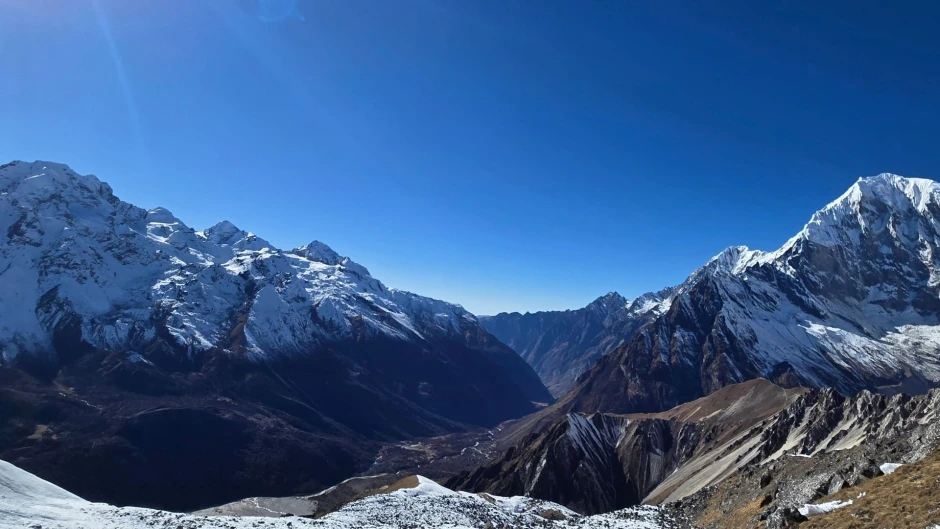
Langtang Valley Trek follows routes inside Langtang National Park in Nepal. The trek is close to Kathmandu, as the starting point of the trek, Syabrubesi, is only about 113 kilometers by road from Kathmandu. Tt also takes fewer days to complete the trek compared to other similar classic treks, such as Everest and Annapurna trails.
Langtang Valley immerses trekkers in its spectacular mountain views, rich biodiversity, and colorful villages. The valley includes settlements such as Syabrubesi, Kyanjin Gompa, Lama Hotel, Langtang Village, and Ghoda Tabela. This region is also called “Valley of Glaciers”, as it contains many glaciers including Lirung Glacier, Yala Glacier, Kimshung Glacier, and the Shalbachum glacier. Vegetation along the route includes bamboo and rhododendron forests. Langtang valley also connects to Gosaikunda Lake, a separate short trekking destination in the same region.
Join our short, beautiful, and accessible Langtang Trek for spectacular, close-up Himalayan views of Langtang Lirung (7,234 m), Langshisha Ri (6,427 m), Ganchenpo (6,387 m), Dorje Lakpa (6,966 m), and Yala Peak (5,500 m). You will walk through verdant green forests, cross the rustling, turquoise Langtang River, meet friendly trekkers, and summit either Tserko Ri (4,985 m/16,355 feet) or Kyanjin Ri (4,773 m/15,659 feet), choosing the peak that best matches your fitness level.
Langtang Valley Trek Cost
USD 340 / person
| No. of people | Price per person |
|---|---|
| 1 Pax | USD 570 |
| 2 Pax | USD 375 |
| 3 to 5 Pax | USD 340 |
| 6 to 9 Pax | USD 290 |
| 9 to 12 Pax | USD 270 |
Speak to An Expert
Cost Includes and Excludes
Cost Includes
- Local tourist bus transfer Kathmandu to Syabrubesi
- Local tourist bus transfer Syabrubesi to Kathmandu
- Accommodation in Twin-sharing Basis in Mountain Lodges
- Local English-Speaking Guide for 8 days
- Langtang National Park Permit
- Trekking Map, Sun Hat, Duffel Bag
- Trip completion certificate
- Medical supplies (first aid kit will be available)
- Special Surprise Moments (disclosed only during the trek)
- Government Taxes
Cost Excludes
- Porter service for 8 days (optional – extra USD 170 per porter). One Porter can carry 2 trekkers load (24 kg)
- Meals (breakfast, lunch, and dinner) during the trek – around USD 15 to USD 20 Per Day Per Person
- Personal Expenses and Travel insurance, including high-altitude emergency evacuation coverage
- Tips for trekking staff and driver
- Hot showers, Wi-Fi usage, and battery charging
- International Payment Bank Charges
- Any expenses not mentioned in the Includes section
Why Our Trekking Packages Exclude Meals?
Travel To Nepal does not include meals in our standard trek packages to guarantee menu choice for trekkers. This is also true for Langtang Valley Trek. Fixed packages often limit trekkers to specific, pre-set meals. Meals-not-included policy allows trekkers to order based on their daily appetite and pay teahouse owners directly. Direct payments support the local economy while reducing food waste.
Policy Benefits and Logistics
- Dietary Flexibility: Trekkers select meals based on daily appetite and physical condition. This freedom allows hikers to adjust intake as digestion fluctuates with altitude changes.
- Direct Local Support: Cash payments go immediately to the families managing the lodges. This direct transaction supports the complex logistics of transporting ingredients via mules and porters.
- Cost Transparency: Daily food expenses average USD 15 to USD 20 per person. Prices correlate directly with elevation; menu costs increase at higher stops like High Camp and Badal Danda due to transport fees.
Langtang Trek Itinerary 8 Days
Our Langtang Valley trek itinerary is designed to provide trekkers with the best accommodation each night, with no rush and plenty of time to rest. The itinerary is 8 days long and includes approximately 6 hours of trekking per day for 6 days and about 7 hours of driving per day for 2 days. The trip begins and ends in Kathmandu. The main viewpoints on this itinerary are Tserko Ri (4,985 m/16,355 ft) and Kyanjin Ri (4,773 m/15,659 ft). It includes towns and villages such as Syabrubesi, Sherpagaon, Langtang Village, Kyanjin Gompa, and Thyangshap.
Day 1: Drive from Kathmandu city to Syabrubesi town
Day 1: Drive from Kathmandu city to Syabrubesi town
Highlights
- Scenic drive along the Trishuli River
- First view of Mt. Manaslu, Ganesh Himal, Dorje Lakpa, and Langtang Lirung.
You depart Kathmandu at 8:00 AM by a local tourist bus and you will be picked up by our private vehicle inside Kathmandu. The bus drive follows the Pasang Lhamu highway to Syabrubesi, a small Tamang town and the starting point of Langtang trek. During the drive, the bus usually makes multiple short stops for toilets, tea, and passenger needs. Before reaching Dhunche, your trekking permit will be checked by the authorities. You arrive in Syabrubesi at around 2:00 PM and check in at your Lodge for the night. The rest day is free and trekkers can visit nearby viewpoint, walk around the town, or rest and prepare for the upcoming trek.
Day 2: Trek from Syabrubesi to Sherpagaon (Village)
Day 2: Trek from Syabrubesi to Sherpagaon (Village)
Highlights
- Panoramic views of Ganesh Himal and Paldor Mountain Range from Khanjim & Surka.
- Avoid the busy Lama Hotel trail for a quieter, scenic ridge walk.
- Spotting Himalayan wildlife like the common langur and musk deer in the rhododendron forests.
Syabrubesi, Bhote Koshi River, Khanjim Village, Surka Village, Sherpagaon (Village), Ganesh Himal, the Paldor range, and the Langtang Valley define the first trek day.
After breakfast in Syabrubesi, the trek starts at around 8:00 am. Shortly after starting, the trail crosses a suspension bridge over the Bhote Koshi River and the route passes through rhododendron forest, pine trees, and local wild plants.
After 3.5 hours of uphill walking through forested terrain, the trail reaches Khanjim. Surka village lies a further 15 minutes ahead and serves as a fixed lunch stop. Surka is a small settlement with 4 teahouses and a viewpoint overlooking Langtang Valley. From this point, the trail offers clear views of the Ganesh Himal range and Paldor Peak.
After lunch, the trek continues from Surka to Sherpagaon. The walk takes approximately 2.5 hours and follows a quieter route that avoids the main Lama Hotel trail. Arrival at Sherpagaon is usually around 4:00 pm. The afternoon is available for village walks and dinner is served in the evening. Normally, trekkers sleep around 10:00 pm.
Day 3: Trek from Sherpagaon to Langtang Village
Day 3: Trek from Sherpagaon to Langtang Village
Highlights
- Walk along the serene, turquoise Langtang river.
- Walk along forested trails and through scenic meadows.
- First magical, close-up view of Langtang Lirung.
Rimche, Lama Hotel, Riverside Lodge, Langtang Lirung, Langtang Khola, Ghodatabela, Thyangsyap, Gompa Danda, and Langtang Village are the main points on the second trek day.
The trek starts at about 08:00 AM, after breakfast. The walk to Rimche takes about 1 hour 30 minutes. The walk from Rimche to Lama Hotel takes about 30 minutes. Lunch is at Riverside Lodge, about 1 hour from Lama Hotel. Riverside Lodge sits near the Langtang Khola and the trail passes pine and rhododendron forest.
The walk from Riverside Lodge to Ghodatabela takes about 1 hour 15 minutes. Officials check permits in Ghodatabela on the Langtang route. The trail above Ghodatabela has more open sections and fewer tall trees. Wildlife sightings are not guaranteed, but Langtang National Park is known for species such as red panda, snow leopard, langur, and Himalayan tahr.
The walk from Ghodatabela to Thyangsyap takes about 1 hour. The walk from Thyangsyap to Gompa Danda takes about 1 hour on a slightly uphill trail with wooden bridges. The route then continues for about 2 hours along the glacier to Langtang Village, passing the former settlement area affected by the 2015 earthquake. Arrival in Langtang Village is around 5:00 PM. Teahouses in Langtang Village can serve yak milk or Tibetan tea. Dinner is around 7:00 PM, followed by a short briefing. Sleep is around 10:00 PM.
Day 4: Short Trek from Langtang Village to Kyanjin Gompa (Village)
Day 4: Short Trek from Langtang Village to Kyanjin Gompa (Village)
Highlights
- Visit the Kyanjin Gompa monastery.
- View the massive Lirung Glacier up close.
- Visit the historic Yak Cheese Factory established in 1955.
Kyanjin Gompa, Mundu, Sindum, and the Langtang mountain range are the main places on this day.
Breakfast is at about 08:00. The trek starts at about 09:00. After a few minutes on the trail, the route gives mountain views that can include Gangchenpo, Ganja La, Naya Kanga, Scout Peak, and Langtang Ri. After about 30 minutes, the trail reaches Mundu across pasture land. Mundu has about 8 basic teahouses where tea and coffee are available. Mundu is also used as a viewpoint for the Langtang range and the valley.
From Mundu, the trek continues toward Kyanjin Gompa. After about 30 minutes, the route reaches Sindum. The trail from Sindum is wider and mostly flat or slightly uphill. After about 45 minutes, the route passes a newly built monastery that you can visit and, in a few minutes, you reach Kyanjin Gompa. Lunch is planned at about 14:00 in Kyanjin Gompa, and the night stay is in Kyanjin Gompa. The rest of the day is free, about 4 hours of time. You can use the free time to hike to the Kyanjin Ri summit, visit the hydropower lake, or visit the old cheese factory.
Day 5: Hike from Kyanjin Gompa to Tserko Ri or Kyanjin Ri (Viewpoint). Return to Kyanjin Gompa
Day 5: Hike from Kyanjin Gompa to Tserko Ri or Kyanjin Ri (Viewpoint). Return to Kyanjin Gompa
Highlights
- Reaching the highest point of the trek at 4,985 meters or 4,773 meters.
- 360-degree Views of Langtang Lirung, Dorje Lakpa, Ganchenpo, Yala Peak and nearby glaciers.
- Spotting snow partridges and blue sheep on the rocky slopes.
Kyanjin Gompa and Tserko Ri define this hike day in the Langtang region. Breakfast is usually at 06:30 to support an early start for the Tserko Ri hike and the Kyanjin Ri hike.
Tserko Ri Hike
The Tserko Ri round trip hike takes 9 hours total, depending on pace and trail conditions. The ascent takes around 6 hours. The route starts with a short, gentler section from Kyanjin Gompa, then continues on a sustained uphill trail.
The Tserko Ri route has no access to drinking water on the trail. Carry water and food for the hike. The hike reaches a high altitude of about 4,985 m, so altitude illness risk increases on summit day. Use a slow pace and take breaks as needed. Wear warm layers. Snow and ice can appear on the trail in colder seasons.
From the Tserko Ri summit, trekkers see a panoramic view of the Langtang mountain range and nearby peaks, including Langtang Lirung, Ganchenpo, Naya Kanga, Langtang Lirung, Yala Peak, Dorje Lakpa. Return to Kyanjin Gompa after the hike and the descent takes around 3 hours. Dinner is usually at about 7:00 PM, and sleep is usually at about 10:00 PM.
Kyanjin Ri Hike
The hike starts from Kyanjin Gompa and climbs to two viewpoints on Kyanjin Ri. Lower Kyanjin Ri is at around 4,360 m. Upper Kyanjin Ri is at about 4,773 m. Some trekkers stop at the lower viewpoint and return from there.
Kyanjin Ri is a steep trail and from Kyanjin Ri upper view point you can see Langtang Lirung, Yala Peak, Dorje Lakpa, Naya Kanga (Ganjala Peak), Gangchempo, and Tsergo Ri, along with glaciers (Yubra Himal Glacier and Yala Glacier) in the Langtang area.
Day 6: Descend from Kyanjin Gompa to Thangshyap Village
Day 6: Descend from Kyanjin Gompa to Thangshyap Village
Highlights
- Passing the Mani walls and chortens of Mundu and Langtang Village.
- Afternoon views of the valley looking west toward the sunset.
Kyanjin Gompa, Mundu, Langtang Village, and Thangshyap (Thyangsyap) are the main places on this return day. After breakfast in Kyanjin Gompa, you start the walk back at about 08:00. You follow the same trail back to Thangshyap.
The route passes through Mundu and Langtang Village on the way to Thangshyap. The day is a moderate walk with a gradual descent on many sections. During the return, the mountain and valley views face a different direction than on the ascent.
Arrival in Thangshyap is around 1:00 PM. Thangshyap has about three teahouses. You check in at a teahouse for an overnight stay. The teahouses in Thangshyap are basic. Dinner is served at the teahouse.
Day 7: Descend from Thangshyap to Syabrubesi
Day 7: Descend from Thangshyap to Syabrubesi
Highlights
- Transitioning from alpine meadows back to lush green forests.
- Crossing suspension bridges over the roaring Langtang Khola.
- Celebrating the completion of the trek with the team in Syabrubesi.
Today trekkers need to cover the most distance compared to other days so we start early at 7:30 AM. Start at Thangshep (3,140 m) and walk to Ghodatabela (3,030 m). Vegetation shifts from alpine shrubs to taller trees. The route descends through the Langtang Valley in Nepal. It follows the Langtang Khola and leads to Lama Hotel (2,470 m) on steeper, rocky forest trails. The valley narrows and the trail stays close to the river. Surfaces can be damp and slippery in shade. Descend to Bamboo (1,970 m) through switchbacks. The trail crosses a landslide-prone section between Rimche and Bamboo. From Bamboo, cross a suspension bridge and follow the junction near Pahare/Paira. Stay on the main river route to reach Syabrubesi. After 9 hours of walk, you will reach Syabrubesi.
You did it! You have successfully conquered the beautiful Langtang Valley Trek. From the roaring river to the silence of the high peaks, you have stood face-to-face with the giants: Langtang Lirung, Ganchenpo, and Naya Kanga. While the physical journey ends here, the experience remains. You are leaving with more than just photos; you are taking home a piece of the Himalayas.
Day 8: Drive from Syabrubesi to Kathmandu. Trip Ends
Day 8: Drive from Syabrubesi to Kathmandu. Trip Ends
Highlights
- Hike downhill along the traditional villages of Nepal.
Today after our breakfast, we will drive from Syabrubesi to Kathmandu. The road follows the Pasang Lhamu Highway for most of the trip. It is the same vehicle road as used on the first day of the drive. We will reach Kathmandu by 1:00 PM.
We will say goodbye, once we reach Kathmandu. We hope to see you again. If you would like to extend this tour with another trek, do short cultural tour of Kathmandu, or spend some leisure time on a Chitwan Jungle Safari, we would be more than happy to arrange it for you.
Langtang Valley Trek Map
We have built a custom Langtang Trek map to help trekkers navigate the Langtang Valley. This trek has many route options, but for this itinerary, we have chosen a specific route, as shown below, that has well-established accommodations, is relatively easy to walk and offers better mountain and landscape views.
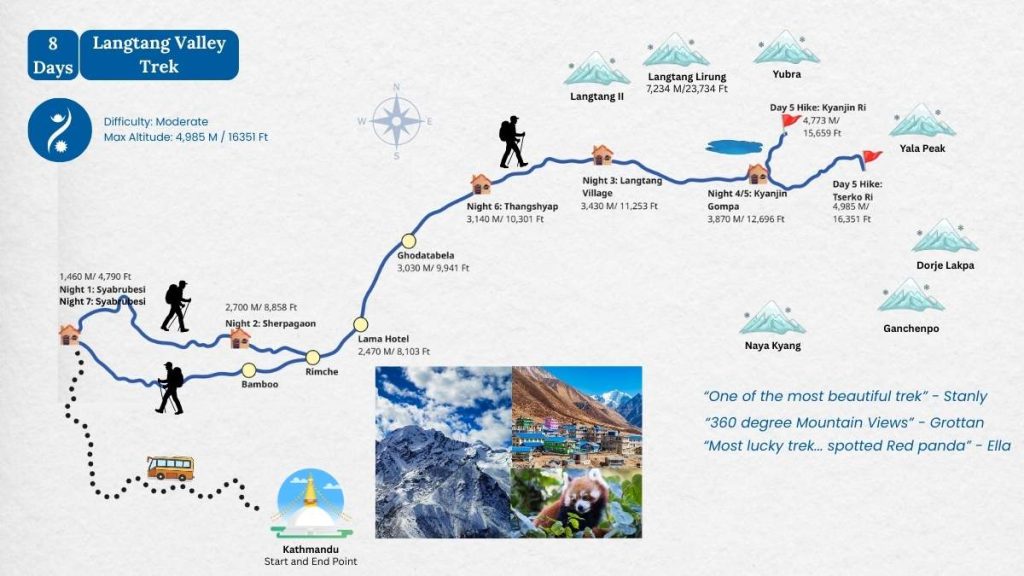
This Langtang Valley Trek map shows an 8-day route in Langtang National Park. The map matches the trekking schedule. It labels the altitude for each itinerary place: Syabrubesi, Sherpagaon, Lama Hotel, Ghodatabela, Thangshyap, Langtang Village, Kyanjin Gompa, Kyanjin Ri, and Tserko Ri. The map also marks nearby peaks around the Langtang Valley: Langtang Lirung, Langtang II, Yubra, Yala Peak, Dorje Lakpa, Ganchenpo, and Naya Kanga.
Who is Langtang Trek Suitable For?
The Langtang Valley Trek is suitable for people who want to complete a short, affordable, beautiful, and high-altitude trek around Kathmandu. The trek takes around 8 days to complete, which is shorter than the Everest Base Camp Trek that commonly takes about 14 days. The route does not require a domestic flight, so the trip costs less than treks requiring air travel. The Langtang route begins with a road trip from Kathmandu; you reach the starting point of the trek within a seven-hour drive. The trail passes through forests inside Langtang National Park, offering mountain viewpoints and wide-angle ridge and valley views. Wildlife sightings are possible, and some trekkers aim to spot rare species such as the Red Panda.
Langtang trek is suitable for following trekkers:
- Time-Conscious Trekkers:
- The Langtang Trek often takes about 8 days to complete.
- This duration is shorter than 14-day Everest Base Camp Trek or 13-day Annapurna Circuit Trek.
- This fits travelers with limited holiday leave who still want a high-altitude Himalayan trek.
- Budget-Conscious Trekkers:
- The Langtang route does not require a flight to airports such as Lukla.
- Trekkers use ground transportation from Kathmandu to reach the starting point.
- Removing flight costs reduces the total trip cost.
- Additionally, shorter trek means lower overall cost of the trip.
- Beginner Trekkers:
- The trail is generally moderate and has fewer technical sections than routes that cross high passes.
- The maximum altitude is lower than treks that involve 5,000-meter-plus passes in the Annapurna or Everest regions.
- This suits first-time high-altitude hikers who want to test endurance on a less complex route.
- Comfort Trekkers:
- Langtang Valley has well-established teahouses along the route.
- The teahouse infrastructure is similar to Everest region and better than Annapurna Circuit.
- They provide reliable lodging and meals, ensuring a consistent level of mountain hospitality throughout the 8-day circuit.
- Social Trekkers:
- Langtang is a popular trekking route in Nepal.
- Trekkers often meet other likeminded trekkers on the trail and in teahouses.
- Evenings in teahouses create regular chances for conversation and cultural exchange.
- Trekkers Who Want To Trek Near Kathmandu:
- Langtang is one of the closest high-mountain trekking valleys to Kathmandu.
- The starting point is reachable by about a 7-hour drive from the capital.
- Short transit time can simplify logistics and allow faster return to Kathmandu if needed.
- Nature Lovers & Wildlife Enthusiasts:
- The trail goes through temperate green forests inside Langtang National Park.
- The park is known as habitat for endangered wildlife, including the Red Panda and the Snow Leopard.
- The route crosses multiple vegetation zones, from lower-elevation forests to alpine shrubs, which can increase wildlife and biodiversity sightings.
Langtang Valley Trek delivers an 8-day Himalayan itinerary with road access from Kathmandu in about 7 hours and no domestic flight. It combines a moderate trail, established teahouses, and a busy teahouse network that supports social trekking. The route crosses Langtang National Park forests and higher terrain with broad mountain viewpoints and possible sightings of Red Panda and Snow Leopard habitat zones.
Why Choose Travel To Nepal?
Special Moments
Our itineraries include cultural secrets and unrevealed activities to make your trek extra memorable.
Local Experts
Local guides from Sherpa, Tamang, Lama, Newar, and Chhetri communities lead every trek with deep local knowledge.
Seamless Service
Dedicated staff handle all permits and logistics to ensure a frictionless travel experience.
Active Guardianship
Our “Guarding the First Living Shangri-La” policy ensures that we protect our environment and local culture.
Custom Itineraries
We design personalized programs as per your preference, including arrangements for single guests.
Transparent Pricing
We have no hidden fees or forced add-ons included in our trek cost.
Table of Contents
What Are the Main Attractions of the Trek?
The main attractions of the Langtang trek are as follows:
- 360° mountain views: Langtang Lirung, Yubra Himal, Yala Peak, Dorje Lakpa, Ganchenpo, Naya Kang, Scout Peak.
- Vegetation: Temperate verdant forests and low sub-alpine meadows. Rhododendron blooms in the spring season.
- Wildlife: High chance of spotting Red Panda. Other wildlife are also present: Snow Leopard, Himalayan Langur, Himalayan birds.
- Natural Beauty: Waterfalls appear often along the trail. The route follows the turquoise Langtang River. The trail crosses open meadows, lush green forests, and bamboo areas.
- Well established teahouses: Teahouses provide a facility level similar to the Everest region. Teahouses in Langtang provide better facilities than some other regions, such as Annapurna Base Camp Trek, Mardi Trek, and Manaslu Trek.
- Peak summit for trekkers: Tserko Ri (4985m) or Kyanjin Ri (4773m). The ascents are non-technical. The ascents require effort and can be tiring. Each peak provides a full view of the valley and surrounding mountains from one viewpoint. The viewpoint provides a very wide mountain panorama.
Overall, the Langtang trek offers 360-degree views of snow-capped mountains, green meadows, forests, villages, waterfalls, turquoise rivers, and the Langshisha valley on the same route. To get a better visual sense of the Langtang Valley, visit our Langtang Trek picture page. It features stunning photos of 360-degree mountain views, verdant hills, rugged terrain, lush forests, the turquoise Langtang River, local wildlife, and the charming villages of the Langtang region.
#Personal-Experience: The beauty of our Himalayas is not just the snowy peaks. It is the humble feeling of standing before towering mountains that are much bigger than yourself and connecting to their spirit. It is a call that pulls you back, long after you have gone home. It is the kindness and warm smile of local people. The true gift of the Himalayas is the special moments that touch your soul and change you forever.
Key Points to Know Before Trekking Langtang Valley
Langtang Trek operates inside Langtang National Park in Nepal. Trekkers should know about permits, cash, lodge facilities, national park rules, altitude sickness, weather, and insurance before the trek. This is explained in detailed below:
Trekking Permits
Trekkers must carry a valid Langtang National Park entry permit. Checkpoints at Dhunche, Syabrubesi, and Ghodatabela require this permit from all trekkers. Travel To Nepal secures these permits in Kathmandu for its clients before the trek.
Currency Requirements
Teahouses and shops on the Langtang Valley Trek accept only Nepali Rupees (NPR) for meals and other facilities. ATMs are available in Kathmandu and in Syabrubesi. There are no ATMs on the trail after Syabrubesi. However, ATMs in Syabrubesi can be unreliable and may not work on some days. Trekkers should withdraw enough Nepali Rupees in Kathmandu to cover the extra expenses not covered by agency.
Accommodation Facilities
Teahouse lodges provide basic single‑bed and twin‑bed rooms. Most lodges offer shared bathroom facilities. During peak seasons (March to May and Mid-October to Mid-December), room demand is high. In peak season, rooms with attached bathrooms may already be fully booked.
Meal Availability
Teahouses offer a range of meals such as pizza, pasta, momos, Dal Bhat (rice and lentils), noodle soup, and boiled eggs. Meat items may not always be fresh because of long transport and lack of cold storage. Unfresh meat can increase the risk of digestion problems. Consult with the guide before ordering the food. Kitchens cook each meal to order. Trekkers should expect dinner wait times of about 45 to 60 minutes.
Weather Conditions
Trekkers should check the local weather forecast for the Langtang region before starting the trek. The Department of Hydrology and Meteorology of Nepal publishes weather forecasts. Trekkers should review the forecast for at least the next 7 to 10 days before departure. Our team and the guide handles this and inform trekkers if there is sudden change in weather.
Water Availability
Trekkers should carry water purification tablets or a water filtration system. Teahouses can provide boiled water, usually for an extra cost. Even with boiled water, trekkers should still use purification methods for added safety.
Route Conditions
The Langtang Valley trail includes stone staircases, packed earth paths, and some exposed ridge sections. The final ascent to Tserko Ri and Kyanjin Ri is steep and requires careful footing. Snow and ice can make the path slippery and increase the risk of injuries. Trekkers should stay on the main marked trail, especially when there is snow. Walking off the main trail in snow can lead to hidden holes or streams and can cause accidents.
Internet Connectivity
Namaste (NTC) cellular network provides mobile coverage up to Kyanjin Gompa. Wi‑Fi is available in the dining halls of many teahouses up to Kyanjin Gompa, which is the last main village of the Langtang Valley Trek.
Electricity
Teahouses in Langtang Valley use electricity supplied by nearby hydropower plants. Langtang Village and Kyanjin Gompa also depend on this hydropower supply. In winter months, water sources can freeze, and electricity supply can become unstable or cut off. Trekkers should carry at least one power bank of about 20,000 mAh capacity, or more if needed. This backup power should cover charging needs for at least 2 to 3 days during possible power cuts.
Gear and Clothing
Trekkers should check the weather forecast and pack clothing according to the season. Cloudy, rainy, and winter periods require warm layers, including thermal base layers, insulating mid‑layers, and waterproof outer layers. Sunny and mild days require fewer and lighter layers, but a windproof outer layer is still useful. Travel To Nepal provides a detailed packing list based on the trek plan and season. Crampons are required for Tserko Ri and Kyanjin Ri, especially after snowfall. Snow and ice make the path to these viewpoints slippery and hard to walk on without crampons.
Altitude Sickness
Tserko Ri is about 4,985 meters above sea level and Kyanjin Ri is about 4,773 meters above sea level. These elevations create a real risk of Acute Mountain Sickness (AMS). Trekkers should follow planned acclimatization schedules and avoid fast ascent. If a trekker notices symptoms such as a strong and persistent headache, or chest tightness or pain, the trekker should descend to a lower altitude as soon as possible. In case of serious symptoms, trekkers should seek medical support as early as possible. Our guide takes necessary measure if you have symptoms of altitude sickness, as per severity.
National Park Rules
Langtang Valley Trek lies fully inside Langtang National Park. It is not allowed to take plants, plant parts, animals, or animal parts out of the national park without official permission. Park authorities may conduct detailed bag checks at checkpoints or lodges, while returning. If trekkers are found with plant seeds, branches, or other natural materials from the park without permission, they can face legal problems or fines.
Insurance Coverage
Travel insurance for Langtang Valley Trek should clearly cover trekking and emergency rescue at high altitude. Policies should include emergency helicopter evacuation up to at least 5,000 meters. Many standard medical or travel insurance policies do not include high‑altitude trekking by default. Trekkers should confirm with the insurer that the policy covers high‑altitude trekking in Nepal and helicopter evacuation.
Company Policy
Trekkers should read the payment, refund, cancellation, and trekking policies of the trekking company before confirming the booking. Trekkers should confirm that these company policies match their own requirements.
Government Updates
Government agencies and other regulatory bodies sometimes issue new rules or notices about Langtang National Park and the Langtang Valley Trek. Changes can relate to permits, fees, local rules, or safety regulations. Travel To Nepal monitors such official updates and informs its booked clients if any change affects their trek plan.
Company Communication
Trekkers should inform the trekking company about any pre‑existing medical conditions before booking. Trekkers should also share dietary restrictions, allergies, and other important personal needs in advance. Travel To Nepal also confirms in writing which services, accommodations, transfers, and facilities are included in the itinerary. Clear communication before the trek supports accurate service delivery during the Langtang Valley Trek.
Facilities Available During the Langtang Trek
The Langtang Trek provides a wider range of meal options, well-established teahouses, and road access to Syabrubesi. All the amenities available in Langtang Valley trek are listed and described below:
Typical Meals, Menu Prices, and Food Quality
Trekkers in Langtang trail can choose from over 25 meal options served at teahouses across villages such as Syabrubesi, Sherpagaon, Langtang Village, Kyanjin Gompa, and Thangshyap.
Breakfast Options
Typical breakfast items and prices on the Langtang Trek are:
- Black tea or coffee: Rs 150 (USD 1)
- Milk tea or coffee: Rs 200 (USD 1.4)
- Hot lemon: Rs 150 (USD 1)
- Boiled egg: Rs 200 (USD 1.4)
- Plain fried Tibetan bread: Rs 450 (USD 3.1)
- Bread with jam, peanut, butter, and honey: Rs 550 (USD 3.8)
- Bread with yak cheese: Rs 700 (USD 4.9)
- Oat porridge: Rs 500 (USD 3.5)
- Tsampa porridge: Rs 500 (USD 3.5)
- Hot milk with muesli: Rs 550 (USD 3.8)
- Pancake with jam, honey, peanut butter: Rs 550 (USD 3.8)
- Chocolate pancake: Rs 660 (USD 5)
These breakfast options are commonly available in teahouses from Syabrubesi up to Kyanjin Gompa.
Lunch and Dinner Options
Typical lunch and dinner items and prices on the Langtang Valley Trek are:
- Vegetable momo: Rs 550 (USD 3.8)
- Vegetable cheese momo: Rs 600 (USD 4.2)
- Egg chowmein: Rs 600 (USD 4.2)
- Cheese pasta: Rs 700 (USD 4.9)
- Egg pasta: Rs 600 (USD 4.2)
- Nepali set meal (Dal Bhat): Rs 750 (USD 5.2)
- Vegetable cheese sandwich: Rs 650 (USD 4.5)
- Local food “Tingmo”: Rs 700 (USD 4.9)
- Vegetable pizza: Rs 650 (USD 4.5)
These meals cover common choices for both lunch and dinner along the route.
Food Quality During The Trek
Travel To Nepal selects teahouses on the Langtang trail that follow hygiene practices and serve high‑calorie meals. Our Guides inspect these kitchens during reconnaissance trips to reduce food safety risks. The selected lodges use standardized menus that provide necessary carbohydrates and proteins for trekking. Trekkers should ask their guide for advice before ordering meals to choose foods that suit high‑altitude digestion.
Dietary Tips for the Langtang Valley Trek
Dietary guidelines for the Langtang Trek include avoiding meat, maintaining regular calorie intake, choosing foods that lower altitude‑related risk, and using chocolate as an energy boost.
- Avoid meat: Meat requires high digestion power, but high altitude reduces the body’s digestion power. Therefore, eating meat at altitude increases the risk of gastrointestinal problems.
- Caloric intake: Dal Bhat (rice and lentils) is the most efficient energy source on this trek. Dal Bhat offers a balance of carbohydrates and fiber for long‑lasting stamina.
- Natural remedies: Garlic soup supports blood circulation. Many trekkers use garlic soup as a natural aid to help reduce the risk of Acute Mountain Sickness (AMS).
- Meal schedule: Trekkers should eat meals at consistent times each day. Long gaps between meals can cause fast loss of energy and strong fatigue. Our guide will ensure that you are having the required meals on time.
- Supplemental energy: Trekkers should carry dark chocolate and energy bars. These snacks supply quick glucose during steep and tiring ascents.
Accommodation Standards on the Langtang Valley Trail
The Langtang Valley trail includes well‑established teahouses with many rooms in villages such as Syabrubesi, Langtang Village, and Kyanjin Gompa. The points below describe typical teahouse standards in Nepal and on the Langtang Trek.
- Langtang Trek teahouses offer single rooms or twin‑ shared rooms.
- Rooms usually have wooden beds with foam mattresses.
- Some rooms have attached bathrooms, while others use shared bathrooms. During peak season, trekkers may not always get rooms with attached bathrooms. Most bathrooms have western‑style toilets.
- Each room normally has a charging point, so trekkers do not need to leave phones in the dining hall for charging.
- Rooms do not have a fixed room‑heating system. Trekkers stay warm in unheated rooms by using thermal clothing and proper bedding.
- Staff change bed linens less often because of the cold high‑altitude temperature. Trekkers should use personal sleeping bags to maintain their own hygiene.
- Many teahouses are built from modern concrete and have multiple floors. These solid buildings protect trekkers from snowfall and night‑time storms.
Transportation Before and After the Trek
Kathmandu to Syabrubesi (start of trek)
Vehicles drive from Kathmandu to Syabrubesi in about 7 hours. The road includes both paved asphalt sections and unpaved packed‑earth sections. The route requires off‑road vehicles with good ground clearance to reach Syabrubesi safely. The road passes small villages, high hills, and terraced farmland. On clear days, trekkers can see views of Ganesh Himal and Langtang Lirung along the drive. Trekkers stop on the way for lunch. Under the usual plan, trekkers reach Syabrubesi at around 2:00 PM.
Syabrubesi to Kathmandu (after the trek)
The return drive from Syabrubesi to Kathmandu follows the same route as Day 1. The drive time is again about 7 hours. Clients normally reach Kathmandu at around 1:00 PM after leaving Syabrubesi in the morning.
Best Time to Trek Langtang Himal (2026 Climate Change Update)
In Nepal’s Langtang National Park in the central Himalayas, the most suitable months for the Langtang trek in 2026 are from mid-October to mid-December (Autumn) and from March to May (Spring). During these months, weather is usually stable and mountain views are clear. Climate change has changed the traditional trekking calendar, so trekking guidebooks published before 2020 are no longer reliable for planning.
Climate Change and Seasonal Patterns in Nepal
Global climate change has permanently changed the seasonal pattern in Nepal. Rising temperatures in the Himalayan region have shortened winter and delayed the start of Autumn by about 10 days, based on field experience and an ICIMOD climate report. These changes have also shifted the most suitable trekking periods in Nepal.
Seasonal Timeline Comparison
Historical Pattern (2010)
Current Pattern (2026)
New trekkers should ignore older advice that suggests departures from mid-September. A delayed Monsoon now brings heavy rain into early October. In contrast, a longer Autumn season now allows high-altitude trekking until mid-December, a period that earlier was considered too cold for standard itineraries.
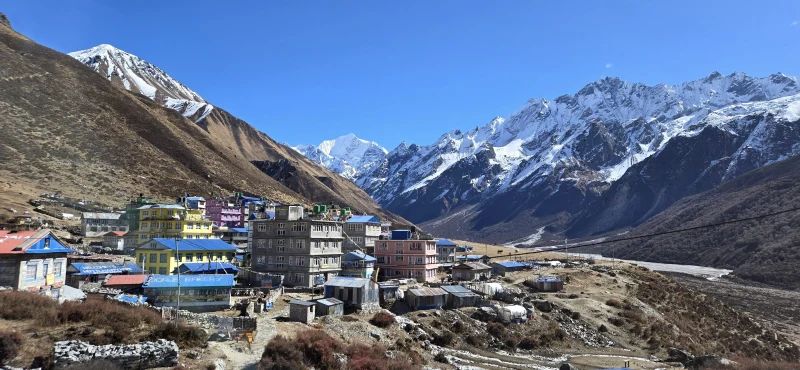
The image above shows Kyanjin Gompa in mid-December. As you can see, the snow is mostly limited to the high peaks, while the village remains clear under the bright daytime sun.
Why Are Autumn and Spring the Preferred Seasons for Trekking in Langtang?
Langtang Trek Physical Preparation
The Langtang trek in Nepal requires daily walking, strength, and mental focus at high altitude. Trekkers need to walk in uneven terrain, carry a bag, and safely manage low oxygen. Preparation ranges from one to four weeks, depending on current fitness, with emphasis on cardio, strength work, and hill training.
Physical and Mental Requirements
Trekkers must meet the following physical and mental criteria for the Langtang trek:
- Endurance: Trekkers walk for about 6 to 8 hours per day on uneven and often steep terrain.
- Cardiovascular fitness: The body must function in thin air at high altitude to manage fatigue and maintain a steady pace.
- Leg strength: Strong and stable leg muscles are necessary for repeated steep ascents and descents.
- Adaptation to low oxygen levels: Trekkers should not suffer from any respiratory or brain-related conditions.
- Balance: Good balance and core stability are required to move safely on rocky, narrow, and irregular paths.
- Load capacity: Trekkers who do not use porters must carry a daypack of about 9 to 11 kg for the full 8 days.
- Mental readiness: Trekkers may feel tired but still need to walk consistently each day. This pattern requires mental focus and determination.
Training Guide
The training volume for the Langtang trek depends on each trekker’s current fitness level. Trekkers can estimate their starting level based on the categories below.
Training by Current Fitness Level
- Beginner trekkers:
Trekkers who do not exercise and spend most days sitting at a desk with a computer in a office should start training at least 4 weeks before the trek. - Moderate fitness trekkers:
Trekkers who exercise at least 3 times per week should start focused trek preparation about 2 weeks before the trek. - Highly active trekkers:
Trekkers who regularly play sports that build leg and cardiovascular strength, such as football, rugby, or swimming, can usually prepare with about 1 week of targeted training.
Key Training Focus Areas
Trekkers should focus on the training activities listed below.
Cardiovascular endurance
- Perform 45 to 60 minutes of aerobic exercise each day.
- Use hill walking and stair climbing to simulate the gradients and surfaces of Langtang trails.
Strength and stability
- Legs: Perform squats, lunges, and calf raises daily to build climbing power and support descent control.
- Core: Perform planks and “bird dog” exercises daily to improve balance and trunk stability on rocky slopes.
- Ascent training: Use an incline treadmill or local hills to prepare for continuous uphill walking.
- Altitude adaptation (where possible): Train on an incline treadmill or spend time at elevations above 2,500 meters, if accessible, to experience lower oxygen levels before the trek.
Altitude Sickness and Prevention
The Centers for Disease Control and Prevention (CDC) states that rapid ascent can cause Acute Mountain Sickness (AMS) from around 2,500 meters or approximately 8,000 feet. AMS occurs due to low oxygen levels and reduced atmospheric pressure at altitude. Proper acclimatization and proactive precautions can reduce the risk.
Trekkers with any medical condition should inform us (Travel To Nepal team) in advance. We can then plan recommendations and precautions. This is especially important for trekkers with asthma, pregnancy, cardiovascular disease, unstable angina, anemia, or similar conditions.
Main High-Altitude Illnesses
Low oxygen levels can lead to two serious altitude-related conditions, as described in the altitude guidelines of CDC, WMS, NHS, and UIAA:
- HACE (High Altitude Cerebral Edema):
- HACE involves fluid accumulation in the brain.
- Symptoms include fatigue, nausea, headache, loss of appetite, sleep disturbance, irritability, and an unsteady, “drunken” walking pattern.
- HAPE (High Altitude Pulmonary Edema):
- HAPE involves fluid accumulation in the lungs.
- Symptoms include dry cough, shortness of breath, noisy breathing, and bluish skin or lips (cyanosis).
Note: Many trekkers experience mild altitude symptoms, such as a headache. Mild symptoms often occur when trekkers do not follow precautions, such as sleeping too little, skipping appropriate medicines, eating poorly, or ignoring acclimatization plans. When trekkers follow acclimatization schedules, eat well, hydrate, and rest, the risk of serious altitude sickness becomes lower, but not zero.
Precautions Against Altitude Sickness
Trekkers should follow these core precautions at high altitude (prevention principles also described by CDC, WMS, NHS, and UIAA):
- Do not drink alcohol at high altitude.
- Drink at least 4 liters of water per day, unless a medical condition requires a different amount.
- Eat enough food, with a focus on carbohydrates such as dal, bhat (rice), and potatoes.
- Use acetazolamide to support acclimatization only if it is medically appropriate.
- Dress according to the weather with layered clothing to stay warm and dry.
Medical note on acetazolamide: Trekkers must consult a doctor before arriving in Nepal to confirm whether acetazolamide is safe for them. Acetazolamide is not recommended for people with certain pre-existing conditions, especially kidney disease, liver disease, or electrolyte imbalance.
Treatment After Altitude Sickness
If a trekker develops significant altitude sickness, immediate action is required. The overall approach of rapid descent, oxygen, and rest follows the treatment principles described by CDC, WMS, NHS, and UIAA altitude guidelines.
- Immediate descent:
- If the trekker can walk, or if team members or support can carry the trekker, descend at least 100 meters as soon as possible.
- Avoid exerting the sick trekker during descent.
- Use a horse or helicopter rescue if available and necessary.
- A licensed mountain guide is essential in this situation to coordinate decisions and support.
- Oxygen support:
- If supplemental oxygen is available, provide oxygen continuously.
- Aim to keep the trekker’s oxygen saturation above 90% to stay within a safer range.
Travel To Nepal provides an altitude and safety briefing to all trekkers before or at the start of the trek. The goal of this briefing is to help guests recognize altitude symptoms early and follow prevention steps.
By law in Nepal, Travel To Nepal staff and trekking guides are not allowed to administer medicines to guests. Guides carry a basic first-aid kit, but they are prohibited from giving medicines. Trekkers must bring their own prescribed and over-the-counter medicines so they can take them if needed to prevent or manage AMS, under medical advice obtained before travel.
Daily Altitude Notes for the Langtang Trek
These points summarize altitude risk across our 8‑day Langtang itinerary:
- Day 1:
- The day mainly involves driving at lower elevations.
- The risk of altitude sickness is very low.
- Day 2:
- The maximum altitude is about 2,700 meters.
- The risk of altitude sickness remains low, but trekkers must stay alert to possible symptoms.
- If any symptoms appear, descend immediately and inform the guide.
- Drink enough water.
- Avoid open clothing; continuous cold wind can cause common cold, sneezing, and coughing.
- Days 3 to 6:
- The maximum altitude increases from about 3,430 meters up to about 4,958 meters.
- The risk of altitude sickness is higher on these days.
- Consult the guide about whether to take altitude medicine.
- Guides may also suggest local remedies, such as garlic soup.
- Drink plenty of water and wear full clothing that covers the body.
- Eat regularly to maintain energy and nutrient intake.
- Do not drink alcohol at all during these high-altitude days.
- Remaining days (descent):
- The route descends to lower altitudes.
- The risk of altitude sickness becomes very low during descent.
- Trekkers should still monitor how they feel and inform the guide immediately if any symptoms appear.
Safety Guidelines in the Langtang Region
Travel To Nepal follows specific safety guidelines for treks in the Langtang region:
- Stay with the group and guide: Group members must not leave the guide or split far from the group. The guide cannot monitor all trekkers properly, if the group separates. Separation can delay support if a trekker ahead becomes sick or develops altitude sickness. Walking together allows the guide to observe everyone and respond quickly in an emergency.
- Follow guide instructions: Trekkers must follow route changes or pace adjustments recommended by the guide. The guide may change the route due to weather, trail damage, health concerns, or other safety reasons.
- Guide’s decision is final for safety: If the guide decides to stop the day’s trek due to sudden weather changes or other risks, all trekkers must follow that decision.
- Food safety: Trekkers should avoid food that the guide does not recommend. Unsafe food can cause stomach problems and, in severe cases, may require helicopter evacuation.
- Cultural respect: Every trekker must respect local customs, culture, and religious practices in the Langtang region. Trekkers must avoid behavior that local communities may consider disrespectful.
- Communication and power: Trekkers should save key contact numbers, including the guide and the trekking company office. Trekkers should carry a fully charged phone and at least one power bank to maintain communication in case of delays or emergencies.
Complete Packing Guide for the Langtang Trek
Your packing list for Langtang Valley trek should consider variable weather conditions, including sub-zero temperatures at night, high UV radiation during the day, and heavy rain sometimes. This packing list includes the essential clothing, gear, and documents required to complete the trek smoothly.
Clothing & Layers
- 2 moisture-wicking thermal tops & bottoms
- 1 lightweight down jacket
- 1 Waterproof shell jacket
- 1 Waterproof pants
- 2 quick-dry trekking shirts (long, short sleeve)
- 2 trekking pants (lighter and warmer)
- Warm beanie
- Sun hat/cap
- Sunglasses
- Insulated outer gloves
- 6 pairs trekking socks
- 5 Quick-dry underwear
Trekking Gear
- Trekking shoe
- Camp shoes/sandals
- 2 Trekking poles (with snow baskets if late autumn/early spring)
- Backpack 30–40L (daypack) + rain cover
- Crampons
- Sleeping bag
- Water bottles (2 × 1L wide-mouth; bladders can freeze at altitude)
- Headlamp + spare batteries
Personal Items & Toiletries
- Sunscreen with high SPF
- Lip balm SPF
- Hand sanitizer & wet wipes
- Biodegradable soap & small shampoo
- Toothbrush, toothpaste, floss
- Quick-dry towel (small/medium)
- Toilet paper (carry a roll)
Health & Safety
- Personal medications
- Altitude medication (e.g., acetazolamide/Diamox, only with doctor’s advice)
- Pain relief (ibuprofen/acetaminophen)
- Anti-nausea & anti-diarrheal (e.g., ondansetron, loperamide)
- Oral rehydration salts/electrolyte tabs
- Water treatment: filter + purification tablets (belt-and-braces approach)
- Energy snacks: nuts, bars, trail mix, chocolate
Documents & Money
- Passport (valid for 6+ months)
- Nepal visa (or plan for visa on arrival)
- Permits: Langtang National Park Permit – we will handle the permit requirements
- 2 passport-size photos
- Insurance photocopies + digital scans
- Cash in Nepalese Rupees (NPR) (small bills; no ATMs during the trek)
Electronics & Accessories
- Power bank (20,000 mAh)
- Charging cables
- Universal adapter
Optional But Useful
- Thermal flask (hot drinks on the pass)
- Microspikes (during snowfall)
- Phone with offline maps
Langtang Trek Frequently Asked Questions
Where is the Langtang Valley Trek located in Nepal?
The Langtang Valley Trek lies inside Langtang National Park in Rasuwa District, north of Kathmandu in central Nepal, close to the Tibet (China) border.
What is the best time of year to do the Langtang Valley Trek?
The best trekking seasons for Langtang are Autumn (5 October to 20 December) and Spring (March to May), when weather is more stable and mountain visibility is clearer.
How difficult is the Langtang Valley Trek?
The Langtang Valley Trek is of moderate difficulty. Trekkers walk 6 to 8 hours daily on uneven trails and reach altitudes from 4,773 meters to 4,985 meters.
What is the maximum altitude reached on the Langtang Valley Trek?
Our Langtang Valley itinerary takes trekkers to Tserko Ri (4,985 meters) or Kyanjin ri (4,773 meters), as per their preference.
Do I need trekking permits for the Langtang Valley Trek?
Yes. Trekkers need a Langtang National Park Entry Permit. We arrange it in Kathmandu for you.
Is a guide mandatory for the Langtang Valley Trek?
No, Guide is not mandatory for Langtang Valley Trek currently. However, guide rules in Nepal can change.