
Guarding The First Living Shangri-La, Nepal

Nepal embodies the physical reality of the mythical Shangri-La and the spiritual concept of Beyul. These “Hidden Valleys” function not merely as scenic landscapes, but as sentient sanctuaries where nature and humanity exist in symbiotic balance. In this “Living Land,” the environment possesses consciousness, and indigenous communities act as active guardians. Ancient rituals, such as the Mani Rimdu, and strict adherence to ahimsa (non-violence) maintain the spiritual potency of these zones, ensuring that the mountains remain sacred spaces rather than inert resources.
Unchecked modernization and out-migration currently threaten this fragile spiritual ecosystem. Over the past 50 years, the phenomenon of “Ghost Villages” has severed the ancestral chain of knowledge, leaving sacred lands without their traditional protectors. Simultaneously, noise pollution from recreational helicopters disrupts the silence essential for wildlife and meditation, while unchecked infrastructure projects scar the hillsides. This rapid shift toward commercialization risks homogenizing Nepal’s unique culture and stripping the Beyul of its primary attribute: peace.
“Travel To Nepal” implements a strict guardianship strategy to counter this degradation. The agency enforces a zero-tolerance ban on recreational aviation to restore the sanctuary’s silence and diverts tourism to isolated settlements to combat rural depopulation. Through partnerships with waste management platform Khaalisisi and a commitment to locally led cultural tours, the organization prioritizes the health of the “Living Land” over short-term profit. This approach transforms tourism from a destructive force into a tool for physical preservation and cultural revitalization.
Table of Contents
What is Shangri-La?
Shangri-La is a universal term representing an earthly paradise or a utopia isolated from the world. British author James Hilton introduced this specific name in his 1933 novel, Lost Horizon. In the text, Shangri-La exists as a mystical lamasery enclosed in the western end of the Kunlun Mountains.
The concept of Shangri-La originates from the far older Tibetan belief in Shambhala. Ancient Buddhist scriptures describe Shambhala as a spiritual kingdom, a “Pure Land”, that exists on a higher plane of reality. Western explorers and storytellers adapted this spiritual legend into the physical, romanticized idea of Shangri-La. Today, scholars identify the high Himalayan valleys of Nepal as the geographic inspiration for both the fiction of Hilton and the legends of old.
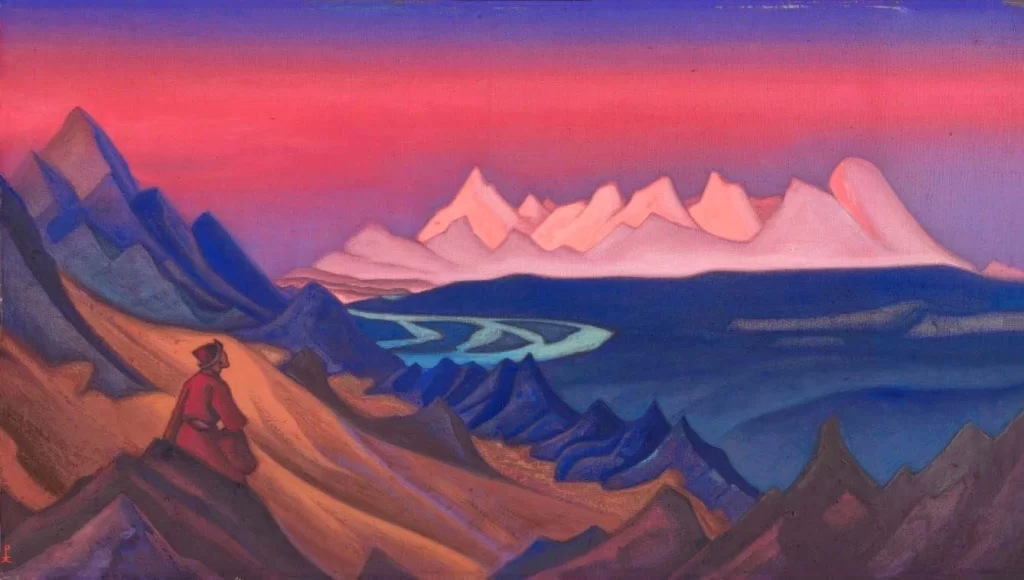
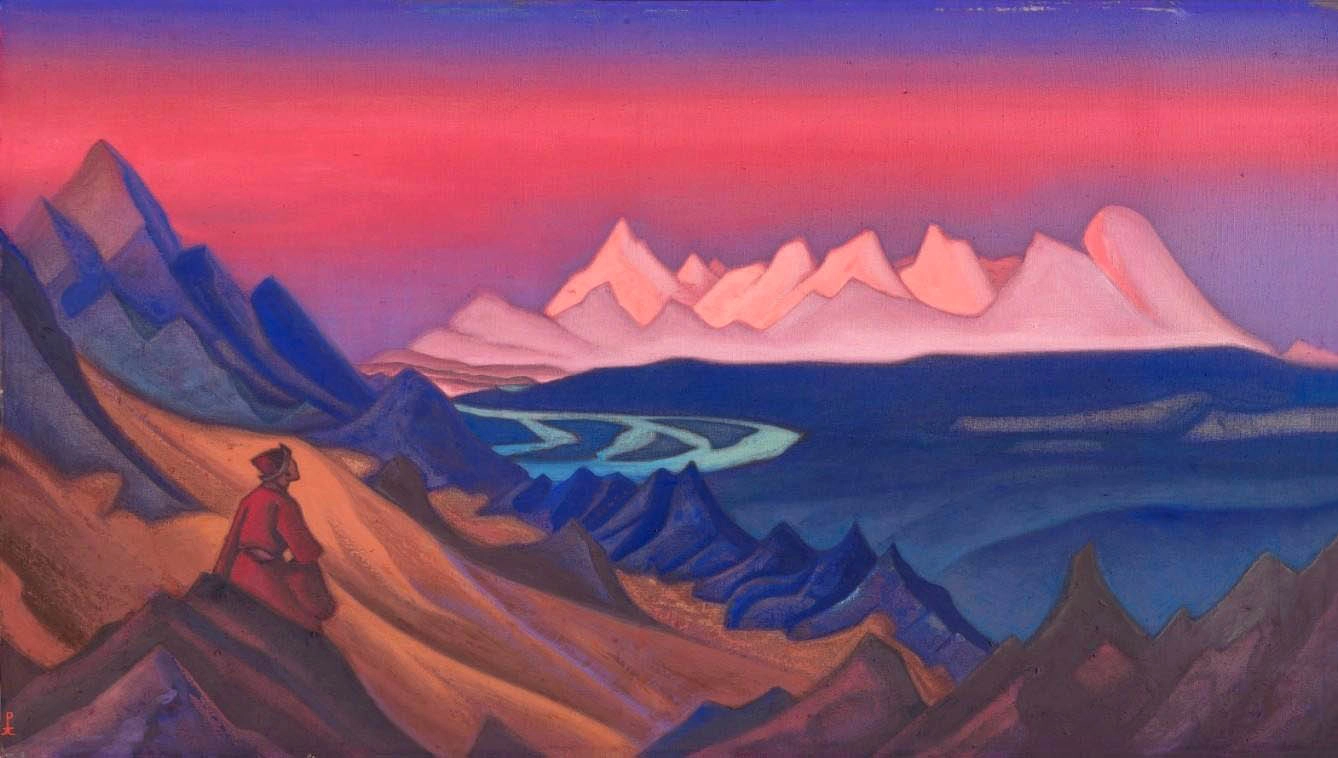
The image above is a painting by Nicholas Roerich depicting Shangri-La. Its landscape closely resembles the deep trans-Himalayan valleys of Nepal, such as Upper Mustang and Upper Dolpo.
The Hidden Valley: A Sanctuary
The myth of the Hidden Valley bridges the gap between the legendary Shambhala and the physical landscape of Nepal. A Hidden Valley operates as a biological and spiritual sanctuary. The ecosystem in these zones dictates the lifestyle of the inhabitants. Humans coexist with nature in a symbiotic relationship rather than dominating it.
This relationship creates a functional “Sanctuary” status. Sheer cliffs and narrow gorges physically protect the valley from outside invasion. The community inside follows strict laws of non-violence (ahimsa). Villagers do not hunt animals or pollute water sources. This mutual respect allows wildlife and humans to thrive in close proximity, mirroring the peace described in the Shambhala legends.
A Place of Eternal Peace
Eternal peace in the Himalayas stems from a balance between limited resources and unlimited contentment. A spiritual refuge offers safety not just for the body, but for the mind.
The isolation of these valleys acts as a filter. It blocks the noise, speed, and stress of modern industrial life. Travelers entering these regions experience a shift in perception. The silence of the mountains forces the mind to slow down. This deceleration creates a sense of timelessness, which visitors often describe as “healing.”
What is Beyul?
A Beyul is a sacred hidden valley described in the Nyingma tradition of Tibetan Buddhism. The 8th-century tantric master, Guru Rinpoche (Padmasambhava), concealed these valleys to serve as refuges during times of war, famine, or spiritual decay.
A Beyul possesses distinct physical and spiritual traits:
- Physical traits: The landscape often resembles the anatomy of a deity or the shape of a lotus.
- Spiritual traits: Rocks, caves, and waterfalls possess consciousness and protective energy.
- Access: Physical maps are insufficient; entering a Beyul requires positive karma and spiritual purity.
Nepal contains several prominent Beyuls, including Kyimolung (in the Tsum Valley) and Khenpalung. These areas act as spiritual batteries, recharging the vitality of the planet.
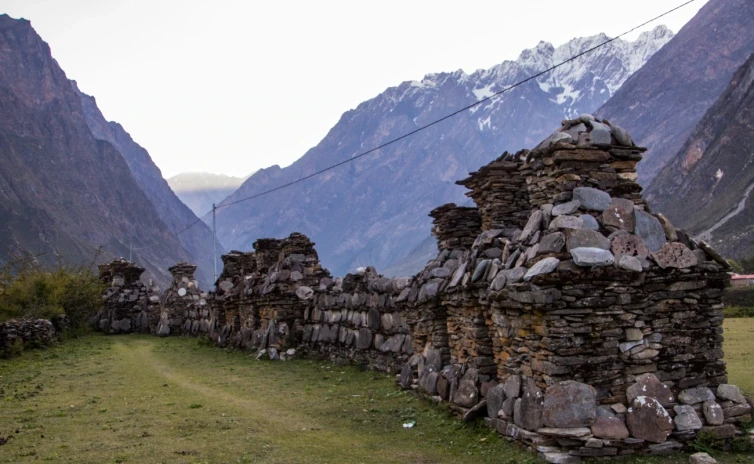
The image above shows Tsum Valley, a region associated with non-violence, where any form of killing is strictly prohibited. For this reason, it is considered one of the few true beyuls in the world.
Beyul and Shangri-La
Beyul and Shangri-La share a common foundation as hidden Himalayan sanctuaries. Both concepts describe isolated valleys where steep geography physically protects spiritual purity. Nature and humanity coexist in these zones without conflict, offering a refuge from the chaos of the outside world.
The distinction lies in their function and reality. Shangri-La represents a static, fictional utopia designed for effortless escape. A Beyul, conversely, functions as a dynamic spiritual system demanding intense practice (sadhana). Travelers seek Shangri-La to avoid the world, while pilgrims enter a Beyul to confront it.
Nepal manifests as a dual sanctuary for different intentions. The rugged mountains serve as a Beyul for committed spiritual seekers willing to endure hardship for enlightenment. The serene valleys, simultaneously, act as Shangri-La for visitors desiring simple rest. This duality allows every traveler to find either the challenge of the spirit or the peace of the mind within the same borders.
Why is Nepal the First Shangri-La?
Nepal stands as the physical prototype for the literary Shangri-La. Geographers and historians identify the remote Himalayan valleys of Nepal as the primary inspiration for the utopian isolation described in western literature. The country predates the fiction, offering a tangible location where spiritual preservation and geographic isolation have existed for millennia.

As Shangri-La is a mythical place, the image above was generated using AI to illustrate how Shangri-La might have looked if it existed. It is intended to provide readers with a visual reference. The landscape, mountain, and people’s features closely resemble those of Nepal.
Revealing the Forbidden Valleys to the Modern World
Nepal ended its centuries of self-imposed isolation in the 1950s. This historic policy shift transformed the nation from a “Forbidden Kingdom” into an accessible sanctuary. Boris Lissanevitch, a legendary Russian hospitality pioneer, persuaded King Tribhuvan to issue the first tourist visas.
This decision revealed the hidden valleys to the global community for the first time. Early explorers confirmed that the culture and landscape matched the Shangri-La myth perfectly. The world recognized Nepal not as a new discovery, but as the unveiling of a timeless sanctuary that had been guarding itself.
Home to the Vibrant Ecosystems of the Himalayas
The “Vertical Sanctuary” defines Nepal’s unique ecological structure. The elevation rises dramatically from 60 meters in the south to 8,848 meters at the summit of Everest within a short lateral distance. This vertical steepness creates 118 distinct ecosystems packed into one narrow strip of Earth.
Biodiversity thrives in these compressed zones. Tropical jungles house Bengal tigers and rhinos at the base. Alpine deserts shelter snow leopards and red pandas at the peaks. This biological density validates the Shangri-La myth of a “contained world” where every form of life exists in balance.
What is “Living Land”?
The “Living Land” defines a physical geography that possesses consciousness, memory, and spiritual agency. Indigenous traditions view the earth not as dead matter, but as a responsive ancestor. This concept transforms a location from a resource to be used into a relationship to be honored.
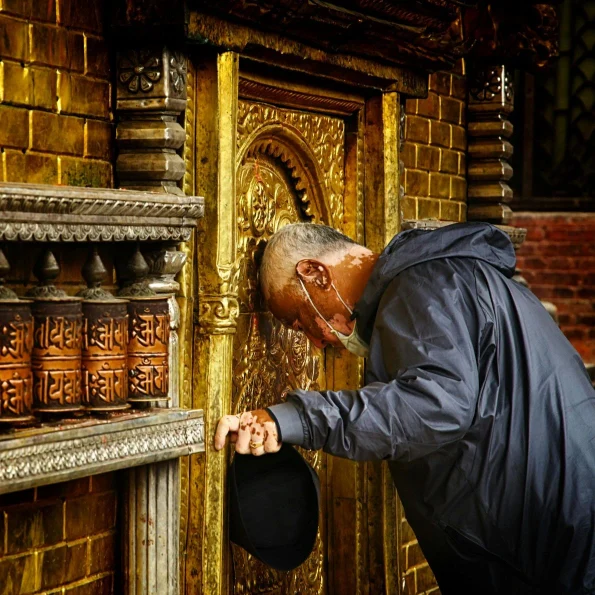
Defining the Environment as a Sentient
The environment functions as a sentient, conscious entity in the Himalayan worldview. Mountains and rivers act as the physical bodies of local deities. Static scenery exists only on postcards; the actual landscape reacts to human behavior.
This sentience demands respect. Climbers and trekkers do not conquer a peak; the mountain permits their passage. Local Sherpas petition the land for safety before every expedition. The terrain is an active participant in the journey, capable of granting safe passage or withholding it based on the traveler’s intent.
A Tradition Maintained Through Daily Ritual
Culture exists as a breathing organism in Nepal. It relies on the heartbeat of daily practice to survive. Daily rituals such as lighting butter lamps, circumambulating stupas, and chanting mantras, feed this tradition.
Museum displays preserve dead history behind glass. Living tradition manifests in the mud of the rice paddy and the smoke of the village hearth. Festivals are not performances for tourists; they are necessary maintenance for the community’s spiritual health. A “Living Culture” evolves and adapts while keeping its ancestral root intact.
Human Presence Sustains the Spirit of the Place
Biocultural symbiosis forms the vital link between the people and their environment. Human presence sustains the spirit of the place through stewardship and worship. The “Sanctuary” relies on this interaction to remain potent.
An empty wilderness is not a sanctuary; it is just wild land. A Sanctuary requires guardians who recognize its sacredness. Villagers protect the forests because the forests house their gods. The land, in turn, provides water and shelter. This reciprocal relationship means that if the people leave, the spirit of the Sanctuary fades.
Why is Nepal the Living Land?
Nepal functions as a cohesive spiritual ecosystem where geography, culture, and humanity intertwine. Spiritual geography treats mountains and rivers as the physical bodies of deities, creating sacred zones that demand ecological respect. Ancient festivals like Indra Jatra and Chhath keep this connection alive, turning history into daily practice rather than static memory. Local communities act as the land’s immune system, protecting forests and wildlife not for profit, but to honor the spirits residing within them.
The Spiritual Geography
Spiritual geography maps the land not by elevation, but by sanctity. The Himalayas function as the physical throne of the gods. Mount Everest is Chomolungma (Mother Goddess of the World), and Machhapuchhre is the forbidden home of Lord Shiva.
Local deities inhabit specific features:
- Lu (Nagas): Serpent spirits guarding water sources who punish pollution with skin diseases.
- Tsen: Warrior spirits residing in red rocks who protect the valley boundaries.
- Sadag: Lords of the Soil who must be appeased before breaking ground for construction.
This reverence creates a natural “no-go” zone in ecologically sensitive areas, protecting them more effectively than fences.
The Continuity of Ancient Festivals and Indigenous Knowledge
An unbroken ancestral chain links modern Nepal directly to its ancient past. Festivals act as the rhythmic heartbeat of this continuity.
- Mani Rimdu: A Sherpa festival re-enacting the establishment of Buddhism in Tibet.
- Udhauli/Ubhauli: Kirat festivals marking the seasonal migration of birds and ancestors.
- Indra Jatra: A Newari celebration in Kathmandu where the Kumari (Living Goddess) blesses the city, merging civic duty with divine presence.
- Chhath: A Terai tradition where devotees stand in sacred rivers to thank Surya (the Sun God), emphasizing water and light as the source of life.
Oral histories transmit knowledge without textbooks. Grandparents teach the Mukdum (ancient tribal wisdom) to the youth, explaining which plants heal and which forests are forbidden.
The Human Element
Local communities serve as the active immune system of the ecosystem. The Himalayan people are the hereditary guardians of the Beyul (Hidden Valleys).
Their guardianship manifests in daily action:
- Forest Protection: The Shingi Nawa (Forest Wardens) enforce strict bans on cutting live trees in sacred groves.
- Waste Management: Villages mobilize to clean trails, viewing waste as a spiritual impurity that offends the Yul Lha (local gods).
- Wildlife Coexistence: Farmers tolerate snow leopards preying on livestock, viewing it as a “tax” paid to the mountain deity rather than a pest problem.
This human element ensures the land remains “living.” Without the people to honor the spirits, the Beyul would become just another wilderness; with them, it remains a sanctuary.
This integration among geography, spirituality, culture, and people defines why Nepal is a “Living Land” rather than just a scenic destination. The concept relies on the active relationship between the earth and its inhabitants. The land possesses rights and demands respect to people through the Nagas and Sadag. The people are active guardians who sustain the landscape through ritual and restraint. Nepal remains “living” because this heartbeat of biological and spiritual symbiosis continues to pulse every day.
What has Happened to the Himalayas in the Past 50 Years?
The Himalayas have faced rapid cultural and environmental degradation over the last five decades. Modernization drives a wedge between the land and its people. This separation erodes the “Living Land” status, turning sacred sanctuaries into mere commodities. The physical Shangri-La remains visible, but the spiritual atmosphere that defines it is fading due to neglect and exploitation.
The Phenomenon of “Empty Villages”
Out-migration posed the single greatest threat to Indigenous heritage. Young local people left the mountains in massive numbers for employment and education in the Middle East or Kathmandu. This exodus created “Ghost Villages” where only the elderly remained to tend the shrines.
The impact was immediate and irreversible. Rituals and oral traditions died because no one was left to inherit them. The ancestral chain broke, leaving the land without its traditional protectors. A “Living Land” could not survive without the people who knew how to speak to it.
For example, a 2026 published research, titled “The Ghost Village: Disappearing Human Settlements — A Case Study in the Madi Watershed”, revealed that nearly 6% of rural settlements had already been abandoned, with projections estimating over 60% of highland settlements could be deserted within 15 years due to out-migration.
The Facebook post above shows an example of rural villages in Nepal that are gradually becoming depopulated.
Loss of Sanctuary
Noise pollution aggressively invaded the once-silent spiritual zones. Commercial helicopters flew frequently over sacred valleys to deliver quick sightseeing tours. The constant roar disrupted the deep meditation of monks and the natural rhythms of wildlife.
A Sanctuary required silence to function as a refuge. The vibration and noise stressed the ecosystem, driving away sensitive species like the musk deer. This mechanical intrusion stripped the Beyul of its primary attribute: peace.
For instance, a 2025 report published in Mongabay, titled “Helicopters slash the trek to Earth’s highest peak”, states that frequent helicopter flights in the Everest region caused significant noise pollution, negatively impacting wildlife behavior, such as driving away musk deer and snow leopard prey, and disrupting the tranquility essential for spiritual tourism.
Homogenization
Architectural homogenization erased the visual identity of Nepalese villages. Concrete and tin rapidly replaced traditional wood, stone, and terracotta materials. New hotels mimicked generic global designs rather than preserving local craftsmanship.
Authentic culture became invisible as unique settlements transformed into standard roadside towns. Travelers struggled to distinguish a Himalayan village from any other developing town. This loss reduced the cultural value of the destination and disconnected the people from their artistic heritage.
Research Evidence: Post-2015 earthquake reconstruction accelerated the loss of vernacular architecture in the Kathmandu Valley, as traditional Newari homes were demolished in favor of modern concrete structures that lacked cultural uniqueness (Warner et al., 2025; Anthropology of Architecture, 2025).
Unsustainable Development
Unchecked infrastructure physically wounded the hills and forests of Nepal. Heavy bulldozers cut unplanned roads through fragile slopes without proper engineering oversight. These haphazard tracks triggered landslides, destabilized the soil, and destroyed ancient walking trails.
The forests, once revered as the home of spirits, were cleared for convenience. Development practices often treated the living earth as dead material to be excavated. This approach violated the laws of the Living Land, leading to ecological imbalances that threatened both locals and visitors.
Research Evidence: The haphazard use of bulldozers for road construction in the mid-hills was identified as a major driver of landslides and environmental damage, with over 3,000 km of non-engineered roads built annually, destabilizing fragile slopes (Oxford Policy Management, 2021; CIJ Nepal, 2025).
Our Response: The “Travel To Nepal” Plan to Guard Our Sanctuary
“Travel To Nepal” implements a strict guardianship strategy to counter the threats of modernization, migration, and pollution. Our policies prioritize the health of the “Living Land” over short-term profit. We act as a defense mechanism for the Himalayan sanctuary.
Our Strict Ban on Recreational Aviation
Focus: Protecting the Spiritual Solitude of Himalayas and Trekking Routes Noise pollution erodes the primary attribute of a Beyul: its silence. The roar of rotors disrupts the deep meditation of monks and the breeding patterns of sensitive wildlife like the musk deer. Travel To Nepal prioritizes the restoration of natural soundscapes. We believe that true spiritual connection requires quiet, not speed.
Action: Refusing Recreational Helicopter Tours to Maintain the Sanctity of the Himalayas We enforce a zero-tolerance policy for recreational helicopter bookings. Our team refuses requests for “breakfast on Everest” or sightseeing joyrides. This refusal reduces the acoustic footprint on sacred valleys. We limit aviation use strictly to medical evacuations and essential rescue operations. This stance ensures that the mountains remain a place of pilgrimage rather than a playground for the wealthy.
Combating Rural Depopulation
Focus: Revitalizing “Forgotten Villages”: Diverting Tourism to Isolated Indigenous Settlements Out-migration creates “Ghost Villages” where the ancestral chain is breaking. Standard itineraries funnel tourists into crowded hubs, leaving remote settlements economically starving. Travel To Nepal deliberately redesigns routes to include these bypassed communities. Our treks bring vital economic energy to the guardians who still remain in the highlands.
Action: Retaining Local Youth: Creating Sustainable Jobs to Keep Families and Lineages Intact Youth unemployment drives the exodus to foreign labor markets. We create high-value employment specifically for young locals within their home regions. Our training programs turn village youth into specialized cultural guides and heritage protectors. Financial stability allows these young guardians to stay home, care for their elders, and keep the Mukdum (oral tradition) alive.
Local Culture by Local People
Focus: Respecting and Preserving the “Living” Culture: Village and Cultural Tours by Locals Cultural homogenization occurs when outsiders interpret indigenous heritage. We mandate that local community members lead all cultural interactions. A Newari guide explains the Indra Jatra; a Sherpa guide interprets the Mani Rimdu. This policy prevents the commodification of sacred rituals and ensures authentic representation.
Action: Community Education: Empowering Locals to Value Heritage over Quick Modernization Modern pressure often convinces villagers that their traditions are obsolete. We invest in community education workshops that demonstrate the global value of their unique heritage. Villagers learn that their mud-brick architecture and organic farming are assets, not liabilities. This realization empowers them to resist generic development and protect their distinct identity.
Physical Preservation and Waste Management
Focus: The “1kg Pledge” with Khaalisisi: Ensuring Sacred Trails Remain Free of Impurity Waste accumulation insults the Nagas (water spirits) and degrades the physical sanctity of the land. Travel To Nepal partners with Khaalisisi, a digital waste management platform, to close the loop. We view trash removal as a spiritual duty, not just a logistical task.
Action: Advocating for Sustainable Infrastructure that Aligns with Traditional Aesthetics Our guides and porters take the “1kg Pledge.” Every team member carries at least 1kg of non-biodegradable waste out of the mountains on every return trip. We also lobby local lodges to use traditional stone and wood instead of concrete. This advocacy ensures that physical infrastructure blends into the Beyul rather than scarring it.
Empowering Communities to Protect Their Heritage
Focus: Aligning Infrastructure with the Culture and Laws of Nature Unchecked road construction wounds the hills and disrupts the Sadag (Lords of the Soil). We promote trail maintenance over new road building. Our strategy aligns tourism infrastructure with the ecological limits of the valley. Nature’s laws dictate our logistical decisions.
Action: Education as the First Line of Defense Education serves as the strongest weapon against destruction. We fund programs that teach local stakeholders about the long-term economic benefits of conservation. Communities learn that a standing forest generates more wealth through sustainable tourism than through timber sales. Knowledge transforms the local population from passive residents into active guardians of the Living Land.
Transparency and Impact: Measuring Our Contribution to Nepal’s Living Spirit
Transparency acts as the final verification of our guardianship. Travel To Nepal publishes annual impact reports to prove that our promises yield physical results. We measure success not by profit margins, but by the health of the Living Land and its people.
Quantifying the Cleanliness: Waste Audits and Environmental Health
Waste audits provide concrete data on our cleaning efforts. Our partnership with Khaalisisi tracks every kilogram of refuse removed from the trails. We publish monthly logs detailing the weight and type of waste collected by our guides and clients.
These metrics confirm that we are restoring the purity of the Beyul. A cleaner trail signals respect to the Nagas (water spirits) and improves the habitat for high-altitude wildlife. You can see exactly how your trip contributed to physically unburdening the Himalayas.
Tracking Social Vitality: Employment and Retention Data
Employment statistics measure our success in combating the “Empty Village” phenomenon. We track the number of young guides hired from remote settlements like Nar-Phu and Tsum Valley. Our reports disclose the wages paid compared to the national average, ensuring fair compensation.
Economic retention keeps the ancestral chain intact. Every job created in a village prevents a family from migrating to Kathmandu or the Middle East. This data proves that tourism serves as a stabilizing force for Indigenous communities rather than a disruption.
Measuring Cultural Integrity: The Community Feedback Loop
Community feedback dictates our operational adjustments. We conduct annual interviews with village elders to assess the impact of our presence. The question is simple: “Does our tourism strengthen your culture or dilute it?”
This direct dialogue holds us accountable. If a village reports that a specific behavior is offensive to the Yul Lha (local deity), we immediately alter our itinerary. Our impact is positive only if the local guardians validate it. Travel To Nepal remains a guest in their sanctuary, and we respect the rules of the house.
