Government-licensed trekking agency

Travel To Nepal

2027/2028 season open · start on any date you choose

Khopra Ridge (Danda) Trek – 8 Days, USD 275

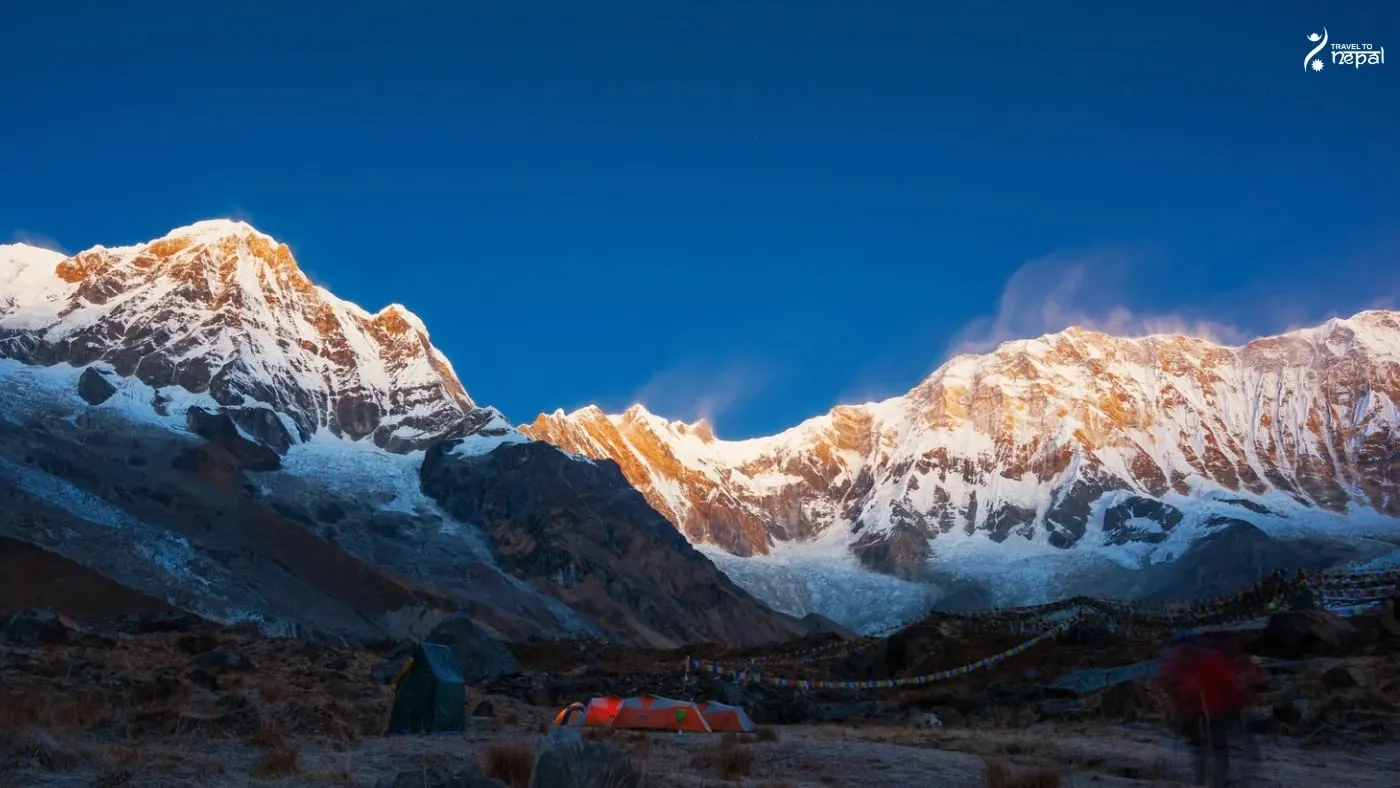
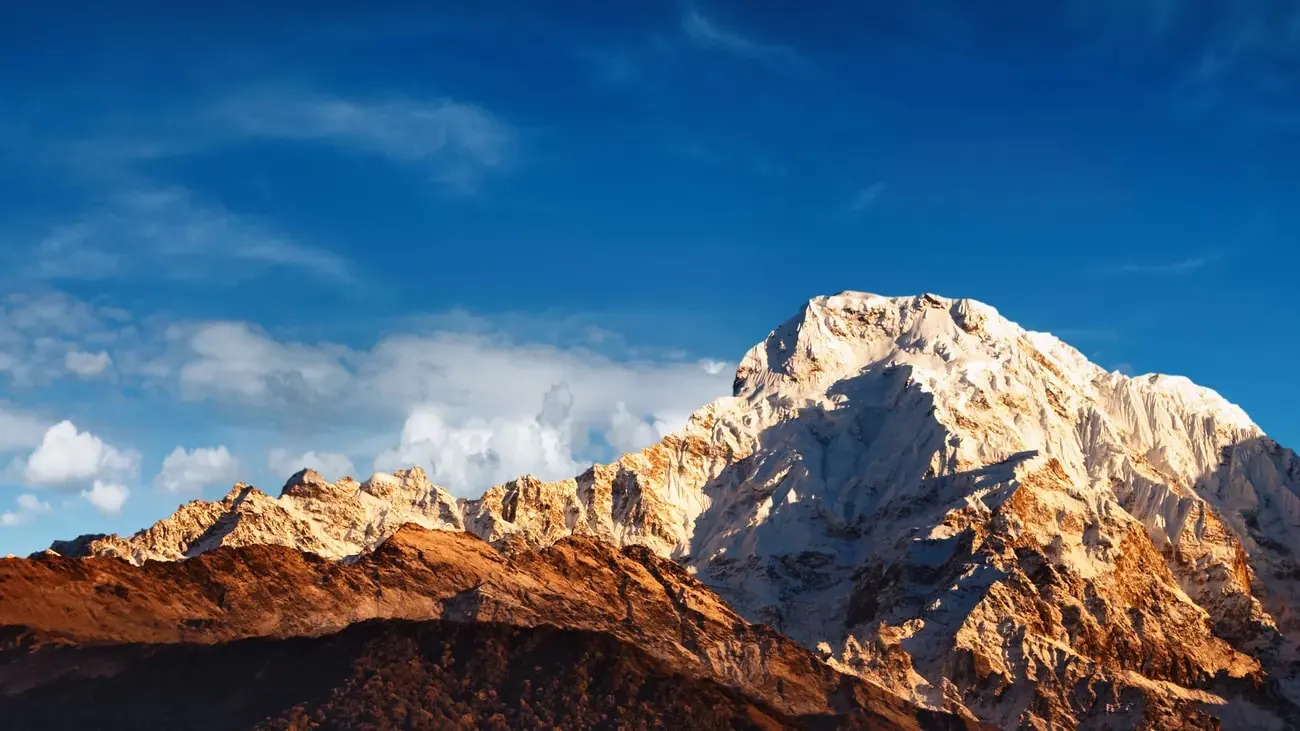
Annapurna South from Khopra Ridge, Khopra Danda (Ridge) Trek
  • Quiet trail, fewer crowds
  • Optional Khayer Lake Hike
  • Tatopani hot springs

Introduction

The Khopra Ridge Trek is an 8-day trek from Pokhara to Khopra Danda (3,660 m), an open grassy ridge in Nepal’s Annapurna region with close views of Dhaulagiri and Annapurna South. It starts in the Gurung village of Ghandruk, climbs through quiet rhododendron forest to the ridge, and ends at the natural hot springs of Tatopani.

After Ghandruk and Tadapani, most trekkers head toward Annapurna Base Camp. We turn north-west onto a community trail that few groups take. The path climbs through old rhododendron, oak and bamboo forest to Dobato, where you can walk half a day without meeting another group. Early next morning, you hike up to Muldai Viewpoint (3,637 m) for your first wide sunrise over Dhaulagiri and the Annapurnas. Then, above Chistibung, the trees end and you step out onto a bare, windy ridge.

From Khopra, Dhaulagiri (8,167 m) stands directly across the Kali Gandaki, one of the deepest gorges in the world. Annapurna South rises close by, with Nilgiri and the Annapurna massif in between. You spend two nights on the ridge, so you watch the light move across the mountains from sunset to sunrise, twice.

The lodges on Khopra Ridge are community-owned. Committees from the villages below manage them and share the income, which pays for local schools, health care and village projects. When you eat or sleep a night here, your money stays in the hills you are walking through.

Strong walkers can add a day hike from Khopra to Khayer Lake (4,660 m), a sacred lake at the foot of Annapurna South. It is a long round trip of 7 to 8 hours, and only a small number of trekkers reach it. Pilgrims walk up every August for the full-moon festival. The rest of the year, you may have the lake to yourself. Your guide makes the final call that morning, based on the weather and how everyone slept.

On the way down, you stay in Swanta, a Magar village known for its community cheese factory. The last walking day joins the old Annapurna Circuit trail through the villages of Shikha and Ghara, down to Tatopani in the Kali Gandaki valley. Here you soak tired legs in natural hot springs before the drive back to Pokhara.

This trek suits fit walkers who want close-up Himalayan views without the crowds of the main Annapurna routes. There are no glaciers or technical sections, but there are long stone staircases and walking days of 3 to 6 hours, plus a 7 to 8 hour day if you hike to Khayer Lake. The lodges are simple and the nights at Khopra are cold. At 3,660 m, the high point is a good first step for anyone who has not trekked at altitude before.

Our guides have walked this ridge many times. They know the lodge committees, the weather patterns and the right time to leave for Khayer Lake. We arrange your ACAP permit, transport and lodges before you arrive, so you can focus on the walk.

Trip overview and key specifications

Verified route 2027/2028

  • Start / finish
    Pokhara / Pokhara
  • Total distance
    ~70 km / 43 miles
  • Daily walking
    5 to 7 hours a day
  • Region
    Annapurna Region
  • Country
    Nepal
  • Duration
    8 days
  • Difficulty
    Moderate
  • Max. altitude
    4,660 m / 15,289 ft
  • Best season
    Mar–May and Oct–Nov
  • Accommodation
    Teahouse and hotel
  • Transport
    Jeep to Ghandruk
  • Activity
    Trekking / hiking

Our heritage and roots

Our story

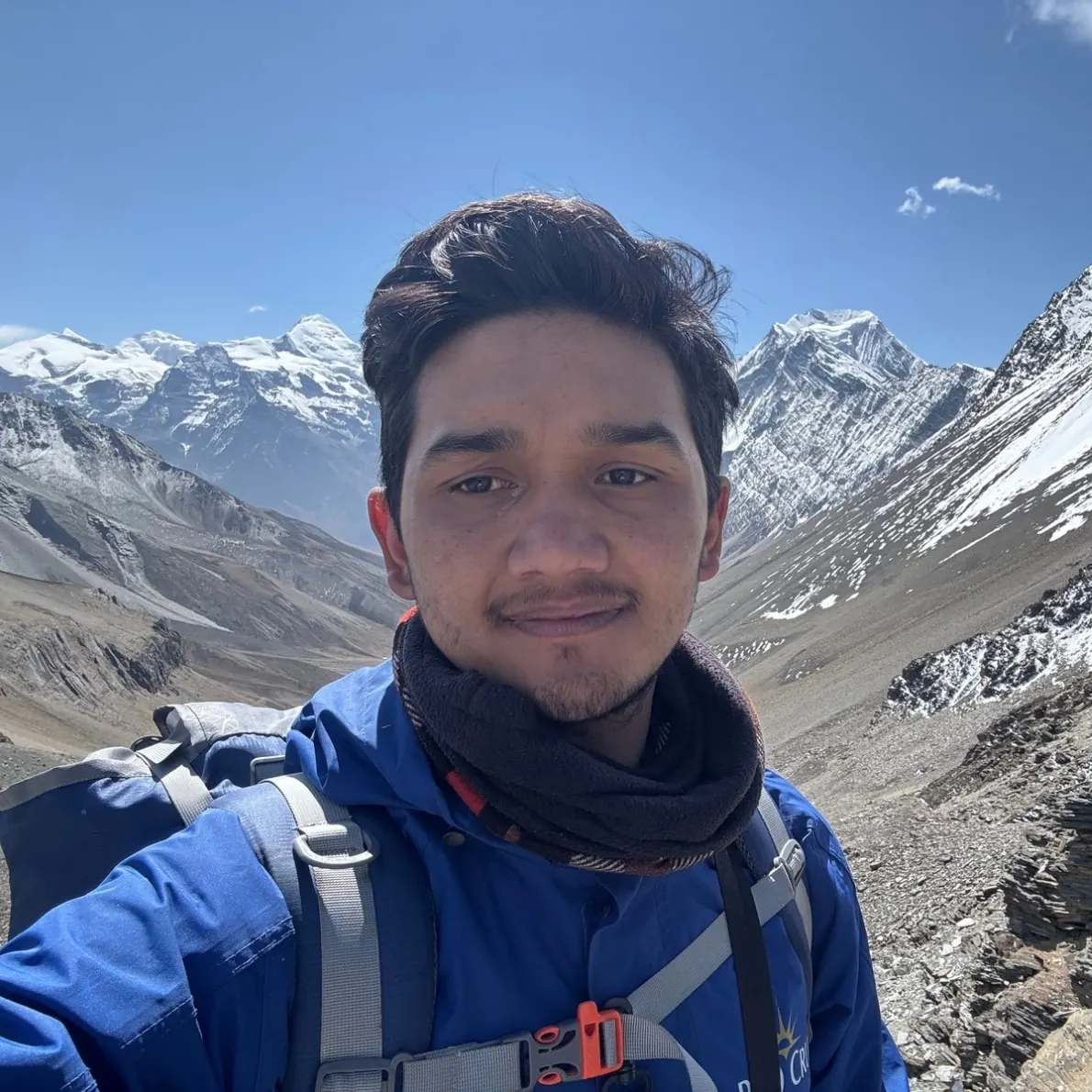
I’m Sandip Kshetri, a licensed guide from Mirlung, a hillside village in Tanahun near the Annapurna region. I’ve guided more than 200 travelers in Nepal. My journey began on the Mardi Himal Trek in 2022. One clear afternoon, I stopped to watch a small cloud drift across Annapurna South. As I stood there, it felt like the mountain was whispering to me. That moment made me realize that mountains, rivers, and forests have their own voice, and we only need to listen. From that day, my love for nature and mountains grew stronger. That passion led me into tourism, and in 2025, I cofounded Travel To Nepal. I started this company to stay in my own country and give something back to it. We pay our guides and porters 50% more than the industry standard, and no porter carries more than 20 kg. We also show Nepal through local voices, including small villages which most travelers never hear about. We trek slowly and with an open mind, so you notice the villages, rivers, and forests, not just the summit view. Above all, we always keep your safety first.

Sandip KshetriFounder and lead trek director

Read our story

Do you have any specific questions that you want to ask us personally?

Message us on WhatsApp or send us an email. Either I or my team will personally answer your questions and make sure all your doubts are answered properly.

  • Prompt 1-to-1 local advice
  • Free itinerary discussion
  • Fast reply on WhatsApp

Trek milestones

Highlights of the Khopra Ridge Trek and why you will love this trek

  • Eye-level views of Dhaulagiri and Annapurna South

    Across the Kali Gandaki, the deepest gorge on Earth

  • Sleep on the ridge at 3,660 m

    You spend the night facing Annapurna South and Dhaulagiri, so you see both sunset and sunrise from your lodge door.

  • Lodges owned by the villages

    The lodges on the ridge are community-run, and their income pays for local schools and health care.

  • Sacred Khayer Lake (4,660 m)

    An optional day hike takes you to a holy alpine lake below Annapurna South that few trekkers ever reach.

  • Muldai Viewpoint at Dawn

    Climb to Muldai Viewpoint (3,637 m) at sunrise for a wide panorama of Dhaulagiri, the Annapurnas and Machhapuchhre, with almost no crowds.

  • Tatopani Hot Springs

    End your trek with a soak in natural hot springs beside the Kali Gandaki River.

Trekker suitability guide

Is this trek for you?

An honest look at what the trek asks of you, so you can decide before you book.

Suitability checklist

  • Fitness:: You should be able to hike 5 to 6 hours with a daypack, two days in a row. If you can do that now, you’re ready.

  • Trekking experience:: No previous trekking is needed. Many of our Khopra trekkers are on their first Himalayan trek.

  • Altitude:: You sleep one night at 3,660 m, which can cause mild headaches but rarely serious altitude sickness. Khayer Lake at 4,660 m is a bigger test, and you can skip it.

  • Trail conditions:: There are no glaciers or technical sections, but long descents, such as Khopra to Swanta, put heavy strain on your knees, so trekking poles help a lot.

  • Crowds:: You’ll meet other trekkers in Ghandruk and Tadapani, which sit on the busy Annapurna Base Camp route. After Tadapani, the trail turns quiet, and some days you’ll see only a few other groups until you reach Tatopani.

  • Lodges:: Rooms are simple twin rooms with shared toilets higher up, often squat style. Nights at Khopra are cold, so you need a warm sleeping bag.

Unsure about your fitness or readiness?Our lead trek director gives a free, no-obligation preparation check.

Step-by-step route

8-day day-by-day itinerary

Our 8-day Khopra Ridge itinerary starts and ends in Pokhara and climbs gradually, so your body has time to adjust before you sleep at 3,660 m. It begins in the Gurung village of Ghandruk, leaves the busy trails at Tadapani for a quiet forest route over Muldai Viewpoint to Khopra Ridge, then descends through the Magar village of Swanta to the hot springs at Tatopani.

  1. Day 1: Pokhara to Ghandruk, then Trek to Tadapani

    A short drive, then a forest climb to Tadapani

    2–3 hrs drive, 3–4 hours walk · 2,630 m

    Our Day begins with a drive from Pokhara to Ghandruk (1,940 m) and ends with a forest climb to Tadapani (2,630 m). You gain about 700 m on foot today, a steady climb that eases you into the trek.

    The road climbs out of the Pokhara valley through Lumle and Naudanda, and on a clear morning you can see Machhapuchhre and the Annapurna range behind you. After Nayapul, the jeep follows the Modi Khola valley and climbs a rough mountain road to Ghandruk. The drive takes 2 to 3 hours, depending on the road. Your guide shows your ACAP permit at the checkpoint on the way.

    Ghandruk is one of the largest Gurung villages in the Annapurna region, with stone houses, slate roofs and neat stone paths. Before you start walking, take time to explore the old part of the village. If it is open, visit the small Gurung museum to see traditional clothing, tools and household items. Many men from this area have served in the British and Indian Gurkha regiments.

    After lunch in Ghandruk, the trail climbs on stone steps through the upper village and farmland, then enters forest. Most of the walk passes through rhododendron, oak and bamboo, which flowers red and pink in spring. The climb is steady rather than steep and takes 3 to 4 hours. Walk at an even pace and rest when you need to.

    Tadapani is a small group of lodges on a forested ridge. Its name means “far water” in Nepali. On a clear evening, the sunset lights up Annapurna South, Hiunchuli and Machhapuchhre. Tonight you stay in a simple lodge with twin rooms and mostly shared bathrooms. Hot showers are usually available for a small fee.
  2. Day 2: Tadapani to Dobato

    Leave the main trails behind and climb through quiet forest to the ridge at Dobato

    5–6 hrs · 3,420 m

    Today you climb about 800 m from Tadapani (2,630 m) to Dobato (3,420 m) on a quiet community trail through some of the finest rhododendron forest in the Annapurna region. This is where the Khopra Ridge Trek leaves the busy Annapurna Base Camp route behind.

    From Tadapani, the trail heads north-west and climbs gradually through dense rhododendron and oak forest. You pass the small clearings of Meshar Danda and Isharu, with very few lodges or people along the way. Your guide knows the trail well, which matters here, as signposts are few and side paths can be confusing.

    In March and April, the forest turns red, pink and white with blooming rhododendron, Nepal’s national flower. In autumn, the forest is green and the air is clear. Listen for langur monkeys in the trees, and look for the colourful danphe, Nepal’s national bird, on the upper slopes.

    The final section climbs between small hills and open grassy slopes. The trees thin out as you gain height, and the views begin to open up toward Annapurna South and Machhapuchhre. Dobato is a small group of simple lodges on an open ridge, much quieter than the villages lower down.

    Tonight is your first night above 3,000 m, so take it easy once you arrive. Drink plenty of water, avoid alcohol and tell your guide if you feel a headache, dizziness or nausea. Dobato gets cold after sunset, so keep your warm layers and hat close. Go to bed early, because tomorrow starts before dawn with the sunrise hike to Muldai Viewpoint.

  3. Day 3: Poon Hill Sunrise, then Trek to Chistibang

    The day you leave the crowds behind

    7–8 hrs · up to 3,420 m at Dobato · sleep 2,950 m

    Today starts with the most famous sunrise in the Annapurna region and ends on a quiet forest trail far from the crowds.

    We leave the lodge at about 4:30 am and climb for 45 to 60 minutes by headlamp to Poon Hill (3,210 m). As the sun rises, Dhaulagiri, Tukuche, Nilgiri, Annapurna South and Machhapuchhre light up one by one. There is a small entry fee, a viewing tower and a tea stall at the top. It is cold and busy, but this view is one of the best in Nepal.

    After breakfast in Ghorepani, most trekkers head east to Tadapani. We take the quieter ridge trail instead. It climbs through Deurali (3,090 m) and along the ridge to Dobato (3,420 m), the highest point of the day. Fit trekkers with energy left can take a short detour to the Mulde viewpoint above Dobato for another wide mountain panorama.

    From Dobato, the trail descends through old forest to Chistibang (2,950 m), a small lodge stop in a clearing surrounded by trees.

    This part of the forest sees far fewer trekkers. The trees are older, covered in moss and hanging lichen, and the trail is narrower. In the shaded sections, frost and ice can last until late morning in November and December.

    Chistibang has simple lodges with twin rooms and shared toilets. The dining room stove is the warmest place in the evening.

    This is a long day. Fill your water bottles in Ghorepani and carry snacks, because there are few tea stops between Deurali and Chistibang.

  4. Day 4: Chistibang to Khopra Danda

    Out of the forest and onto the ridge

    5–6 hrs · 3,660 m

    Today you climb about 700 m from the forest at Chistibang to the open ridge of Khopra Danda (3,660 m). This is the day most of our trekkers remember best.

    The trail climbs steadily through rhododendron and birch forest for most of the morning. As you gain height, the trees become smaller and more spread out, and you start to see high grazing pastures (kharka) where local herders bring their buffalo and yak in summer.

    Then the forest ends suddenly. One moment you’re under the trees, the next you’re standing on a wide, grassy ridge with nothing blocking the view.

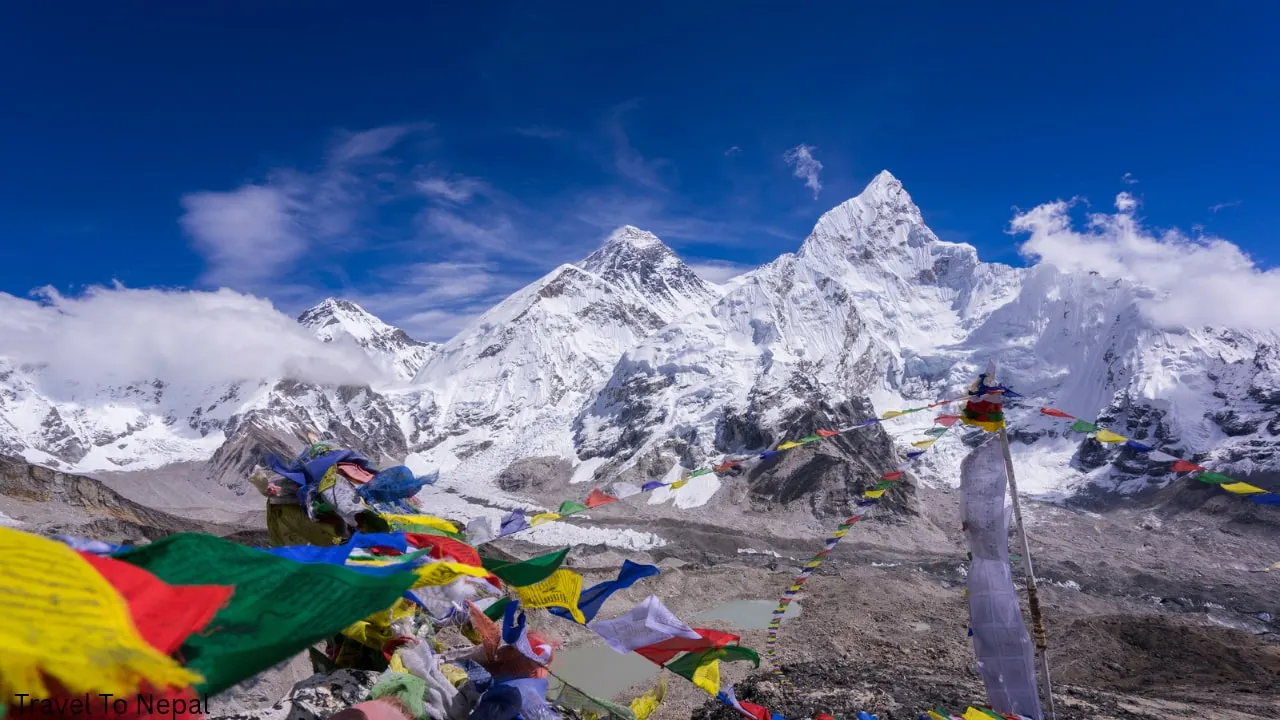
    The Kali Gandaki gorge, one of the deepest in the world, opens up to the west. Directly across it, Dhaulagiri (8,167 m) fills the sky. Tukuche Peak and Nilgiri stand to the north, and Annapurna South and Annapurna I rise close by to the east. At Poon Hill these peaks are far away. At Khopra you sleep facing them.

    The lodge on the ridge is community-owned. Committees from the villages below manage it, and the income pays for local schools and health care. Rooms are basic twin rooms with shared toilets. Electricity comes from solar power, so charging is limited.

    This is your highest sleeping point. Walk slowly, drink 3 to 4 litres of water and avoid alcohol tonight. Nights on the ridge often drop below freezing, so keep your down jacket and warm hat close. Cold weather drains batteries quickly, so keep your phone and camera in your sleeping bag overnight.

  5. Day 5: Rest Day at Khopra, with Optional Khayer Lake Hike

    Your choice: a full day on the ridge or a hike to the sacred lake

    Free day, or 7–8 hrs optional hike · up to 4,660 m at Khayer Lake · sleep 3,660 m · High point

    Today is a free day at Khopra Danda (3,660 m). You can spend it resting and exploring the ridge, or join an optional hike to Khayer Lake (4,660 m). The choice is yours, and both are a good way to spend the day.

    The Khayer Lake hike is not a required part of the trek. Decide based on your fitness, how much energy you have after four days of walking, how you slept at altitude, and what you want from the day. Many of our trekkers choose to stay on the ridge, and they don’t miss out on the main reason for coming: the view of Dhaulagiri from Khopra.

    Talk it over with your guide the evening before. You can also decide in the morning, once you see how you feel. A slow day on the ridge gives your body time to recover before the long descent. Walk along the ridge for different angles on Dhaulagiri and Annapurna South, take photos as the light changes, read by the dining room stove, or visit the herders’ pastures nearby. The mountains look different every hour, from the first pink light at sunrise to the gold at sunset.

    The hike starts around 5:30 am and climbs about 1,000 m over high pastures and rocky ground to the lake. It isn’t technical, but the steady climb in thin air makes it the hardest walk of the trek. Most groups reach the lake in 4 to 5 hours and return to Khopra in about 3 hours.

    Khayer Lake sits in a bowl of rock at the foot of Annapurna South. It is sacred to Hindu communities in the villages below, and pilgrims walk up each August for the full-moon festival. The rest of the year, you may have it almost to yourself.

    There are no teahouses on the way, so the lodge prepares a packed lunch. Carry at least 2 litres of water, a warm layer, gloves and sunglasses.

    Even if you choose to go, your guide may cancel or turn back if the weather closes in, there is fresh snow, or anyone shows signs of altitude sickness. Safety always comes first. Whatever you choose, you sleep at the Khopra lodge again tonight.

  6. Day 6: Khopra Danda to Paudwar

    A long, steep descent from Khopra Ridge to the traditional Magar village of Paudwar

    5–6 hours · up to 3,660 m at Khopra Danda · sleep 2,000 m

    Today you descend about 1,700 m from Khopra Danda to Paudwar, a 300-year-old Magar village on the western side of the ridge. Start early and enjoy one last sunrise over Dhaulagiri, Tukuche Peak, Nilgiri and Annapurna South before breakfast at the lodge.

    Wake up early for your final sunrise on the ridge. On a clear morning, the first light hits Dhaulagiri (8,167 m), then spreads across Tukuche Peak, Nilgiri, Annapurna South and Hiunchuli. Far below, the Kali Gandaki gorge stays in shadow. This view is the main reason trekkers come to Khopra, so take your time before packing up.

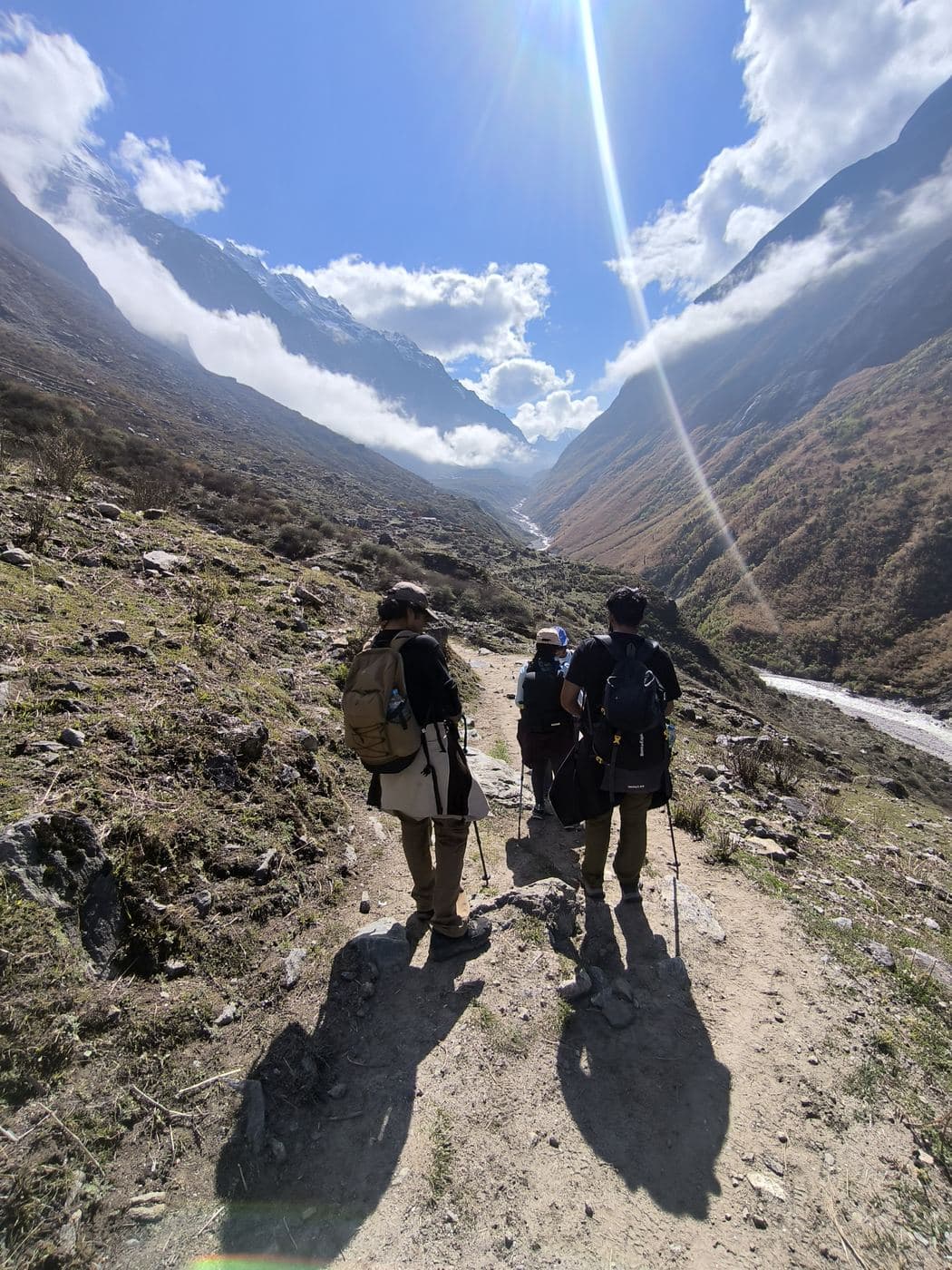
    The trail leaves the lodge and heads west, away from the route you came up. It drops steadily on well-built stone steps for most of the way, with very few flat sections. The first part crosses open grassland where you may spot grazing yaks or Himalayan pheasants. Lower down, the trail enters forest, and the air becomes noticeably warmer.

    As you get closer to Paudwar, the forest opens up into terraced fields of millet, maize and potatoes. You will pass small farmhouses and meet villagers working in the fields or herding animals. This change from high mountain ridge to lively farmland in a single day is one of the highlights of this section.

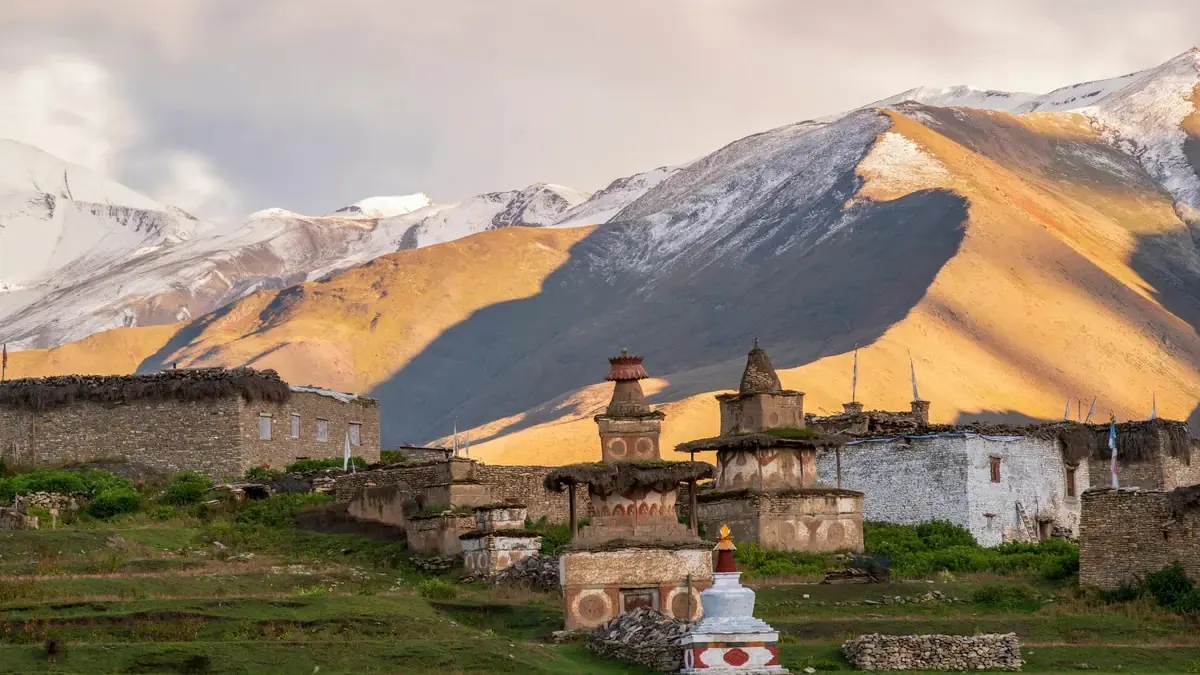
    After you settle in, spend the afternoon walking around the village. Visit the small Magar Museum to learn about local customs, clothing and farming tools. Stop by the community cheese factory and try the local honey, both known products of the area. The evening is quiet and relaxed, a good chance to rest your legs after the long descent.

  7. Day 7: Paudwar to Tatopani

    An easy downhill walk from Paudwar to the natural hot springs of Tatopani

    3–5 hours · 1,190 m

    Today you walk from Paudwar (2,000 m) down to Tatopani (1,190 m), a descent of about 800 m that takes 3–5 hours. After yesterday’s long drop from Khopra Danda, this is a shorter and gentler day, with time to relax in the hot springs in the afternoon.

    Start the day with a slow morning in the village. On a clear day, Dhaulagiri and Tukuche Peak glow above the hills at sunrise. Your legs may feel tight after the Khopra descent, so a few minutes of gentle stretching helps.

    The route leaves Paudwar on the village jeep road and goes steadily downhill toward the Kali Gandaki valley. Your guide will use footpath shortcuts where they cut off long bends in the road. The walking is easy, but the steady descent still works your knees, so keep using your trekking poles.

    Tatopani means “hot water” in Nepali, and the village is named after its natural hot springs beside the Kali Gandaki. It sits on the old trade route between Tibet and the lowlands, and today it is a well-known stop on the Annapurna Circuit. Compared to the quiet ridge villages, Tatopani feels busy, with lodges, small shops and jeeps passing through.

    Spend the afternoon soaking in the hot spring pools, which is the best way to ease tired muscles after several days of trekking. The pools have a small entry fee, so carry some cash. Bring a swimsuit and a quick-dry towel, and avoid wearing silver jewellery, which can tarnish in the mineral water. This is your last night on the trail, a good time to celebrate the trek with your guide and porters.

  8. Day 8: Drive from Tatopani to Pokhara

    Along the Kali Gandaki and back to the lakeside

    5–6 hrs drive · 820 m

    Today you drive from Tatopani back to Pokhara (820 m), following the Kali Gandaki river for most of the way.

    The road runs south along the Kali Gandaki to Beni, a busy market town where the Myagdi Khola joins the river. From Beni, it follows the Modi and Kali Gandaki valleys through Kusma and back into the Pokhara valley. The first section to Beni is rough and bumpy in places, and the whole drive takes about 5 to 6 hours, depending on road conditions and traffic.

    You’ll pass small roadside villages, long suspension bridges and the deep, narrow sides of the Kali Gandaki valley. Stop for tea in Beni, and look back for your last views of the hills you have just walked through.

    We reach Pokhara by mid-afternoon. Then it’s a hot shower, a good meal by Phewa Lake, and the kind of sleep you only get after a week of real walking. If you want to stay longer, we can arrange a rest day, paragliding, a boat trip on Phewa Lake, or onward travel to Kathmandu or Chitwan.

    The first part of the road is bumpy, so take motion-sickness tablets if you need them. In monsoon and just after, landslides can delay the drive, so avoid booking a flight out of Pokhara on the same evening.

Unlimited free changes until it is right

Custom itinerary and private changes

Want to match your own pace, fitness, group or holiday dates? Tell us what you have in mind and our Kathmandu team will change the route as many times as you need, until it is the Khopra Trek you want.

  • Extra rest day
  • Add a side trip
  • Private guide and porter
  • Slower or faster pace

WhatsApp +977 9847693070 · inquiry@traveltonepal.com · Reply usually within a few hours

Local expertise and safety first

Meet your trek guide

Hand-picked, licensed guides who have walked the Khopra ridge many times, trained in wilderness first aid and focused on your safety.

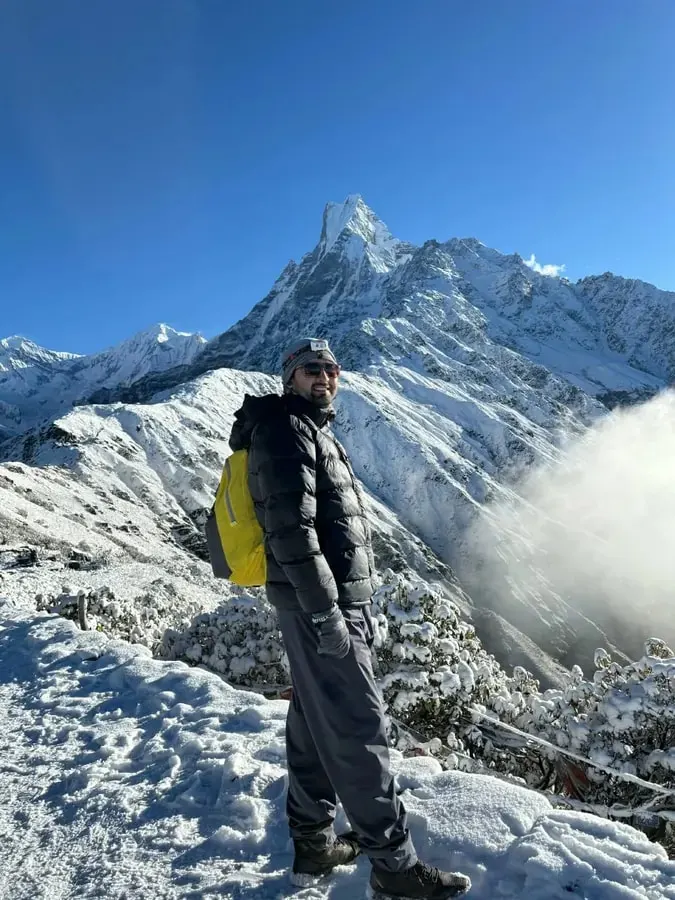
  • Nabraj Nepal

    Family treks

    NATHM trained

    Nabraj Nepal

    12+ yrs guiding

    Senior Trek Leader

    Nuwakot

    “There is something special about the Annapurna region that always makes me happy, every time I walk these trails.”
    Cert:
    Trekking guide training (NATHM)
    Languages:
    English, Nepali, Hindi

Full disclosure

What’s covered · What’s not included

Included in the price

  • Permits:: Annapurna Conservation Area Permit (ACAP)arranged before you arrive.

  • Guide:: An experienced, licensed trekking guide who knows the Khopra route and the community lodges.

  • Accommodation:: 7 nights in teahouses and community-run lodges on twin-sharing, from Ulleri to Tatopani.

  • Transport:: Private jeep from Pokhara to the trailhead and from Tatopani back to Pokhara.

  • Guide’s costs:: Your guide’s meals, accommodation, wages and insurance.

  • Briefing:: A pre-trek meeting in Pokhara to check your gear and answer questions.

  • Support:: Direct contact with our office throughout the trek, and emergency coordination if needed.

  • Taxes:: All government taxes and service charges.

Not included

  • Meals on the trek:: You order from lodge menus and pay directly, which supports the lodges (see the food budget below).

  • Flights and visa:: International flights and your Nepal visa.

  • Travel insurance:: Guests are responsible for arranging their own travel insurance.

  • Tips:: For your guide and porter, at your discretion.

  • Unplanned costs:: Extra nights, transport or evacuation caused by weather, landslides, illness or flight delays.

Why don't we include meals in our trekking package?

Trekker-first transparency

  • Freedom of choice and appetiteAppetite changes with altitude. Order what your body wants, from dal bhat to pasta, porridge or soup.

  • Direct support for teahouse familiesYou pay the lodges directly, so all food money stays with the local families who run them.

  • No package markupsAll-inclusive meal packages are often padded. Here you pay real menu prices for what you eat.

  • Dietary needs and allergiesVegetarian, vegan or gluten-free: order on the spot and get food made the way you need it.

Average daily food budget: plan on about $20–30 USD per day for hearty breakfasts, lunches, hot dinners and boiled drinking water or tea.

Pro tips and important notes

Trail pro tips

  • “Dal bhat power”: unlimited refills of rice, lentils and vegetable curry. The best fuel at altitude.

  • Go vegetarian higher up: meat is carried up without refrigeration, so we suggest vegetarian meals above Lama Hotel.

  • Stay hydrated: drink 3–4 litres a day (ginger-lemon-honey tea, garlic soup, boiled water).

  • Cash is king: there are no ATMs on the trail. Bring enough Nepali rupees from Kathmandu.

Essential teahouse notes

  • Teahouse rule: eat breakfast and dinner where you sleep. Lodges keep room prices low because of it.

  • Order early: order dinner around 5 pm and choose your breakfast time the night before.

  • Small extras: showers, charging and Wi-Fi cost a few dollars each higher up.

Acclimatization map

Khopra Danda Trek Altitude Profile

Daily altitude curve

You sleep no higher than 3,660 m and only day hike to the high point.

Peak: 4,660 m

1,500 m3,000 m4,500 m6,000 mTadapaniD1DobatoD2DobatoChistibangD3Khopra Danda 3,660 mD4Khayer Lake 4,660 mKhopra DandaD5Khopra DandaPaudwarD6TatopaniD7PokharaD8
Trek start · Nayapul
3,420 m / 11,220 ft
Highest night · Khopra Danda
3,660 m / 12,008 ft
High point · Khayer Lake
4,660 m / 15,289 ft

Route and GPS waypoints

Khopra Danda Trek Route Map

Google interactive trail and waypoint map

Interactive map

Interactive Google map
Loading it connects to Google, which can see your IP address and may set cookies.

Stops on the route

  1. Tadapani 2,630 mStart

    Day 1
  2. Dobato 3,420 m

    Days 2–3
  3. Chistibang 2,950 m

    Day 3
  4. Khopra Danda 3,660 m

    Day 4
  5. Khayer Lake 4,660 mHigh point

    Day 5
  6. Khopra Danda 3,660 m

    Days 5–6
  7. Paudwar 2,000 m

    Day 6
  8. Tatopani 1,190 m

    Day 7
  9. Pokhara 820 m

    Day 8

Interactive map by Google Maps. See our privacy policy for how Google handles your data.

Direct operator advantage

Why book your trek with us

Local leadership, honest pricing and careful safety standards, straight from our Kathmandu team.

  • Built around you

    Every trek is private, so the plan fits you. Want an extra rest day, a slower pace or a different route? Just tell us, and we’ll change it at no extra cost.

  • Honest conversation

    We give you the same advice we’d give a friend, even if it means you book less with us. Our prices are transparent and there are no hidden fees.

  • Guides who call these mountains home

    Your guide grew up in these mountains and knows every turn of the trail you’re trekking.

  • Your safety comes first

    We build acclimatization days into every itinerary, check your oxygen levels daily and have a rescue plan ready on every trek. Plans can change, but safety never does.

  • Local, licensed and fair to our team

    We’re registered with the Government of Nepal and TAAN. You book straight with our team in Nepal, with no middleman. Our porters carry limited loads and get warm gear, insurance and fair wages.

  • More than a trek

    Along the trail, your guide takes you into village homes, quiet monasteries and local kitchens. Many guests tell us these moments changed the way they see Nepal.

Official verification

Credentials and government licences

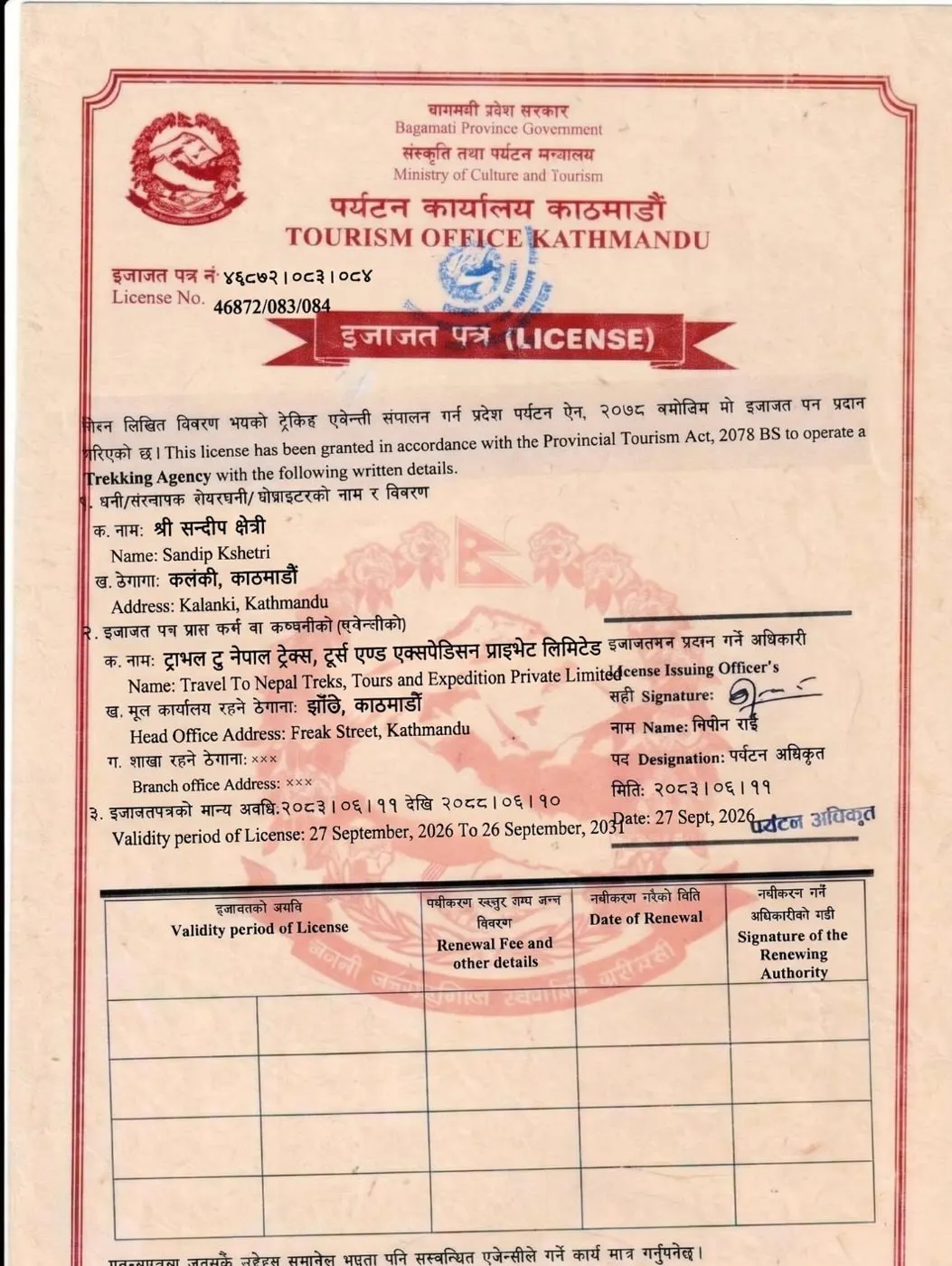
Est. 2025 · Kathmandu

Govt. reg.
Tourism Office Kathmandu
Tourism licence
46872/083/084

Nepal Department of Tourism registration certificateRegistration Tourism Office Kathmandu · licensed trekking agency

View full certificate

Fast reply on WhatsApp

Book your Khopra Danda (Ridge) Trek

Direct local pricing, no middlemen. Fill this in and we open WhatsApp with your request already written.

Trek

Khopra Danda (Ridge) Trek — 8 days

Send my request by email

Nothing is stored on this website.

Gear and essentials

What to Pack for the Khopra Danda Trek

Pack for two climates: freezing nights at 3,660 m on Khopra Ridge and warm, sunny days down at Tatopani.

Clothing and layering

  • Down jacket: Essential for Khopra, where nights often drop below freezing.

  • Base layers: 2 thermal tops and 1 thermal bottom for cold nights on the ridge.

  • Fleece jacket: A warm mid layer for mornings, evenings and rest stops.

  • Waterproof jacket and pants: A light rain shell for wind, showers or snow.

  • Trekking pants: 2 pairs of quick-dry pants, one of them zip-off for Tatopani.

  • Hats and gloves: A warm hat, a sun hat, liner gloves and insulated gloves.

  • Buff or neck gaiter: Keeps out dust on the drive and cold wind on the ridge.

  • Swimwear: For the Tatopani hot springs on Day 7.

Footwear and trail care

  • Trekking boots: Waterproof, ankle-high boots, broken in before the trek.

  • Trekking socks: 4–5 pairs of wool or synthetic socks.

  • Warm sleeping socks: One thick pair kept dry for nights at Khopra.

  • Microspikes: Useful for the Khayer Lake hike on fresh snow, usually on November to March.

Gear and packs

  • Daypack (25–35 L): with a rain cover for layers, water and snacks.

  • Duffel bag: carried by your porter (max 15 kg).

  • Trekking poles and headlamp: for the descent and the sunrise hike.

  • Sleeping bag: comfort to −10 °C (you can rent one in Kathmandu).

Health, hygiene and water

  • Personal medicines: Your usual medicines, plus anything your doctor recommends for altitude.

  • Sun protection: SPF 50 sunscreen and lip balm with SPF.

  • Toilet paper: Most lodges higher up don’t supply toilet paper.

  • Purification: A filter bottle or purification tablets to refill at lodges.

  • Quick-dry towel: Small and light, for washing and the hot springs.

Documents and money

  • Passport and visa: Keep them in your daypack for the permit checkpoints.

  • Passport photos: 2–4 copies for permits and paperwork.

  • Travel insurance: A printed or saved copy showing cover to 5,000 m and helicopter evacuation.

  • Cash in rupees: Enough for food, extras and tips, in small notes. There are no ATMs after Pokhara.

Practical field knowledge

Khopra Danda Trek Guide: Seasons, Lodges and Safety

What our guides tell every trekker before they leave Pokhara, based on years of walking this ridge.

Best season to Trek Khopra Danda (Ridge)

  • Spring (March to May): warm days, rhododendron forest in full bloom and some haze in the afternoons.

  • Autumn (October to November): the clearest skies of the year, sharp Dhaulagiri views and cold nights on the ridge.

*Monsoon (June to August): not recommended, with rain, leeches, slippery stairs and cloud over the mountains.

Teahouses and Community Lodges

On the Khopra Danda Trek, you stay in simple teahouses, with community-run lodges on the upper ridge.

  • Rooms: twin-sharing with thin mattresses and a blanket. Bring a warm sleeping bag.

  • Toilets: shared and often squat style above Ghorepani.

  • Heating: bedrooms are cold, and the dining room stove is lit in the evening.

  • Khopra lodge: community-owned and solar-powered, so showers and charging are limited.

  • Best comfort: Ghorepani and Tatopani, with hot showers and Wi-Fi for a fee.

Food and Drinking Water on the Trek

  • Dal bhat: rice, lentils and vegetables in most lodges.

  • Other meals: noodles, fried rice, momos, porridge, pancakes and eggs. The choice shrinks higher up.

  • Daily food budget: around US$25–35 for three meals and hot drinks.

  • Drinking water: refill at lodges and treat it with a filter or purification tablets.

  • How much to drink: 3 to 4 litres a day to help prevent altitude sickness.

Altitude, Safety and Emergencies

Altitude is the main risk on the Khopra Danda Trek, and most problems are easy to manage if you act early.

  • Highest sleep: 3,660 m at Khopra Ridge, where mild headaches are common.

  • Warning signs: a headache that doesn’t go away, nausea, dizziness or poor sleep. Tell your guide straight away.

  • Treatment: rest first, then descend if symptoms get worse.

  • Phone signal: good in Ghorepani and Tatopani, patchy on the ridge.

  • Emergencies: we coordinate helicopter evacuation to Pokhara through your insurer.

  • Insurance: must cover trekking up to 4,500 m and helicopter rescue.

Frequently Asked Questions for Khopra Danda (Ridge) Trek

Itinerary and duration

How difficult is the Khopra Danda Trek?

The Khopra Danda Trek is a moderate trek. It has no technical sections, but long stone staircases, 5 to 7 hours of walking a day and a high point of 3,660 m make it a real physical effort. Fit beginners can do it with some training.

How many days do I need for the Khopra Ridge Trek?

Plan for 8 days from Pokhara, including a free day at Khopra for rest or the optional Khayer Lake hike. Fit trekkers short on time can do it in 6 or 7 days, and a 9-day plan adds a rest day for a slower pace.

Can beginners do the Khopra Danda Trek?

Yes, fit beginners can do it with preparation. If you can hike 5 to 6 hours with a daypack two days in a row, you’re ready. The 3,660 m high point is a good first step for anyone new to altitude.

What is the best time for the Khopra Danda Trek?

October to November and March to May are the best months. Autumn has the clearest mountain views, and spring brings rhododendron forest in bloom. Winter is possible but cold, and we don’t recommend the monsoon months of June to August.

Route and highlights

Where does the Khopra Danda Trek start and end?

The trek starts and ends in Pokhara. You drive to Nayapul and walk via Ulleri and Ghorepani to Khopra Ridge, then descend to the Tatopani hot springs and drive back to Pokhara.

Can I do Poon Hill and Khopra together?

Yes, Poon Hill is part of our Khopra Danda itinerary. You watch the Poon Hill sunrise on Day 3, then leave the crowds behind on the quieter trail to Khopra.

Is Khopra better than Poon Hill or Annapurna Base Camp?

Khopra is the better choice if you want quiet trails and a close view of Dhaulagiri. Poon Hill is shorter and busier, and Annapurna Base Camp is higher and longer. Khopra gives you big mountain views with far fewer people.

Altitude and health

What is the highest point of the Khopra Danda Trek?

Khopra Ridge at 3,660 m is the highest point and where you sleep. The optional day hike to Khayer Lake reaches 4,660 m and returns to Khopra the same day.

Will I get altitude sickness on the Khopra trek?

Serious altitude sickness is rare on this trek, but mild headaches at Khopra are common. The route climbs gradually over four days, which helps your body adjust. Drink 3 to 4 litres of water a day, walk slowly and tell your guide about any symptoms.

Is the Khopra Danda Trek safe?

Yes, it’s safe with good preparation. The main risks are altitude, weather and slippery stairs. A licensed guide, proper insurance and a flexible plan for the Khayer Lake day manage most of these risks.

Do I need travel insurance?

Yes, travel insurance is required. It must cover trekking up to 4,500 m and helicopter evacuation, as rescue from the ridge is by helicopter.

Permits and guides

What permits do I need for the Khopra Danda Trek?

You need the Annapurna Conservation Area Permit (ACAP). We arrange it before you arrive.

Can I trek Khopra Danda without a guide?

No, foreign trekkers need a licensed guide in the Annapurna Conservation Area.

Lodges, food and money

What is accommodation like on the Khopra trek?

You stay in simple teahouses, with community-run lodges on the upper ridge. Rooms are twin-sharing with shared toilets higher up. The Khopra lodge is basic and solar-powered, but the income supports local schools and health care.

Are there ATMs on the Khopra Danda Trek?

No, there are no ATMs after Pokhara. Withdraw enough Nepali rupees in Pokhara for food, drinks, charging and tips, and carry small notes.

How much should I budget for food on the trek?

Budget around US$25 to 35 a day for meals and hot drinks. Prices rise as you go higher. Dal bhat with free refills is the best value.

Fast reply · local operator

Ready for the Himalaya?

Book the Khopra Trek with us

Get a personal itinerary, packing advice and a confirmed price for your group, straight from our Kathmandu team.

Send my request by email

Nothing is stored on this website.

Explore more of the Himalaya

Similar trekking options in Nepal

Treks planned with you and led by local guides.

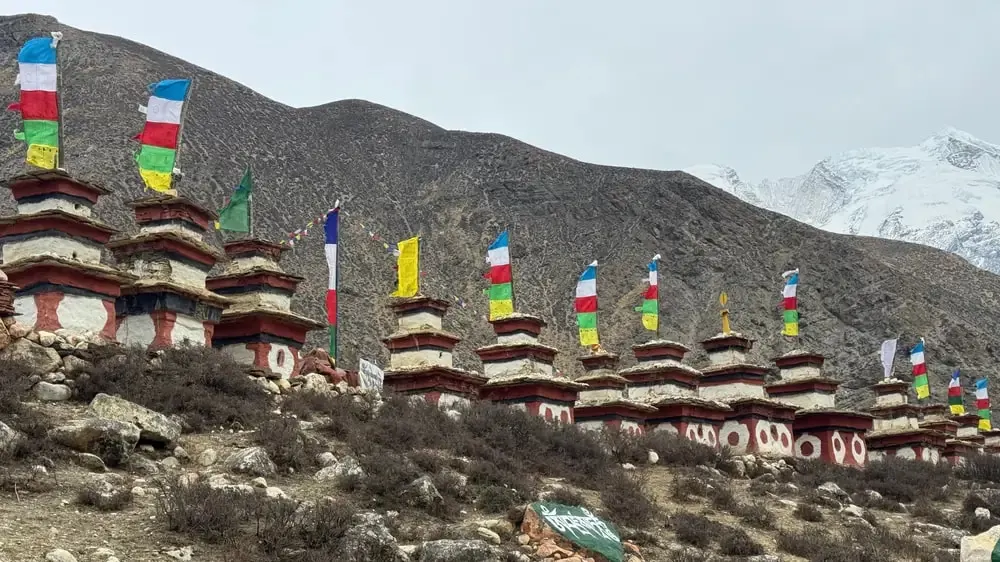
  • Chortens in Nar Phu Valley, Nar Phu Valley Trek 10 DaysAnnapurna Region

    10 days · Challenging

    Nar Phu Valley Trek 10 Days

    A 10-day restricted-area trek to the Tibetan Buddhist villages of Nar and Phu in Manang, crossing Kang La Pass (5,320 m) to the Annapurna Circuit.

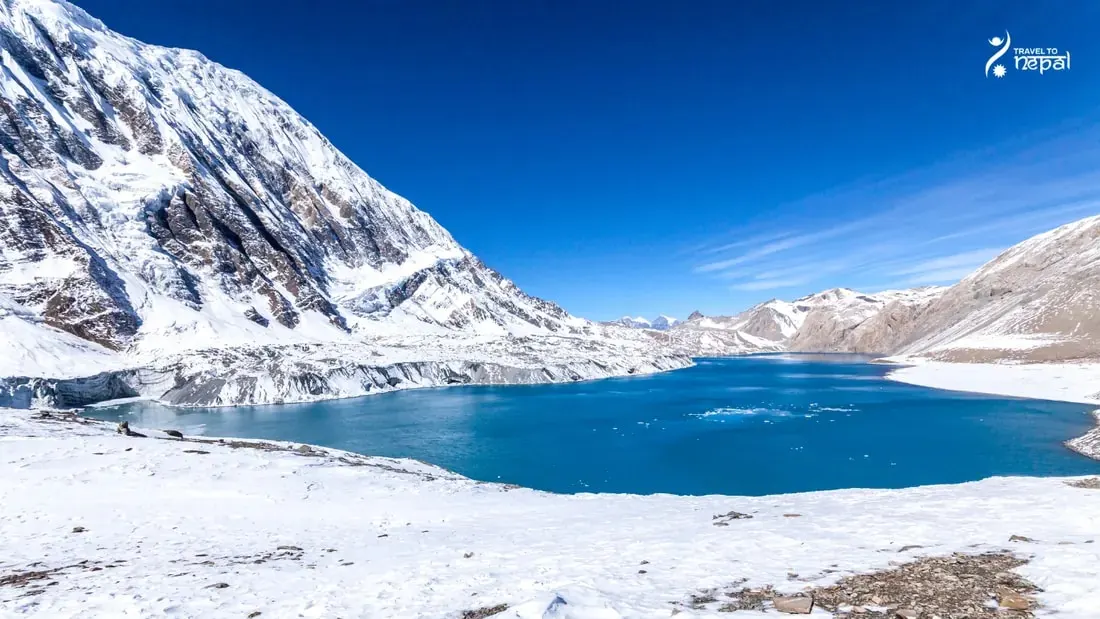
  • Tilicho Lake, Annapurna Circuit Trek with Tilicho LakeAnnapurna Region → Mustang Region

    13 days · Challenging

    Annapurna Circuit Trek with Tilicho Lake

    The classic loop over Thorong La (5,416 m), from green Marsyangdi valleys to the dry hills of Mustang.

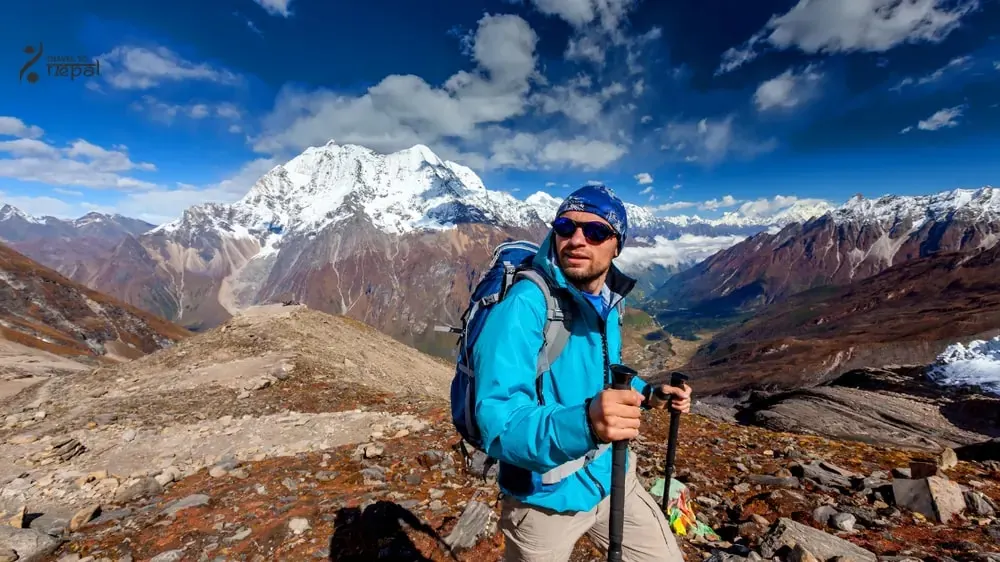
  • Hiking in Manaslu Circuit Trek, Manaslu Circuit TrekManaslu Region → Annapurna Region

    13 days · Challenging

    Manaslu Circuit Trek

    13-day teahouse trek around Manaslu (8,163 m), from Machha Khola over Larkya La Pass (5,106 m) to Dharapani, with a licensed guide and permits.

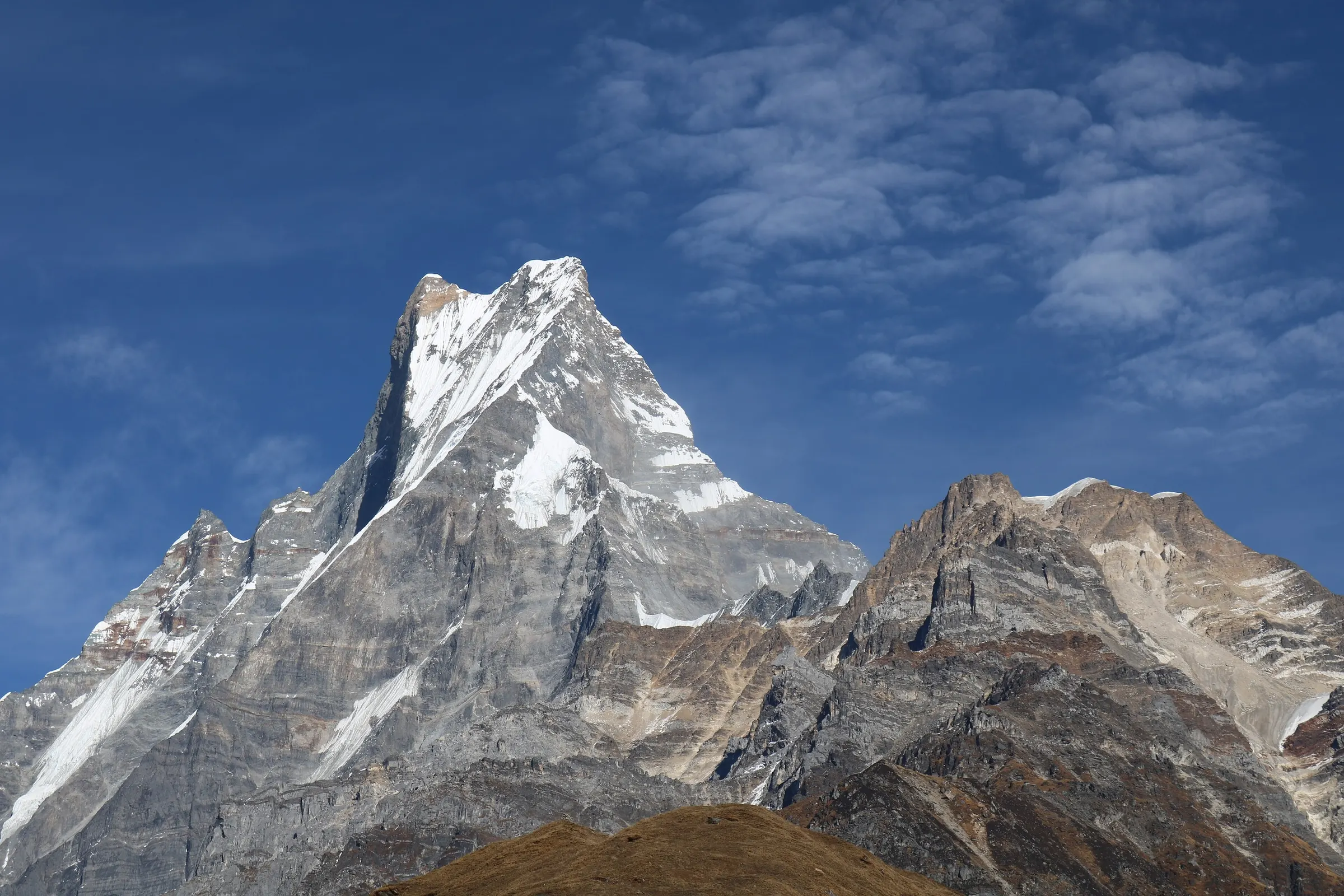
  • Machapuchare from the Mardi Himal viewpoint, Mardi Himal TrekAnnapurna Region

    8 days · Moderate

    Mardi Himal Trek

    A quiet ridge walk from Pokhara to the foot of Machapuchare, with big Annapurna views in a week.

Sign up for our newsletter

Seasonal trail updates, packing guides and new treks, about once a month.

We send a confirmation email first. Unsubscribe any time.

From$990