In this guide (10 sections)
Quick answer
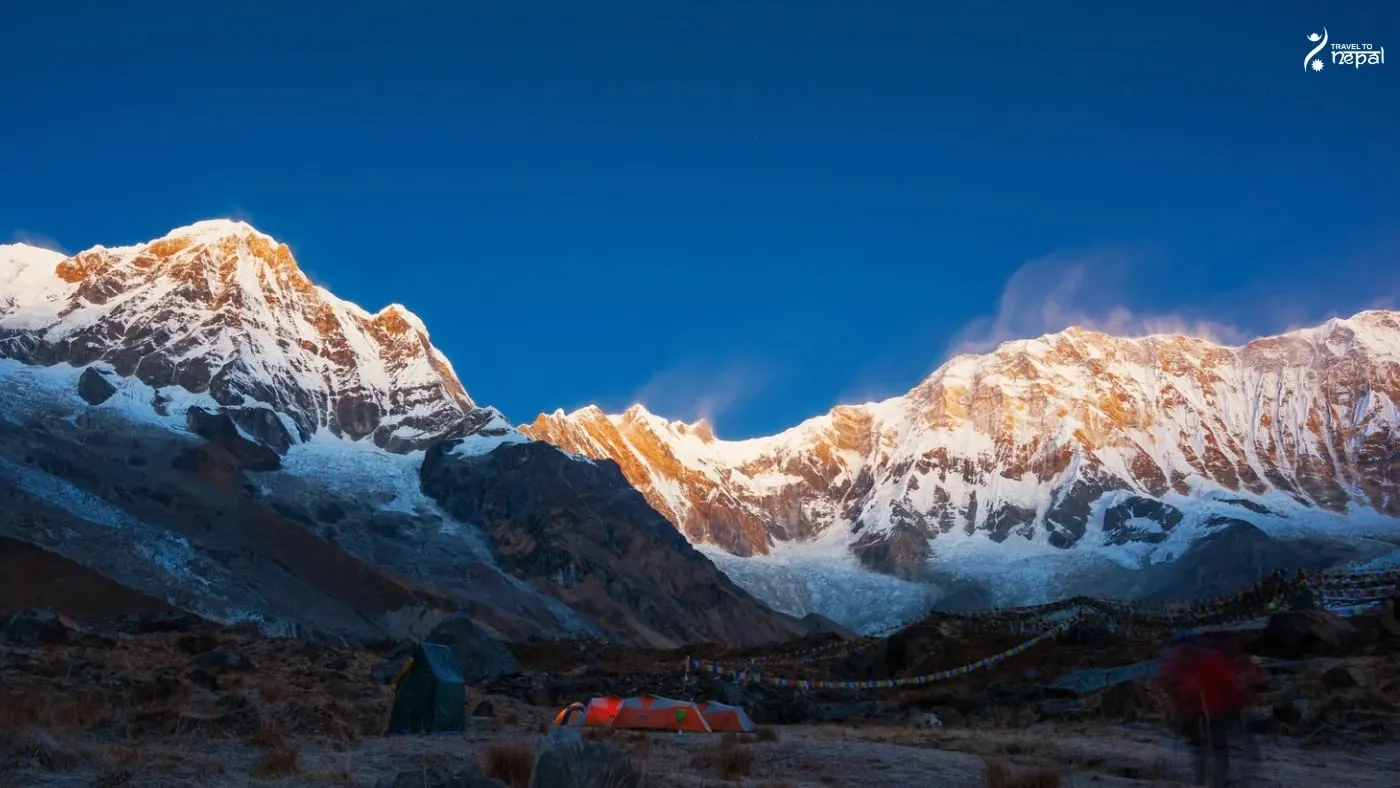
The best time to trek the Annapurna Circuit is March to April and October to November. These four months bring dry trails, clear mountain views and the best chance of crossing Thorong La (5,416 m) on schedule.
May, September and December are good second choices, each with one trade off. May has warm days and quieter teahouses, but cloud builds by midday and the views turn hazy. September is the end of the monsoon, so early showers and landslides on the Besisahar to Chame road can delay your start. December gives clear views and far fewer trekkers, but nights at Thorong Phedi drop to about −12 °C and late month snow can close the pass.
January and February are risky because deep snow can close Thorong La for days. June to August is the monsoon, with heavy rain, leeches and landslides on the lower half of the route.
Annapurna Circuit Weather by Month
Monthly Weather at glance
- January: Not ideal
- February: Not ideal
- March: Best
- April: Best
- May: Possible
- June: Not ideal
- July: Not ideal
- August: Not ideal
- September: Possible
- October: Best
- November: Best
- December: Possible
- Best
- Possible
- Not ideal
Annapurna Circuit Weather in Table Format
| Month | On the trail | Crowds | Our verdict |
|---|---|---|---|
| January | Coldest month; deep snow can close Thorong La and the Tilicho trail | Low | Not ideal |
| February | Still very cold; snow on the pass, longer days by the end of the month | Low | Not ideal |
| March | Clear mornings, windy afternoons; late snow possible near the pass | Busy | Best |
| April | Warmest stable month; clear mornings, cloud after lunch | Busy | Best |
| May | Warm and hazy; cloud builds by midday | Medium | Possible |
| June | Monsoon starts; rain, leeches and landslides below Manang | Low | Not ideal |
| July | Heaviest rain on the lower route; light rain above Manang | Very low | Not ideal |
| August | Wet roads and rare views; dry rain shadow above Manang | Very low | Not ideal |
| September | Monsoon ending; early showers, clearer by late month | Medium | Possible |
| October | Clear, dry and stable; full lodges at Thorong Phedi | Busiest | Best |
| November | Driest month; sharpest views and cold nights | Busy | Best |
| December | Dry and quiet; very cold at Base Camp, the pass may close | Low | Possible |
Annapurna Circuit Temperature by Month
Temperatures on the Annapurna Circuit fall by roughly 6.5 °C for every 1,000 m you climb, so the same day can feel like spring in Chame and deep winter at Thorong La. Use the tabs to see day highs and night lows at seven points along the route, from Chame (2,670 m) to Muktinath (3,800 m).
Month | Manang (3,540 m) | Thorong La (5,416 m) |
|---|---|---|
January | 5 °C / −7 °C | −7 °C / −19 °C |
February | 7 °C / −6 °C | −5 °C / −18 °C |
March | 10 °C / −3 °C | −2 °C / −15 °C |
April | 13 °C / −1 °C | 2 °C / −13 °C |
May | 15 °C / 3 °C | 4 °C / −9 °C |
June | 17 °C / 7 °C | 6 °C / −5 °C |
July | 18 °C / 9 °C | 6 °C / −3 °C |
August | 17 °C / 9 °C | 6 °C / −3 °C |
September | 16 °C / 6 °C | 4 °C / −5 °C |
October | 13 °C / 0 °C | 1 °C / −11 °C |
November | 10 °C / −4 °C | −2 °C / −15 °C |
December | 7 °C / −6 °C | −5 °C / −18 °C |
The rain shadow beyond Manang keeps the upper route dry for most of the year. Jomsom gets only 32–47 mm of rain a month even in the monsoon, while the forested valley below Chame is soaked. Cold is the bigger challenge up high: Thorong Phedi stays below freezing at night from October to May, and at the pass it is below freezing at night in every month of the year.
Autumn (October–November): Peak Season
Autumn is the best and busiest season on the Annapurna Circuit. The monsoon has washed the dust out of the air, the trails are dry, and the mountain views are the clearest of the year. It is also the busiest time on any teahouse trek in Nepal after Everest, so lodges at Thorong Phedi and High Camp fill up early in the afternoon. Book your trek well ahead and plan to reach the high lodges by lunchtime.
Annapurna Circuit in October
October is the most popular month on the circuit because the weather is usually clear, dry and stable. Days are pleasant down low, with Chame reaching about 18 °C, and Manang sits at around 13 °C by day and 0 °C at night. At Thorong Phedi (4,450 m), nights drop to about −6 °C, so a warm sleeping bag matters from the first week.
Early October can still bring a late storm. In 2026, heavy rain and snow closed Thorong La from 26 September and blocked the Besisahar–Chame road for six days before both were cleared. Keep one spare day in your plan, even in the best month of the year.
Dashain and Tihar, Nepal's biggest festivals, usually fall in October or early November. Buses and hotels around Kathmandu get busy during these weeks, so confirm your transport early.
Festival | 2027 | 2028 |
|---|---|---|
Dashain (Vijaya Dashami / Tika) | 10 October | 28 September |
Tihar (Bhai Tika) | 31 October | 19 October |
Annapurna Circuit in November
November is the driest month on the circuit and gives the sharpest mountain views. Jomsom averages just 4.6 mm of rain in November, and the days are usually clear and dry.
The trade-off is colder nights. Manang drops to about −4 °C after dark and Thorong Phedi to about −10 °C, while daytime highs at Manang stay near 10 °C. Pack a down jacket and gloves for the pass morning.
Crowds thin out in the second half of the month, so late November is a good choice if you want clear skies with quieter lodges. A light snowfall can still close Thorong La for a day or two, so keep that spare day.
“The best time I recommend is mid November. The trails are less crowded. You get better rooms and the mountain views are also better. Always add one spare day before your Kathmandu departure flight. Sometimes a single storm can close the pass. On crossing day, leave Thorong Phedi or High Camp by 4 am”
 Nabraj NepalSenior Trek Leader
Spring (March–May): Second-Best Season
Spring is the second-best season on the Annapurna Circuit, with warm days, long daylight and a reliable pass from April. Mornings are usually clear, but cloud and wind build in the afternoon, so start each day early. March and April are as busy as autumn, while May is quieter.
Annapurna Circuit in March
March is a good month to trek, but the high section can still hold winter snow. Late snow can lie on the climb from Thorong Phedi to High Camp and the pass, especially in early March. Check conditions in Manang before you go higher.
Nights are still cold. Manang drops to about −3 °C and Thorong Phedi to about −9 °C, while Manang reaches about 10 °C by day. Afternoons are often windy above Manang, so plan to finish walking by early afternoon.
The second half of March is the safer choice. Days are longer, the snow has had time to settle, and the trail gets busier with spring trekkers.
Annapurna Circuit in April
April is the best spring month on the circuit and the warmest stable month of the year. Manang reaches about 13 °C by day and −1 °C at night, and Thorong Phedi drops to about −7 °C. Chame is mild at around 19 °C by day.
Mornings are clear, and cloud usually builds after lunch. Rhododendrons flower in the forests of the lower Marsyangdi valley, adding colour to the walk below Chame.
April is also a good month for the Tilicho Lake detour. The lake sits at 4,919 m, a steep 800 m climb of about 3.5 hours from Tilicho Base Camp (4,150 m). The trail to the base camp crosses a narrow landslide zone, which is safest when it is dry and free of ice.
Annapurna Circuit in May
May is one of the best months on the Annapurna Circuit, especially if you want quieter trails than in March and April. Days are the warmest of the spring, with Manang at about 15 °C by day and 3 °C at night, and Chame reaching about 21 °C.
The cold is easier to handle than at any other time in the trekking seasons. Thorong Phedi drops only to about −3 °C at night, so the early start for Thorong La is more comfortable than in March or November.
The trade-off is the view. Pre-monsoon cloud builds by midday, and the air is hazier than in autumn, so the best mountain views come in the early morning. Start walking soon after sunrise and plan to finish by early afternoon.
May also suits the Tilicho Lake (4,919 m) detour, because the snow on the high trail has mostly melted. Aim for the first half of the month, before the monsoon moves in at the end of May or early June.
Winter (December–February): Cold and Quiet
Winter on the Annapurna Circuit is clear, dry and quiet, but deep snow can close Thorong La. Skies are often bright blue and the trails are nearly empty. The challenge is the cold: nights at Thorong Phedi drop to between −12 °C and −13 °C, and a heavy snowfall can stop crossings for days.
Annapurna Circuit in December
December is the best winter month for the Annapurna Circuit. The skies are clear and dry, with only about 5 mm of rain at Jomsom all month, so the mountain views stay sharp from Chame to Muktinath.
The main reason to go in December is the quiet. The autumn crowds have gone, so you can usually choose your teahouse and get a better room, even at Thorong Phedi and High Camp.
The trade-off is the cold, which gets harder as you climb. Manang reaches about 7 °C by day and −6 °C at night, Thorong Phedi drops to about −12 °C at night, and the pass itself stays below freezing even at midday. Bring a sleeping bag rated well below freezing and a full down jacket.
Timing within the month matters. Snow risk on Thorong La rises in the second half of December, so start in the first week if you can, and keep at least one spare day for the pass.
Annapurna Circuit in January
January is the coldest month on the circuit, and we do not recommend it for crossing Thorong La. Manang reaches only about 5 °C by day and drops to −7 °C at night. Thorong Phedi stays below freezing all day, with a high of about −1 °C and a low of about −13 °C.
Deep snow can close the pass and makes the Tilicho trail unsafe. Some lodges at Thorong Phedi and High Camp may close for the season, so check which ones are open before you leave Manang.
If you trek in January, treat the pass as a bonus, not a certainty. Plan two or three spare days, and be ready to turn back at Manang if the pass is closed.
Annapurna Circuit in February
February is much like January, with very cold nights and snow still possible on the pass. Manang reaches about 7 °C by day and −6 °C at night, and Thorong Phedi drops to about −12 °C. Days get longer and a little warmer by the end of the month.
The upper Manang villages follow Tibetan Buddhist culture, and Losar, the Tibetan New Year, often falls in February. Trekking at that time can mean prayer flags, monastery rituals and family celebrations in the villages.
February suits experienced winter trekkers with flexible dates. If you have only fixed dates, wait for late March or April.
Monsoon (June–September): Rain Below, Dry Above
The monsoon splits the Annapurna Circuit in two. Below Manang, the Marsyangdi valley gets heavy rain, thick cloud, leeches and landslides. Above Manang and on the Jomsom side, the Annapurna range blocks most of the rain, so the high route stays fairly dry with only 32–47 mm a month at Jomsom.
Annapurna Circuit in June
June is the start of the monsoon, and we rate it as a month to avoid. Rain builds through the month in the lower Marsyangdi valley, bringing cloud, leeches and the first landslides on the Besisahar–Chame road.
Temperatures are warm. Chame reaches about 23 °C by day, Manang about 17 °C by day and 7 °C at night, and Thorong Phedi stays just above freezing at about 1 °C.
Above Manang, the rain shadow keeps the trail fairly dry, with only about 32 mm of rain at Jomsom in June. If you must trek in June, go in the first week, before the monsoon is fully established, and keep two spare days for road delays.
Annapurna Circuit in July
July is the peak of the monsoon on the Annapurna Circuit and one of the hardest months to trek. Heavy rain falls most days below Manang, and landslides can block the jeep road to Chame for days at a time.
It is also the warmest month of the year. Manang reaches about 18 °C by day and 9 °C at night, and Thorong Phedi drops only to about 3 °C. Even Jomsom, in the rain shadow, gets its wettest month, with about 47 mm of rain.
The trails are almost empty and the valleys are green, but cloud hides the mountains most days. We recommend July only for experienced trekkers with flexible dates who don't mind missing the views.
Annapurna Circuit in August
August is one of the uncertain months for the Annapurna Circuit, and we rate it as a month to avoid. The problem is not the trail above Manang but the roads in and out. The 65 km jeep road from Besisahar to Chame takes 5 to 6 hours in normal conditions, and monsoon landslides can block it for days.
The exit road is just as fragile. The rough Beni to Jomsom road along the Kali Gandaki was damaged in 46 places by the 2026 storms, and the whole road is prone to landslides in heavy rain.
Temperatures are the warmest of the year. Chame reaches about 23 °C, Manang about 17 °C by day and 9 °C at night, and even Thorong Phedi stays above freezing at about 3 °C. Mountain views are rare, though, because cloud hangs over the peaks most days.
If August is your only option, expect delays and pack for rain on the lower route. Allow at least two spare days for road closures on the way in and out.
Annapurna Circuit in September
September is the month the monsoon ends, which makes it an OK choice if you start in the second half of the month. Early September still brings showers, cloud and landslide risk on the roads, while the last weeks are often clear and green.
Temperatures are still mild. Chame reaches about 22 °C by day, Manang about 16 °C by day and 6 °C at night, and Thorong Phedi drops to about 0 °C. Rain at Jomsom falls to about 36 mm for the month.
Late storms can still strike. In 2026, end-of-September storms closed Thorong La from 30 September to about 6 October, along with the Tilicho trail and parts of the roads. If you start in September, keep at least two spare days and stay flexible with your dates.
Thorong La Pass Conditions by Season
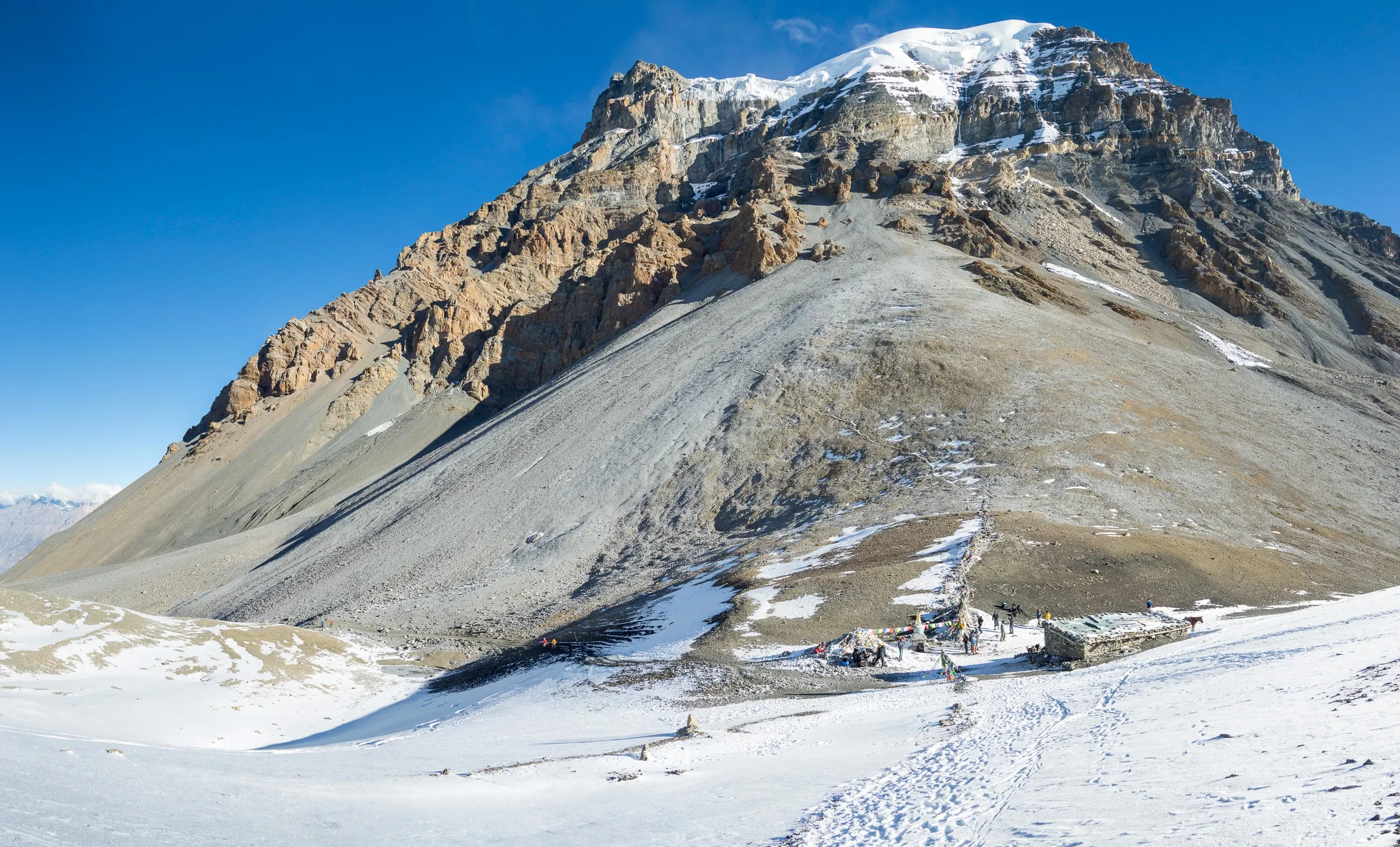
Thorong La (5,416 m) is the high point of the Annapurna Circuit, and its conditions decide the best time to trek. The crossing from Thorong Phedi to Muktinath covers about 15 km and takes around 8 to 10 hours, with roughly 1,000 m of climbing and 1,600 m of descent.
Section | Distance | Time | Trail |
|---|---|---|---|
Thorong Phedi (4,450 m) → High Camp (4,880 m) | 1 km | 1 h | Very steep climb |
High Camp → Thorong La (5,416 m) | 3.5 km | 3.5 h | Steady climb with several false summits |
Thorong La → Chabarbu (4,190 m) | 7 km | 3.5 h | Very steep descent |
Chabarbu → Muktinath (3,800 m) | 3.5 km | 1 h | Gentle descent |
From March to November, the pass is usually open, but a storm can close it for a few days in any month. From December to February, deep snow can close it for longer, and some lodges below the pass may shut. At the pass itself, nights are below freezing in every month of the year.
Whatever the season, start from Thorong Phedi or High Camp before dawn. The wind picks up from late morning, and an early start gets you over the top while the snow is firm. Build one spare day into your plan, and two or more in winter.
Frequently asked questions
Is October or November better for the Annapurna Circuit?
Both are excellent, but November is slightly better if you want clear views and fewer people. October can still bring an early-month storm. November is drier and quieter, especially after mid-month, but nights are colder, down to about −10 °C at Thorong Phedi.
Can you trek the Annapurna Circuit in winter?
Yes, but only with flexible dates and proper cold-weather gear. December is the best winter month, with clear skies and quiet teahouses. In January and February, deep snow can close Thorong La for days, and some lodges at Thorong Phedi and High Camp may close.
Is Thorong La open all year?
No, Thorong La can close in any month after heavy snow. Closures are most common from December to March, but storms can also close it in spring and autumn. Always keep at least one spare day before the crossing.
How cold does it get on the Annapurna Circuit?
Nights at Thorong Phedi (4,450 m) drop to about −13 °C in January and −6 °C in October. At Thorong La (5,416 m), it stays below freezing at night in every month of the year. Manang (3,540 m) is milder, with night lows between −7 °C in January and 9 °C in July.
Can you trek the Annapurna Circuit during the monsoon?
You can, but it is not recommended. From June to August, heavy rain, leeches and landslides affect the lower Marsyangdi valley and the roads in and out. Above Manang, the rain shadow keeps the trail fairly dry, so the main risk is road delays rather than the walking itself.
What is the best time for Tilicho Lake?
April, May, October and November are the best months for the Tilicho Lake (4,919 m) detour. The trail to Tilicho Base Camp crosses a narrow landslide zone, which is safest when it is dry and free of ice. In winter and the monsoon, snow, ice or rockfall can make the detour unsafe.
How many spare days should I add?
Add at least one spare day in spring and autumn, and two or three in winter. Use them for weather on Thorong La or for road delays on the Besisahar–Chame and Beni–Jomsom roads. In the monsoon, keep two spare days for landslides on the roads.
Plan Your Annapurna Circuit Trek
Our Annapurna Circuit Trek runs for 13 days from Kathmandu and back, including the Tilicho Lake detour and about 100 km of walking. It costs from USD 550 per person for groups of 3 to 5, and includes transport, a licensed guide, teahouse rooms and your ACAP permit.
For March to April and October to November, book early, because the lodges at Thorong Phedi and High Camp fill up first. Tell us your dates, and we will check pass and road conditions before you set off.
Choose your Annapurna dates with us
Was this guide helpful?
Want our trekking guides to show up first when you search on Google?